One of the most common questions at the start of any interior design project is: how much should I budget, and where should I spend it? The answer is not a single number — it depends on the project type, the specification level, and crucially, which elements deliver the greatest impact relative to their cost. This complete interior design budget guide for Bangladesh provides honest, detailed guidance on how to allocate a design budget for maximum impact, what drives costs up, and how to avoid the overruns that derail even well-intentioned projects.
Planning a flat in Dhaka? See our flat interior design cost in Dhaka guide for 2026 per sq ft prices by package.

Setting the Right Total Budget
The first step in budgeting is establishing a realistic total figure — not by working backward from a target number, but by understanding what different specification levels actually cost per square foot and applying that to the project size.
| Project Type | Budget (৳/sq ft) | Mid-Range (৳/sq ft) | Premium (৳/sq ft) |
|---|---|---|---|
| Full apartment renovation | ৳900–৳1,500 | ৳1,500–৳2,800 | ৳2,800–৳5,500 |
| New apartment fit-out | ৳700–৳1,200 | ৳1,200–৳2,200 | ৳2,200–৳4,500 |
| Office fit-out | ৳800–৳1,400 | ৳1,500–৳2,800 | ৳3,000–৳6,000 |
| Restaurant / cafe | ৳1,000–৳1,800 | ৳1,800–৳3,500 | ৳3,500–৳7,000 |
| Single room renovation | ৳1,000–৳1,800 | ৳1,800–৳3,500 | ৳3,500–৳7,000 |
Once the total is established, the critical next step is adding a contingency — a budget reserve for unforeseen costs that arise during construction. In Bangladesh’s residential renovation market, a contingency of 10–15% of the total budget is standard. Structural discoveries (finding problems behind walls during demolition), supply chain delays requiring specification changes, and client-driven changes during the project all consume contingency. A project without a contingency reserve is a project where the first unexpected cost creates a crisis.
Where to Invest: The High-Impact Decisions
The mattress and bed frame (bedroom)
Used every night for a decade. A premium mattress and quality bed frame justify disproportionate investment — the daily benefit is direct and measurable. Allocate 25–35% of the bedroom furniture budget to these two pieces.
The sofa (living room)
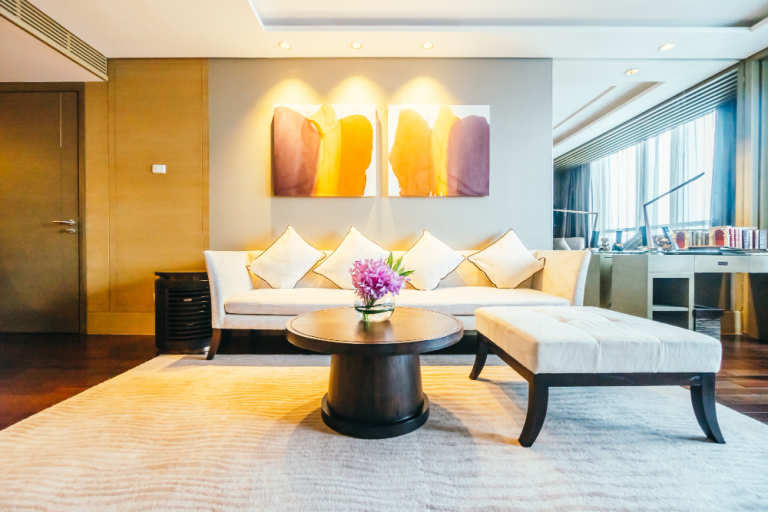
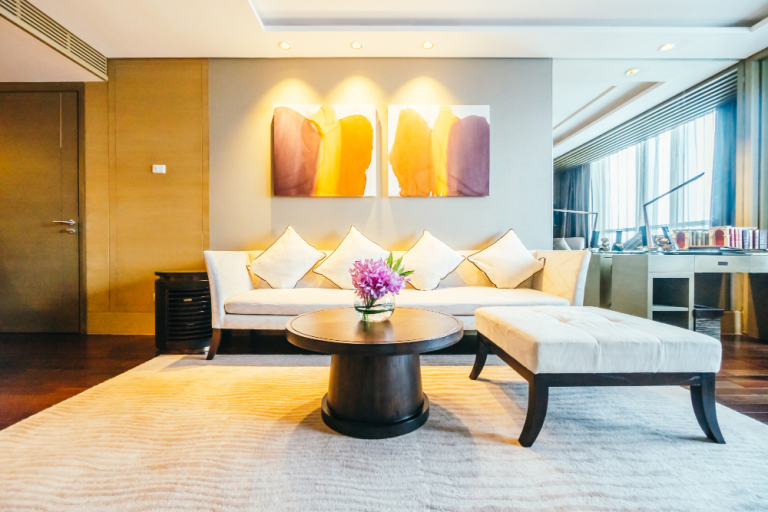
The room’s visual and functional anchor. A quality sofa at the right scale, in the right material, outlasts three budget sofas. Allocate 30–40% of the living room furniture budget to the sofa.
Lighting throughout
Lighting transforms every surface it illuminates. The difference between standard commercial downlights and quality warm-white fittings on a dimmer circuit is one of the highest-return investments in any interior. Budget for proper three-layer lighting in every room — ambient, task, accent.
Kitchen countertops and cabinet fronts
The kitchen is used multiple times daily. Countertops and cabinet fronts are the kitchen’s most visible surfaces — engineered quartz over compact laminate, quality HPL cabinet fronts over PVC, makes a visible and lasting difference.
Bathroom waterproofing and tiles
Cutting costs here produces problems that are expensive to fix and permanent in impact. Budget adequately for waterproofing membrane, quality tile adhesive, and floor and wall tiles specified to the correct performance standard.
Where to Save: Without Compromising Quality
- Secondary room furniture: Guest bedrooms and children’s rooms can be specified at a more affordable level than the master bedroom and main living areas — the occupancy frequency and the design impact is lower.
- Accessories and styling: Cushions, throws, vases, artwork, and decorative objects can be sourced from local markets, independent designers, and affordable retail at a fraction of premium import costs. These are also the easiest elements to update as tastes change.
- Curtains and blinds in secondary spaces: Ready-made curtains in quality fabrics cost far less than fully custom-made versions and perform identically. Custom-made curtains justify their premium in the living room and master bedroom where fit and quality are most visible.
- Internal storage joinery: The inside of a wardrobe does not need a premium laminate finish — the areas you see (the exterior doors, the shelf edges, the drawer fronts) are worth specifying well; the hidden internal structure can be more economical.
Phasing: How to Design Within a Constrained Budget
If the total budget does not reach the desired specification level, phasing is the correct strategy — designing the complete project as a whole, then executing it in stages as budget becomes available. The key to successful phasing is designing the phases in sequence: Phase 1 establishes the permanent elements that cannot easily be changed (structural modifications, waterproofing, flooring, ceiling, electrical and plumbing infrastructure); subsequent phases add the non-permanent elements (furniture, lighting fixtures, soft furnishings, accessories) in priority order.
Never reverse this order — beginning with furniture and delaying infrastructure creates a project where the furniture is installed in a space that then requires demolition to complete the infrastructure work, damaging the furniture and wasting the Phase 1 investment.
How to Avoid Budget Overruns
- Complete the design before construction starts: Every design change during construction costs 3–5x what it would have cost to make the change on paper at the design stage. A thorough design process that resolves all decisions before work begins is the single most effective budget protection tool.
- Specify materials before contracting: A contract priced against unspecified materials allows the contractor to substitute cheaper materials. Specify every material precisely — brand, model, finish, size — before the contract is signed.
- Include a 10–15% contingency: As noted above — non-negotiable.
- Use an integrated design and build firm: House De Arch’s EPC model provides a fixed price for the complete scope — design, procurement, and construction — eliminating the price variance that arises when these are procured separately.
Related: Interior Design Cost Guide | How to Choose an Interior Designer | Kitchen Renovation Cost Guide | Office Fit-Out Cost Guide | EPC Integrated Delivery
Ready to plan your project budget? Contact House De Arch — we provide detailed cost plans before any design work begins.