
Walk into any of Dhaka’s most successful restaurants and pay attention to how the lighting makes you feel — not what you see, but how you feel. You will almost certainly feel welcomed, relaxed, and subtly stimulated. The food will look more appealing than it would under bright fluorescent light. Your companions will look more attractive. The conversation will feel easier. None of this is accidental. It is the result of deliberate, skilled restaurant lighting design — and it is one of the most commercially significant investments a restaurant operator can make.
Why Restaurant Lighting Is Different from Every Other Commercial Setting
Restaurants are the only commercial environment where lighting must simultaneously make food look appetising, make people look attractive, create an emotional atmosphere, and support the operational requirements of a complex service business. These are competing demands — the light level that makes food look beautiful is often different from what a waiter needs to read a handwritten note, and the atmosphere that serves an intimate dinner service is wrong for a bright weekend lunch. Restaurant lighting design is the discipline of resolving these tensions with intention.
The Three Layers of Restaurant Lighting
1. Ambient Lighting
The base layer — the overall illumination level of the room. In restaurant design, ambient light should be significantly lower than in most commercial settings: typically 50–150 lux for fine dining and romantic environments, 150–300 lux for casual dining and cafes. This lower ambient level creates the impression of intimacy and warmth, makes the accent and task lighting more dramatic, and critically — prevents the flat, institutional quality that higher ambient levels produce.
The most common restaurant lighting mistake in Bangladesh is setting ambient light too high, producing a uniformly bright room that feels more like a hospital canteen than a dining destination. Dimmer control on the ambient circuit is not optional — it is the single most important operational flexibility in the entire lighting system.
2. Task Lighting
Localised light at table level — high enough for customers to read menus and see what is on their plates, without raising the ambient level across the room. This is typically delivered by pendant lights positioned directly over tables, or by carefully aimed directional spotlights that concentrate their beam on the table surface. The distinction between task and ambient light in a well-designed restaurant is what creates the “jewel box” effect — tables that appear to glow with their own light while the wider room remains intimate and atmospheric.
3. Accent Lighting
Directional light on specific features — artwork, architectural elements, the bar, plant walls, feature walls, the service counter. Accent lighting creates visual hierarchy: it tells the eye where to look, creates depth and dimension in a room, and ensures that the design elements the operator has invested in are actually visible and appreciated. A feature wall with no accent lighting is a wasted investment; the same wall properly lit becomes the room’s defining visual moment.
Colour Temperature: The Most Important Technical Decision
Colour temperature — measured in Kelvin — determines whether light appears warm (orange-yellow) or cool (blue-white). In restaurant lighting, colour temperature directly affects how food looks, how people look, and how the atmosphere feels. Getting it wrong is one of the most common and most damaging mistakes in restaurant lighting design.
| Colour Temp | Appearance | Best For | Avoid For |
|---|---|---|---|
| 2,700K | Very warm, amber | Fine dining, romantic restaurants, bars | Bright daytime cafes, fast food |
| 3,000K | Warm white | Casual dining, cafes, most restaurants | Clinical or cool-brand environments |
| 3,500K | Neutral warm | Quick service, bakeries, food courts | Intimate or atmospheric dining |
| 4,000K+ | Cool white/daylight | Fast food, convenience retail | Any sit-down dining environment |
The rule: For any restaurant in Dhaka where customers sit down and stay, stay below 3,000K. For fine dining and romantic environments, 2,700K is the correct specification throughout. Cool white light (4,000K+) makes food look flat, skin tones grey, and atmospheres clinical — it is incompatible with a quality dining experience.
Lighting by Cuisine and Restaurant Type
Fine Dining
2,700K throughout. Very low ambient (50–100 lux). Pendant lights or directional spots at each table providing 200–300 lux at table surface. Accent lighting on artwork and architectural features. Full dimmer control on all circuits, ideally with pre-programmed scenes for lunch service (slightly brighter), dinner service (intimate), and after-service (bright for cleaning). Candles on tables complement rather than replace good fixed lighting.
Casual Dining and Cafes
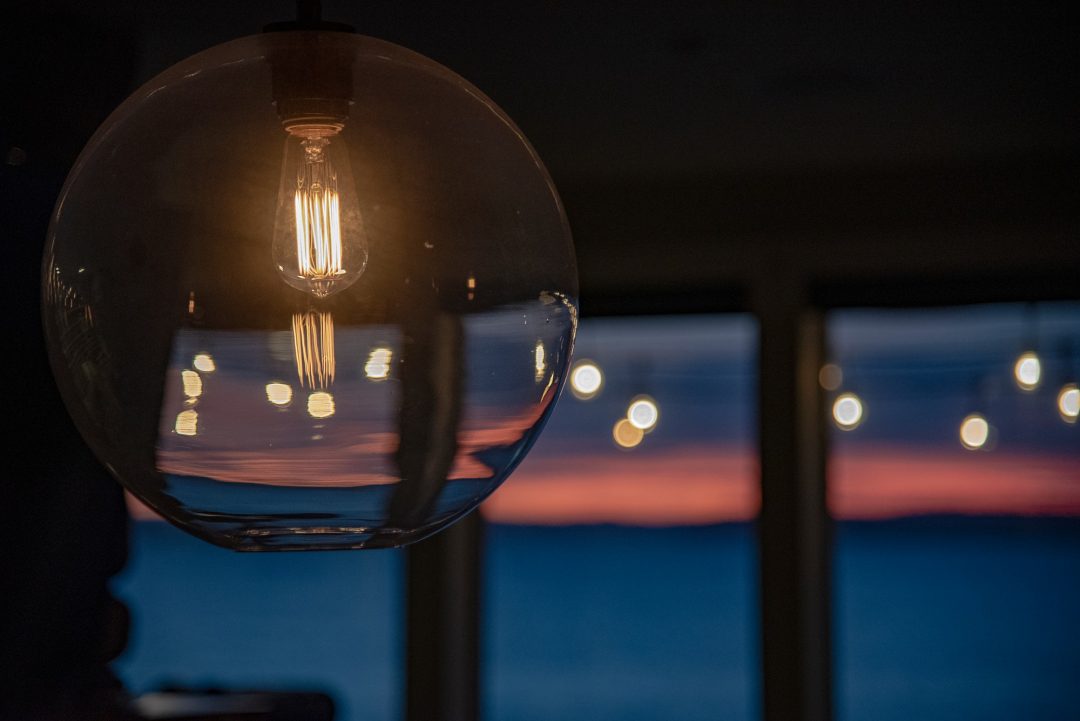
3,000K ambient, potentially 2,700K for pendant lights over tables. Higher ambient level (150–250 lux) supporting an active, social atmosphere. Industrial pendants, exposed Edison bulbs, or contemporary pendant clusters work well aesthetically. Dimming less critical but still valuable for the transition between daytime and evening service.
Bengali / South Asian Cuisine
Warm light particularly important — the rich golden, orange, and deep red tones of Bengali cuisine look extraordinary under 2,700K–3,000K light and flat under cooler sources. Many of Dhaka’s most popular local restaurants have discovered this intuitively; the warm, dim lighting that characterises the most atmospheric traditional restaurants is not coincidental.
Fast Casual and Quick Service
Higher ambient (300–500 lux), 3,000–3,500K, less dimming. The goal is speed and clarity rather than atmosphere. Bright light communicates cleanliness and efficiency — appropriate for a restaurant where the customer experience is measured in minutes rather than hours.
Lighting Control Systems
A restaurant’s lighting system is only as good as its controls. The ability to adjust the lighting — transitioning from bright daytime service to intimate evening ambience, responding to weather and season, creating different moods for different events — requires a properly designed control system.
- Basic dimmer switches: Minimum requirement for any serious restaurant. Separate dimmer circuits for ambient, task/pendant, and accent. Budget option, but requires manual adjustment and cannot create scene memories.
- Scene controller: Allows pre-programmed lighting scenes (Lunch, Dinner, Event, Cleaning) to be recalled at the touch of a single button. Dramatically improves operational consistency — every dinner service starts with exactly the right lighting without anyone needing to remember what the settings were.
- Smart/BMS integration: Full digital control with app management, scheduling, and energy monitoring. Appropriate for premium restaurants and those with complex multi-zone requirements.
The Outdoor and Street-Facing Dimension
In Dhaka’s restaurant scene, street presence is a significant driver of walk-in traffic. A restaurant that is warmly, attractively lit from the street — visible from a distance, clearly occupied and alive — attracts passing traffic that a poorly lit facade will not. Exterior lighting on signage, the entrance threshold, and any window display should be considered as part of the overall lighting design, not as a separate afterthought.
Restaurant Lighting Cost Guide — Bangladesh 2025
| Restaurant Type | Lighting Cost per Cover | Example: 60-cover restaurant |
|---|---|---|
| Basic casual dining | ৳3,000–৳6,000 | ৳1.8L–৳3.6L |
| Mid-range with pendants | ৳6,000–৳12,000 | ৳3.6L–৳7.2L |
| Premium / full design | ৳12,000–৳20,000 | ৳7.2L–৳12L |
| Fine dining / bespoke | ৳20,000–৳40,000+ | ৳12L–৳24L+ |
Includes all fixtures, wiring, control system and installation. Excludes electrical board upgrades if required.
Frequently Asked Questions
Should I use LED lighting throughout my restaurant?
Yes — modern LED technology at 2,700K is indistinguishable from warm incandescent light and uses 70–80% less energy. Early LED had a reputation for harsh, cold light; this is entirely resolved in quality contemporary LED fittings. The key is specifying the correct colour temperature and a high Colour Rendering Index (CRI) — specify CRI 90+ for any restaurant where food appearance matters, which is every restaurant.
How do I transition from daytime to evening lighting service?
With a scene controller, this is a single button press. Without one, train staff to dim ambient circuits to evening levels 30 minutes before the evening service begins — during the transition period when daytime customers are finishing and evening customers are arriving. Candles can be lit at this transition if used, reinforcing the shift to evening atmosphere.
Do bathroom and kitchen lighting matter to the customer experience?
Bathroom lighting matters significantly — customers spend time in the bathroom, use mirrors there, and form strong impressions based on the quality of the space. Warm, flattering light at mirror height (not overhead only) is essential. Kitchen lighting, if visible through a pass or glass wall, should be bright and clinical — the contrast between the warm dining room and the bright professional kitchen reinforces the sense of occasion.
Related: Complete Restaurant Design Guide | The Holy Crab Case Study | Cafe Interior Design Dhaka | Fine Dining Restaurant Design | Interior Design Cost Guide
Designing a restaurant in Bangladesh? Contact House De Arch — we design dining environments that make people return.