Why Restaurant Design Failures Cost More Than Construction in Dhaka’s Competitive F&B Market
The F&B sector in Dhaka has seen exponential growth, with areas like Gulshan, Banani, Dhanmondi, and Uttara saturated with dining concepts competing for the same customers. When restaurant owners approach us at House De Arch, many have already burned through 25-40 lakh BDT on design and construction—only to discover operational inefficiencies that reduce covers per night, increase staff costs, or violate fire safety codes that trigger RAJUK penalties.
Restaurant design mistakes in Dhaka aren’t just aesthetic failures. They’re profitability killers that manifest as: reduced table turnover (costing 15-30% potential revenue), kitchen bottlenecks that slow service during peak hours, HVAC inadequacy in our humid climate (driving customers away), non-compliant exits that halt operations, and layouts that require excessive staffing.
This guide identifies the eight most expensive restaurant design mistakes we see in Bangladesh’s F&B projects, with specific cost implications and actionable prevention strategies rooted in RAJUK regulations, local material realities, and Dhaka’s operational context.
Mistake #1: Ignoring the 60-40 Rule for Front-of-House vs. Back-of-House Space Allocation
The Problem: Many first-time restaurant owners allocate space based on rent per square foot rather than operational logic. We routinely see 2,000 sq ft spaces with 1,500 sq ft dining areas and a 500 sq ft kitchen trying to serve 80+ covers. The result: kitchen staff colliding during rush hours, dishes delayed 15-20 minutes, and high employee turnover from unsafe working conditions.
The Financial Impact: Poor space allocation reduces your effective covers per service by 20-30%. If your target is 120 covers at an average check of 800 BDT, that’s 19,200-28,800 BDT lost per dinner service, or 5.76-8.64 lakh BDT monthly.
The Bangladesh-Specific Fix: Follow the 60-40 principle: 60% customer-facing (dining, bar, waiting area, restrooms), 40% back-of-house (kitchen, prep, storage, staff areas, dishwashing). For Dhaka’s high-humidity environment, add 10-15% extra storage for dry goods (rice, flour, spices) that require climate control. Budget an additional 80,000-1.2 lakh BDT for proper ventilation and dehumidification in storage areas to prevent spoilage.
During space renovation projects, we’ve reconfigured restaurants to gain 12-18 additional covers without expanding square footage—purely through intelligent space allocation that balanced kitchen workflow with dining capacity.
Mistake #2: Kitchen Layout That Ignores the ‘Work Triangle’ and Dhaka’s Staff Movement Patterns
The Problem: Kitchens designed without understanding food flow—from receiving to prep to cooking to plating to service—create chaos. We see kitchens where the tandoor is 15 feet from the naan station, or where the dishwashing area forces staff to cross the main cooking line with dirty plates.
The Financial Impact: Poor kitchen layout adds 3-8 minutes per dish during peak service. For a 60-cover dinner rush, this translates to tables waiting 45+ minutes for mains, increased walkouts, negative reviews, and a 30-40% drop in repeat customers. Lost revenue: 8-12 lakh BDT monthly for mid-scale operations.
The Bangladesh-Specific Fix: Implement a linear flow: Receiving → Cold Storage → Prep Stations → Cooking Line → Plating → Service Window → Dishwashing → Waste. Position high-heat equipment (tandoors, grills, deep fryers) away from refrigeration to reduce cooling costs (a 2-ton AC unit runs 12-15 hours daily at 60-80 BDT/hour; improper placement can increase this by 40%).
For Bengali/Fusion concepts, separate wet prep (fish cleaning, vegetable washing) from dry prep (spice grinding, bread making) with a minimum 6-foot separation to meet BSTI hygiene standards. Install floor drains every 10-12 feet with proper slope (minimum 1:50 ratio) for Dhaka’s monsoon-related water accumulation. Budget 2.5-4 lakh BDT for commercial-grade kitchen flooring with anti-slip tiles (80-120 BDT per sq ft installed).
Mistake #3: Seating Layouts That Sacrifice Covers for ‘Aesthetic Spacing’
The Problem: Instagram-worthy designs with excessive aisle width and oversized furniture look beautiful but kill profitability. We see 1,200 sq ft dining rooms with just 35 covers when proper restaurant space planning in Bangladesh should yield 50-55 covers in that footprint.
The Financial Impact: Every lost cover represents 800-1,500 BDT per service (depending on concept). Losing 15 covers = 12,000-22,500 BDT per service, or 7.2-13.5 lakh BDT monthly (assuming 2 services daily, 6 days/week).
The Bangladesh-Specific Fix: Allocate 12-15 sq ft per cover for casual dining, 15-18 sq ft for mid-scale, 20-25 sq ft for fine dining. Main aisles: minimum 4 feet (120 cm) for server movement and wheelchair access per BNBC standards. Service aisles between tables: 2.5-3 feet (75-90 cm).
Use banquette seating along walls to gain 18-25% more covers versus freestanding tables. In Dhaka’s climate, avoid upholstered seating near windows or in non-AC zones; moisture accumulation requires replacement every 18-24 months (12,000-18,000 BDT per banquette section). Instead, use commercial-grade vinyl or leather alternatives (Rexine) that withstand 80%+ humidity, cost 40% less (450-650 BDT per meter versus 800-1,200 BDT for fabric), and last 4-5 years.
Mistake #4: HVAC Undersizing—The Silent Revenue Killer in Dhaka’s Heat
The Problem: Restaurant owners install residential-grade AC units or calculate tonnage based on square footage alone, ignoring heat load from kitchens, occupancy, glass facades, and Dhaka’s 30-38°C outdoor temperatures (March-September). The result: dining rooms at 28-30°C during lunch service, customer complaints, and reduced table turnover as guests leave quickly.
The Financial Impact: Uncomfortable temperature reduces average dining time but increases walkouts and negative reviews. A restaurant with 20% walkouts during summer months loses 2.4-3.6 lakh BDT monthly in a mid-scale operation.
The Bangladesh-Specific Fix: Calculate HVAC requirements properly: Base tonnage = (Sq Ft ÷ 150) for dining areas, but add 30-40% for kitchen heat migration, 25-35% for glass facade exposure (common in Gulshan/Banani), and 15-20% for occupancy heat (25-30 BTU per person).
For a 1,500 sq ft dining room with 60 covers and moderate kitchen adjacency: Base = 10 tons + 3.5 tons (kitchen) + 2.5 tons (glass) + 1.5 tons (occupancy) = 17.5 tons actual requirement. Install VRV/VRF systems (Carrier, Daikin, Midea) at 85,000-1.2 lakh BDT per ton installed, with split outdoor units to manage Dhaka’s dust and heat.
Budget 15-21 lakh BDT for proper HVAC in a 1,500-2,000 sq ft restaurant, plus 35,000-50,000 BDT monthly for electricity (3-phase connection required; DESCO/DPDC application costs 80,000-1.5 lakh BDT). Install separate AC zones for dining and kitchen with ERV (Energy Recovery Ventilation) to meet BNBC fresh air requirements (15-20 CFM per person) while controlling costs.
Mistake #5: Fire Safety and Exit Compliance Failures That Shut Down Operations
The Problem: Many restaurant interior design projects in Bangladesh treat fire exits as afterthoughts. Single-exit layouts, blocked emergency routes, inadequate fire suppression in kitchens, and missing NOCs from Fire Service & Civil Defence trigger closure notices—especially post-incident inspections after any fire incident in Dhaka’s commercial areas.
The Financial Impact: RAJUK penalties: 50,000-5 lakh BDT depending on violation severity. Forced closure during remediation: 3-8 lakh BDT in lost revenue weekly. Inability to secure insurance or trade licenses: indefinite revenue loss.
The Bangladesh-Specific Fix: Every restaurant over 500 sq ft or 50+ occupancy requires two exits minimum, each minimum 3 feet wide, with illuminated exit signage (backup battery 90+ minutes). Exit routes must remain unobstructed with maximum 150 feet travel distance from any point in the dining room.
Install commercial kitchen fire suppression: Ansul-style wet chemical system over cooking equipment (2.5-4.5 lakh BDT for 10-15 feet hood coverage), Class K fire extinguishers (8,500-12,000 BDT each; minimum two in kitchen, two in dining area), and smoke detectors with 65-70 dB alarm (interconnected system: 45,000-75,000 BDT for 1,500-2,000 sq ft space).
Obtain Fire Service NOC before fitout (15,000-35,000 BDT application, 3-6 week approval). Our consultancy service includes RAJUK and Fire Service liaison to prevent costly compliance failures.
Mistake #6: Plumbing and Grease Trap Inadequacy Leading to Operational Shutdowns
The Problem: Undersized grease traps (or complete absence), improper drainage slope, and insufficient water pressure for commercial dishwashers create recurring blockages. We see restaurants shut down for 2-4 days for emergency plumbing repairs, losing 1.5-3.5 lakh BDT in revenue plus repair costs of 60,000-1.8 lakh BDT.
The Financial Impact: Beyond emergency shutdowns, WASA can levy fines of 25,000-1.2 lakh BDT for grease discharge violations that contaminate sewer systems. Repeat violations risk water connection termination.
The Bangladesh-Specific Fix: Install grease traps sized at 2x your peak hour wastewater flow. For restaurants serving 80+ covers per service, minimum 200-liter capacity grease trap (35,000-65,000 BDT for commercial units; avoid residential models). Position grease traps with easy access for monthly cleaning (15,000-25,000 BDT per service) to prevent overflow.
Commercial kitchens require 3-inch drainage lines minimum (versus 2-inch residential) with floor drains every 10-12 feet. Install a 0.5-1 HP sewage ejector pump (18,000-32,000 BDT) if your kitchen is below street level (common in Banani/Gulshan basements). Water supply: 1-inch lines for handwashing, 1.5-inch for dishwashers, with overhead tanks (1,000-1,500 liters minimum) to maintain pressure during WASA supply interruptions (50,000-85,000 BDT installed with pump).
Mistake #7: Lighting Design That Undermines Ambiance and Food Photography
The Problem: Many F&B design mistakes in Bangladesh involve generic tube lights or single-tone LED panels that create flat, uninviting spaces. In Dhaka’s Instagram-driven dining culture, poor lighting means reduced social media sharing—the free marketing that drives 40-60% of new customer acquisition for trendy concepts.
The Financial Impact: Reduced social media presence lowers discovery by 30-50%, directly impacting customer acquisition. Harsh overhead lighting increases perceived dining duration (customers subconsciously rush), reducing turnover efficiency.
The Bangladesh-Specific Fix: Implement layered lighting: (1) Ambient (general illumination, 150-200 lux), (2) Task (food prep/bar areas, 300-500 lux), (3) Accent (architectural features, art, 100-150 lux with 3:1 contrast ratio), (4) Decorative (statement fixtures for brand identity).
Color temperature matters: 2700-3000K (warm white) for fine dining intimacy, 3500-4000K (neutral white) for fast-casual energy. Install dimmer controls (5,000-12,000 BDT per zone) to adjust ambiance from lunch to dinner service.
Budget 800-1,500 BDT per sq ft for quality restaurant lighting (for 1,500 sq ft = 12-22.5 lakh BDT). Avoid cheap LED strips (80-150 BDT per meter) that fail within 6-9 months in Dhaka’s voltage fluctuations; invest in branded LEDs (Philips, Osram, Havells) at 220-400 BDT per meter with 3+ year warranties. Table lighting: pendant fixtures 24-30 inches above table surfaces, 60-75W equivalent LED bulbs for optimal food presentation without glare.
Mistake #8: Material Selection That Ignores Dhaka’s Humidity, Maintenance Costs, and Hygiene Standards
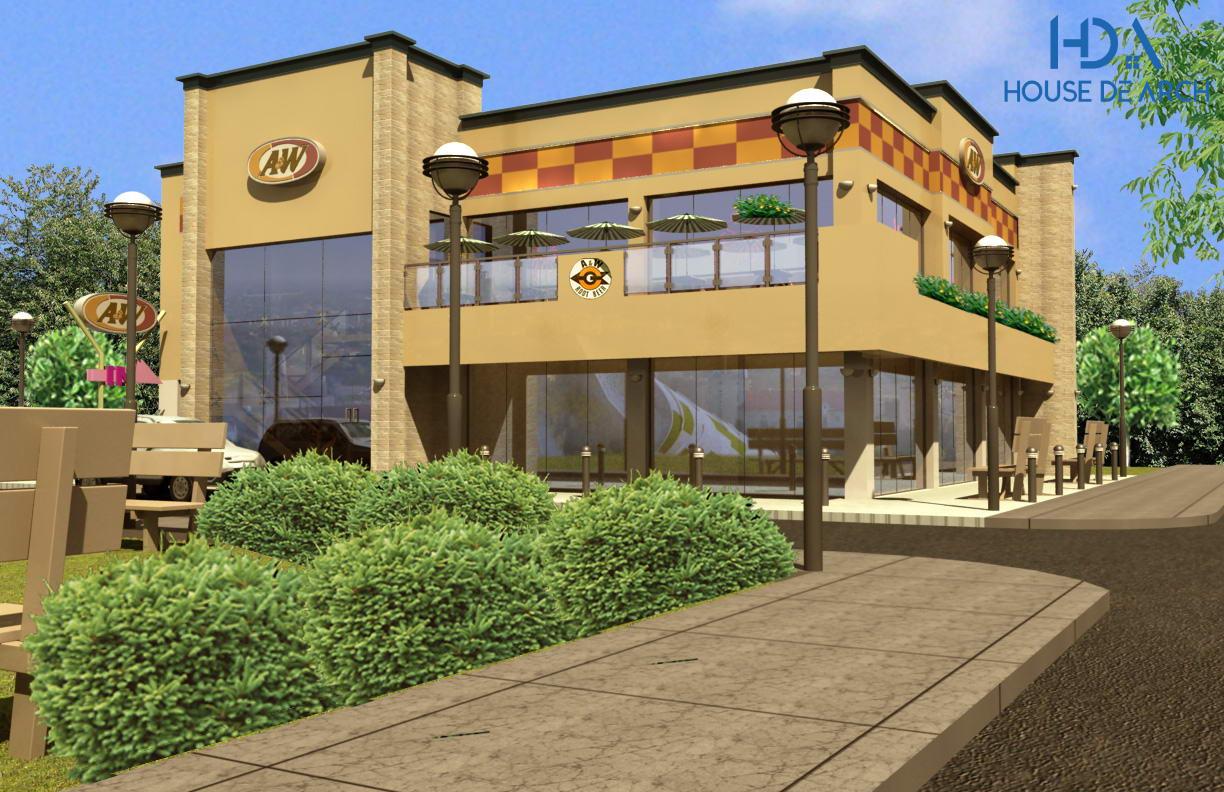
The Problem: Aesthetic-first material choices fail within 12-18 months in Dhaka’s climate. We see MDF furniture swelling from moisture, unsealed concrete floors staining permanently, and decorative wood panels harboring mold. Replacement cycles drain 2.5-4.5 lakh BDT annually—capital that should fund marketing or menu development.
The Financial Impact: Premature material failure requires unscheduled renovations (1.5-3.5 lakh BDT per incident) and temporary closures. Visibly deteriorated interiors reduce premium pricing power by 20-30%; customers won’t pay 1,200 BDT for biryani in a space that looks tired.
The Bangladesh-Specific Fix: Flooring: Commercial vitrified tiles (85-140 BDT per sq ft) with R11 anti-slip rating for dining, R12 for kitchen. Avoid marble (porous, stains easily, requires annual polishing at 45-65 BDT per sq ft). Epoxy coated concrete for bar areas (180-260 BDT per sq ft installed) provides durability and chemical resistance.
Furniture: Stainless steel frames with composite wood tops (not pure MDF) for tables (8,500-15,000 BDT per 4-seater table versus 5,000-7,000 BDT for MDF that fails). Commercial-grade metal chairs with powder coating (1,800-3,200 BDT each) withstand 400+ kg load and moisture better than wooden alternatives.
Wall Finishes: Acrylic emulsion paint (35-50 BDT per sq ft for Asian Paints Apex/Berger Weathercoat) over cement plaster for washability. Avoid wallpaper (peels in humidity within 9-14 months). For feature walls: sintered stone or porcelain large-format tiles (250-450 BDT per sq ft) that mimic marble/concrete without maintenance issues.
Ceilings: Moisture-resistant gypsum board (50-75 BDT per sq ft installed) or aluminum false ceiling (85-120 BDT per sq ft) rather than PVC (collects grease, yellows, looks cheap). Budget 3.5-5.5 lakh BDT for durable finishes in a 1,500 sq ft restaurant versus 2-2.8 lakh BDT for short-lifespan materials that require replacement within 18-24 months.
The Real Cost of Restaurant Design Mistakes in Dhaka: A 36-Month Profitability Analysis
To quantify these mistakes, consider a mid-scale 1,800 sq ft restaurant in Gulshan with 70-cover capacity and 1,000 BDT average check:
Revenue-Killing Mistakes (Monthly Impact):
- Poor space allocation losing 15 covers: 9 lakh BDT lost monthly
- Kitchen layout delays reducing turnover by 20%: 7.2 lakh BDT lost monthly
- Inadequate HVAC causing 15% summer walkouts: 3.6 lakh BDT lost monthly (April-September)
- Single exit forcing closure for 2 weeks during remediation: 6 lakh BDT lost (one-time)
- Plumbing failure shutdown for 3 days: 1.8 lakh BDT lost (+ 1.2 lakh repair)
Total First-Year Impact: 68.4 lakh BDT in lost revenue and remediation costs—often exceeding the original fitout budget of 45-60 lakh BDT.
The Prevention Investment: Working with an experienced restaurant design team adds 8-12% to upfront costs (4-7 lakh BDT for comprehensive restaurant interior design in Dhaka) but eliminates 85-90% of these expensive mistakes. Our cost estimate service provides transparent budgeting before construction begins, preventing the budget overruns that plague 60%+ of self-managed restaurant projects.
How House De Arch Prevents These Mistakes in Every Restaurant Project
Our restaurant design process is built on operational efficiency, not just aesthetics:
- Operational Planning First: We map your service flow, peak covers, menu requirements, and staff movement before drawing a single elevation. This prevents space allocation and kitchen layout mistakes.
- Regulatory Compliance Integration: RAJUK building code review, Fire Service NOC preparation, and BNBC exit planning are embedded in our project management process, not afterthoughts.
- Climate-Appropriate Specifications: Every material, HVAC system, and finish we specify is tested for Dhaka’s 80%+ humidity, 30-38°C temperatures, and voltage fluctuations. We don’t specify materials that fail in Bangladesh’s climate.
- Budget Protection: Our detailed BOQs (Bills of Quantities) prevent the 30-50% budget overruns common in restaurant projects. We include contingency planning for price fluctuations in steel, tiles, and MEP equipment.
- Vendor Coordination: We manage kitchen equipment suppliers, HVAC contractors, plumbers, electricians, and finishers—preventing the coordination failures that delay openings by 2-4 months.
View our commercial projects portfolio to see how these principles translate into profitable, operationally efficient restaurants across Dhaka.
Your Next Step: Protect Your Restaurant Investment Before Breaking Ground
If you’re planning a restaurant in Dhaka and want to avoid the mistakes that kill profitability, start with a professional design consultation. Our restaurant design packages begin at 4.5 lakh BDT for full-service projects (design, MEP coordination, compliance, procurement oversight) for 1,200-1,500 sq ft spaces.
We offer preliminary consultations (2-hour on-site assessment + concept viability report) for 25,000 BDT, fully credited toward design fees if you proceed. This consultation identifies space allocation issues, regulatory constraints, and budget realities before you commit capital.
Contact House De Arch at +880 1711-523692 or visit our contact page to schedule your restaurant design consultation. Invest 3-4 hours in professional guidance now to avoid 40-70 lakh BDT in mistakes over the next three years.
FAQ
What is the typical cost of restaurant interior design in Dhaka?
Professional restaurant interior design in Dhaka ranges from 4.5-12 lakh BDT depending on size and complexity. For a 1,500 sq ft restaurant, expect 5-7 lakh BDT for full-service design including layout planning, MEP coordination, and material specifications. Total fitout costs typically run 2,800-4,500 BDT per sq ft (42-67.5 lakh BDT for 1,500 sq ft) including construction, finishes, furniture, and equipment.
How much space should I allocate for kitchen versus dining area in a Dhaka restaurant?
Follow the 60-40 rule: 60% for customer-facing areas (dining, bar, restrooms, waiting) and 40% for back-of-house (kitchen, prep, storage, staff areas). In Dhaka’s humid climate, add 10-15% extra storage space for dry goods requiring climate control. A 2,000 sq ft restaurant should have approximately 1,200 sq ft for dining (80-100 covers) and 800 sq ft for kitchen and support areas.
What RAJUK approvals do I need for a restaurant in Dhaka?
Restaurants require building plan approval if you’re modifying structure, Fire Service NOC (15,000-35,000 BDT, 3-6 weeks processing), Trade License from City Corporation, and food safety registration from BSTI. Spaces over 500 sq ft or 50+ occupancy must have two exits minimum (3 feet wide each), fire suppression in kitchen, and illuminated exit signage. Non-compliance results in 50,000-5 lakh BDT penalties and forced closure.
How do I calculate HVAC requirements for a restaurant in Dhaka?
Base calculation is sq ft ÷ 150 for tonnage, but add 30-40% for kitchen heat, 25-35% for glass facades, and 15-20% for occupancy. A 1,500 sq ft dining room with 60 covers needs approximately 17-18 tons (10 base + 3.5 kitchen + 2.5 glass + 1.5 occupancy). Budget 85,000-1.2 lakh BDT per ton installed for VRV/VRF systems. Undersizing HVAC is a major profit killer—customers leave uncomfortable spaces quickly, reducing revenue by 15-25% during Dhaka’s summer months.
What materials last longest in Dhaka’s humid climate for restaurant interiors?
For flooring: commercial vitrified tiles (85-140 BDT per sq ft) with R11 anti-slip rating. For furniture: stainless steel frames with composite wood tops (8,500-15,000 BDT per table). For walls: acrylic emulsion paint over cement plaster (35-50 BDT per sq ft). Avoid MDF furniture (swells in humidity), unsealed wood, wallpaper, and marble flooring. Invest in moisture-resistant materials that cost 30-40% more upfront but last 3-4x longer, eliminating costly 18-24 month replacement cycles.
How can poor restaurant design affect my profitability in Dhaka?
Design mistakes typically cost 40-70 lakh BDT in lost revenue over three years through: reduced covers from poor space planning (9+ lakh BDT lost monthly), kitchen layout delays reducing turnover (7+ lakh BDT monthly), inadequate HVAC causing walkouts (3-4 lakh BDT monthly in summer), compliance failures forcing closures (6+ lakh BDT per incident), and premature material failure requiring expensive renovations (2.5-4.5 lakh BDT annually). Professional design adds 8-12% to upfront costs but prevents 85-90% of these expensive mistakes.