Understanding Restaurant Interior Design Costs in Bangladesh: What You’re Actually Paying For
When evaluating restaurant interior design in Dhaka, most F&B entrepreneurs ask one critical question: what does it actually cost? Unlike residential projects where scope is relatively predictable, restaurant interiors involve complex, regulated systems—commercial kitchens, fire safety, ventilation, RAJUK NOC compliance, furniture that withstands heavy daily use, and finishes that survive Dhaka’s humidity and kitchen grease.
As of 2026, restaurant interior design cost in Bangladesh typically ranges from BDT 800 to BDT 2,500 per square foot, excluding kitchen equipment but including design, execution, furniture, lighting, and MEP coordination. This wide range reflects vastly different concepts: a 600 sq ft cloud kitchen requires different investment than a 3,000 sq ft fine-dining restaurant in Gulshan.
This guide breaks down actual costs by space size, concept type, and finish level—based on House De Arch’s experience executing restaurant projects across Dhaka. We’ll cover what’s included at each price tier, RAJUK/BNBC requirements that impact budgets, and the hidden costs that surprise first-time restaurant owners.
Primary Cost Drivers: What Determines Your Restaurant Design Budget
Before diving into per-square-foot rates, understand the six factors that most significantly impact your restaurant interior design budget in Bangladesh:
- Space size and configuration: Smaller spaces (under 800 sq ft) often cost more per sq ft because fixed costs (kitchen ventilation, bathroom compliance, electrical panel upgrades) don’t scale down proportionally. Larger spaces achieve better economies on materials and labor.
- Concept and cuisine type: A juice bar requires minimal MEP investment; a tandoor-based restaurant needs heavy-duty exhaust, fire-rated walls, and specialized ventilation—adding BDT 150,000-300,000 to MEP alone.
- Location and existing conditions: Ground-floor spaces with direct ventilation access cost less than upper-floor restaurants requiring duct runs through common areas (which may need building management approvals). Renovation of existing restaurants is often 20-30% cheaper than shell-and-core build-outs.
- RAJUK and fire safety compliance: Restaurants over 1,500 sq ft or serving alcohol typically require RAJUK Trade License NOC, Fire Service NOC, and City Corporation approvals. Compliance work (fire-rated doors, emergency exits, smoke detectors, fire suppression) adds BDT 80,000-250,000 depending on size.
- Kitchen type and equipment integration: Display kitchens, open grills, or chef’s-table concepts require architectural integration of equipment, specialized lighting, and finish materials that handle heat and splatter—typically 30-40% more expensive than closed kitchens.
- Furniture durability requirements: Restaurant furniture faces exponentially harder use than residential. Commercial-grade chairs, tables with moisture-resistant finishes, and upholstery that withstands daily cleaning cost 40-60% more than residential equivalents but last 5-7 years versus 2-3.
These variables explain why a 1,000 sq ft fast-casual restaurant might cost BDT 12 lakh while a same-sized fine-dining space costs BDT 22 lakh. The concept, not just area, drives investment.
Restaurant Interior Design Cost by Budget Tier: BDT 800 to BDT 2,500/Sq Ft Breakdown
We categorize restaurant design budgets into four tiers based on 2026 Dhaka market rates. Each tier reflects different finish quality, furniture grade, lighting sophistication, and design complexity—not just “cheap” versus “expensive.”
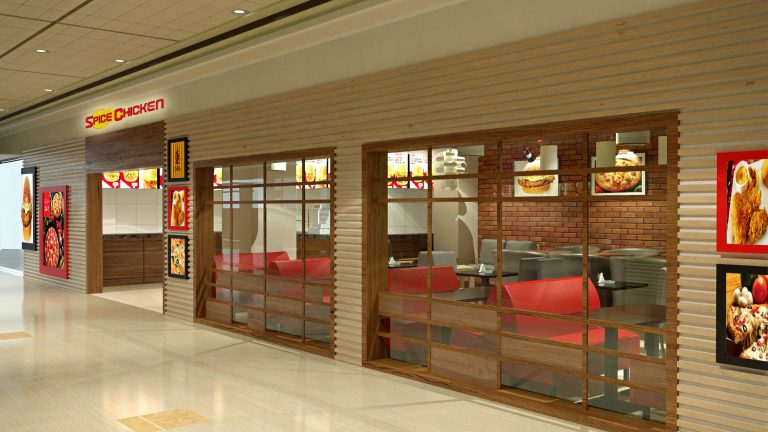
Budget Tier: BDT 800-1,200 Per Sq Ft (Cloud Kitchens, QSR, Minimal Seating)
Typical projects: delivery-focused cloud kitchens, quick-service counters, kiosk-style outlets, juice bars with minimal seating.
What’s included:
- Basic design drawings and 3D visualization (1-2 views)
- Essential MEP: standard kitchen exhaust, basic electrical layout, single-phase connections
- Economical finishes: ceramic tiles (BDT 45-65/sq ft), laminate counters, painted walls, basic false ceiling in customer area only
- Simple furniture: molded plastic chairs, laminate-top tables, basic counter fabrication
- LED strip/panel lighting, no accent or decorative fixtures
- Minimal RAJUK compliance (typically not required for small delivery-only setups)
Cost example: 500 sq ft cloud kitchen = BDT 4-6 lakh total (excluding kitchen equipment like ovens, fryers, refrigeration)
What’s NOT included: Custom millwork, branded signage, decorative lighting, bathroom finishes beyond basic fixtures, acoustic treatment, HVAC beyond exhaust fans.
This tier works for concepts where ambiance is irrelevant (delivery kitchens) or where brand identity comes from packaging and service rather than space design. Not suitable for dine-in concepts where customer experience justifies visit.
Mid-Range Tier: BDT 1,200-1,800 Per Sq Ft (Casual Dining, Cafés, Bistros)
Typical projects: 60-80 seat casual dining restaurants, specialty coffee shops, fast-casual chains, family restaurants in Dhanmondi/Banani mid-market locations.
What’s included:
- Comprehensive design: floor plans, elevations, 3D renders (4-6 views), furniture layouts, lighting design
- Proper MEP coordination: three-phase electrical, dedicated kitchen exhaust with grease filters, adequate cooling (ceiling/cassette AC), hot water systems
- Quality finishes: vitrified tiles (BDT 80-120/sq ft) or engineered wood flooring in dining area, granite/quartz countertops, feature wall with textured paint/wallpaper/brick cladding, gypsum false ceiling with recessed lighting
- Durable commercial furniture: metal/solid wood chairs (BDT 3,500-6,500 each), tables with laminate or veneer tops, custom banquette seating with commercial-grade upholstery
- Layered lighting: ambient (recessed LED), task (over tables), accent (wall washers, pendant clusters over bar/counter)
- Basic RAJUK compliance: fire safety provisions for 1,000-1,500 sq ft spaces, emergency signage, fire extinguishers
- Simple AV: background music system, minimal TV mounting
Cost example: 1,200 sq ft casual dining restaurant = BDT 14.4-21.6 lakh (design + execution + furniture + lighting, excluding kitchen equipment and crockery)
What’s NOT included: Imported furniture/fixtures, complex HVAC zoning, full fire suppression systems (sprinklers), architectural glass partitions, imported tiles/wallcoverings, custom metalwork beyond basic fabrication.
This tier represents the sweet spot for most Dhaka restaurant projects—sufficient quality to create memorable customer experience without over-investing in finishes that don’t proportionally increase revenue. Our commercial projects portfolio shows several examples in this range.
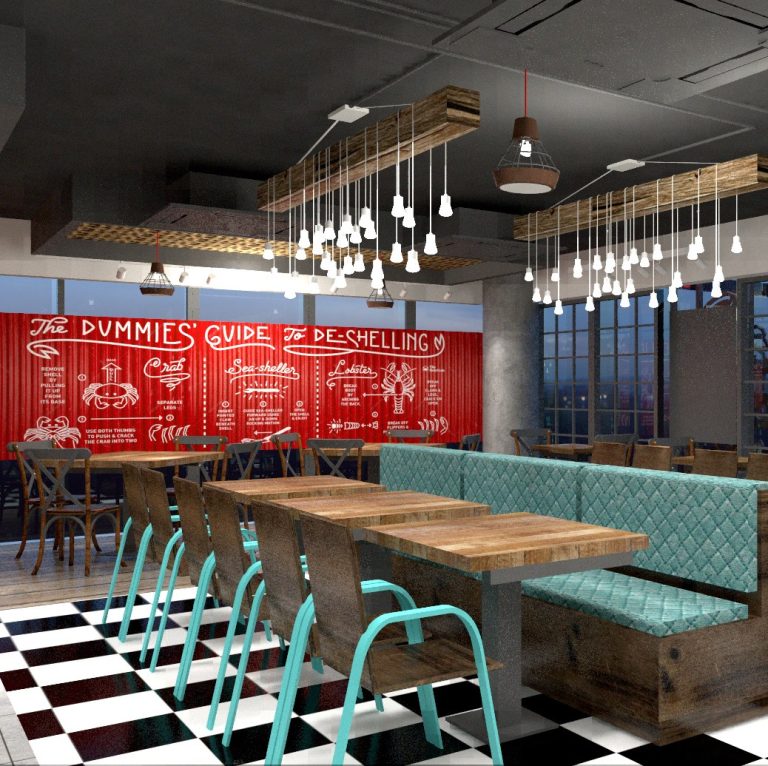
Premium Tier: BDT 1,800-2,200 Per Sq Ft (Upscale Casual, Themed Restaurants)
Typical projects: chef-driven restaurants, rooftop dining concepts, themed interiors (industrial, vintage, tropical), hotel restaurants, upscale cafés in Gulshan/Banani prime locations.
What’s included:
- Detailed design development: multiple concept iterations, full MEP drawings, custom millwork shop drawings, material mood boards
- Advanced MEP: VRV/VRF HVAC with zoning, sophisticated kitchen ventilation (make-up air integration), concealed wiring/ducting, branded electrical fixtures
- High-specification finishes: imported porcelain tiles (BDT 180-300/sq ft), solid surface counters, specialty paint (magnetic, chalkboard, metallic), real wood paneling, designer wallcoverings, acoustic panels, exposed brick or concrete with proper sealing
- Statement furniture: mix of custom-fabricated and curated pieces, solid wood tables, upholstered chairs with high-grade fabrics, designer bar stools, custom banquettes with tufting
- Sophisticated lighting design: feature pendants/chandeliers, track lighting for art, dimmers throughout, color-temperature control, decorative wall sconces
- Full RAJUK compliance: fire-rated construction where required, emergency lighting, fire suppression system integration, NOC documentation support
- AV integration: multi-zone audio, projection/display systems, concealed speaker placement
Cost example: 2,000 sq ft upscale restaurant = BDT 36-44 lakh (comprehensive design through execution)
What’s NOT included: Imported designer furniture brands, full automation systems, structural modifications, imported kitchen equipment, art/décor procurement, complex water features, outdoor landscaping.
This tier suits concepts where interior design is central to brand positioning—where customers expect refined aesthetics and are willing to pay 20-30% more per meal for the experience. Investment pays back through higher average check and social media shareability.
Luxury Tier: BDT 2,200-2,500+ Per Sq Ft (Fine Dining, Flagship Concepts, Hotel F&B)
Typical projects: fine-dining restaurants, flagship locations for international franchises, five-star hotel F&B outlets, ultra-premium rooftop concepts, wine bars with imported finishes.
What’s included:
- Comprehensive architectural services: concept design, design development, construction documentation, site supervision, post-occupancy support
- Premium MEP: fully integrated HVAC with humidity control (critical for wine storage), backup power systems, water treatment for open kitchens, commercial-grade plumbing fixtures
- Luxury finishes: imported marble/granite, designer tiles from Italy/Spain, solid wood floors with specialized moisture barriers, custom metalwork (brass, copper, stainless detailing), imported wallcoverings, specialty glass (back-painted, etched, textured)
- Curated furniture: mostly custom-fabricated or imported pieces, solid wood dining tables, fully upholstered seating, designer bar units, custom wine displays with climate control
- Architectural lighting: custom fixtures, intelligent lighting control systems, feature installations (chandeliers, art lighting), full dimming and scene programming
- Complete regulatory compliance: all RAJUK/Fire Service NOCs, accessibility provisions per BNBC, full fire suppression (sprinkler system), panic hardware on exits
- Advanced AV and automation: integrated control systems, high-end audio, video walls or projection, table-embedded charging, guest WiFi with captive portal
Cost example: 2,500 sq ft fine-dining restaurant = BDT 55-62.5+ lakh (can exceed BDT 70 lakh with imported furniture and equipment)
At this tier, design is a competitive differentiator. These projects require specialized project management to coordinate imported materials, ensure quality control on custom fabrication, and navigate regulatory approvals for premium finishes and systems.
Cost Breakdown by Restaurant Size: 500 to 3,000 Sq Ft Budget Examples
Space size significantly impacts per-square-foot costs due to fixed cost distribution. Here’s how budgets scale:
500-800 sq ft (Small café, juice bar, kiosk):
- Budget tier: BDT 5-6.5 lakh (BDT 1,000-1,300/sq ft)
- Mid-range tier: BDT 7-10 lakh (BDT 1,400-1,667/sq ft)
- Fixed costs (bathroom compliance, basic MEP, electrical panel) represent higher percentage of total
1,000-1,500 sq ft (Casual dining, bistro, specialty restaurant):
- Budget tier: BDT 10-15 lakh (BDT 1,000/sq ft average)
- Mid-range tier: BDT 18-24 lakh (BDT 1,500/sq ft average)
- Premium tier: BDT 27-36 lakh (BDT 2,000/sq ft average)
- Optimal size for cost efficiency—fixed costs well-distributed, sufficient seating for revenue
2,000-2,500 sq ft (Full-service restaurant, themed concept, rooftop venue):
- Mid-range tier: BDT 30-40 lakh (BDT 1,500/sq ft average)
- Premium tier: BDT 44-55 lakh (BDT 2,000/sq ft average)
- Luxury tier: BDT 55-70+ lakh (BDT 2,500+/sq ft average)
- Requires RAJUK NOC, fire safety compliance, sophisticated HVAC zoning
3,000+ sq ft (Large restaurant, multi-cuisine, banquet facility):
- Premium tier: BDT 60-80 lakh (BDT 2,000/sq ft average)
- Luxury tier: BDT 80 lakh-1.2 crore+ (BDT 2,500+/sq ft average)
- Economies of scale on materials offset by complexity—multiple dining zones, separate bars, private dining rooms, expanded BOH areas
These ranges assume typical restaurant proportions (60-70% front-of-house, 30-40% back-of-house including kitchen, storage, staff areas). Projects with disproportionate kitchen space cost more per sq ft due to MEP intensity.
What’s Included vs. What’s Extra: Detailed Scope Breakdown
Confusion about restaurant design budgets usually stems from unclear scope. Here’s exactly what House De Arch’s cost estimates typically include, and what’s quoted separately:
Included in per-sq-ft rates (design + execution):
- Design services: concept development, space planning, 3D visualization, construction drawings, MEP coordination drawings
- Civil work: demolition, flooring, wall finishes, false ceiling, partitions, bathroom/washroom tiling and fixtures
- Carpentry: counters, service stations, host stands, simple shelving, basic millwork
- Electrical: wiring, panel upgrades, switches/sockets, basic light fixtures, exhaust fan installation
- Plumbing: rough-in for kitchen/bar, bathroom fixtures, water heater installation
- Painting and finishes: wall preparation, primer, paint, wallpaper installation if specified
- Furniture: dining tables, chairs, bar stools, basic banquettes per design (fabrication or supply)
- Basic lighting: ambient and task fixtures per design
Typically quoted separately (client direct purchase or specialist vendors):
- Kitchen equipment: ranges, ovens, grills, fryers, refrigeration, dishwashers, prep tables—budget BDT 8-25 lakh for 40-80 seat restaurant depending on cuisine and kitchen complexity
- Signage: exterior storefront signage, internal menu boards, wayfinding—BDT 80,000-3 lakh depending on illumination, size, materials
- Crockery, cutlery, glassware: BDT 1,500-4,000 per seat depending on concept
- POS systems and hardware: BDT 1.5-4 lakh for terminals, printers, cash drawers
- Security systems: CCTV, access control—BDT 1.2-2.5 lakh for 6-12 camera setup with recording
- Initial inventory: food, beverages, cleaning supplies
- Licensing and permits: Trade License, Fire NOC, BSTI (if applicable), City Corporation—BDT 50,000-2 lakh depending on location and approvals required
- Structural modifications: if required (removing walls, adding mezzanine, waterproofing)—quoted per structural engineer assessment
- Outdoor work: facade changes, terrace waterproofing, landscaping, external lighting
Always clarify scope in writing before signing contracts. Reputable firms provide itemized quotes separating design fees, execution costs, furniture/fixtures, and exclusions. Our plans and pricing page outlines typical service structures.
Hidden Costs and Budget Contingencies: Plan for 15-20% Over Base Estimate
First-time restaurant owners consistently underestimate total investment by omitting these “invisible” costs that emerge during execution:
- Building management approvals and fees: Many commercial buildings charge approval fees (BDT 50,000-2 lakh) for renovations, require refundable deposits, or mandate using building-approved contractors. Factor in 2-3 weeks for approvals before work starts.
- Utility upgrades: Existing electrical capacity often insufficient for commercial kitchens. Upgrading from 20 kW to 40-60 kW can cost BDT 1.5-3.5 lakh including DESCO coordination and panel replacement.
- Structural surprises: Hidden plumbing, weak floor slabs requiring reinforcement, asbestos in old buildings, moisture damage behind walls—discovered once demolition begins. Reserve BDT 1.5-3 lakh contingency for 1,000+ sq ft renovations.
- Extended timelines: Delays cost money. If you’re paying rent during fit-out, every extra month costs base rent plus opportunity cost. Realistic timeline for 1,500 sq ft restaurant: 3-4 months from design to opening.
- Change orders: Client-initiated changes after design finalization (different tile, added millwork, relocated plumbing) typically cost 30-50% premium due to rework and schedule disruption.
- Soft costs: architects/designers may charge additional for RAJUK submissions (BDT 40,000-80,000), procurement management fees (8-12% on furniture/fixtures if sourcing on client behalf), site supervision (if not included in base fee).
- Pre-opening costs: staff training period (1-2 weeks salary before revenue), soft opening, initial marketing, menu photography—budget BDT 2-4 lakh.
Best practice: if base interior estimate is BDT 20 lakh, budget BDT 24-25 lakh total including equipment, contingencies, and soft costs. Under-capitalized restaurants compromise on finishes or furniture quality, which directly impacts customer perception and longevity.
RAJUK and Regulatory Compliance Costs for Restaurants in Dhaka
Unlike residential interiors, restaurants face mandatory regulatory compliance that impacts design and budget:
Trade License and NOCs: Dhaka City Corporation Trade License requires Fire Service NOC for restaurants over 1,200 sq ft or any size if serving alcohol. Fire NOC necessitates:
- Fire-rated doors on kitchen access (BDT 25,000-45,000 per door)
- Fire extinguishers (2-6 units, BDT 3,500-8,000 each depending on type)
- Emergency exit signage and lighting (BDT 15,000-30,000)
- Smoke detectors (BDT 2,500-4,500 each, typically 1 per 50 sq ft)
- Fire suppression system for kitchens over certain sizes (BDT 2.5-6 lakh for automatic systems)
RAJUK approval: Required if making structural changes, adding new openings, or modifying building systems beyond tenant improvement scope. Submission requires architectural drawings stamped by licensed architect—fees vary by project size (BDT 50,000-1.5 lakh for typical restaurant).
BNBC compliance: Bangladesh National Building Code mandates accessibility provisions (ramps, accessible washrooms) for public spaces. While enforcement is inconsistent, future-proofing for accessibility adds BDT 80,000-2 lakh depending on existing conditions.
Health and Safety: Food-serving establishments need washable, non-porous kitchen wall finishes (tiles to minimum 2.1m height), pest-proof construction, adequate ventilation (10-15 air changes/hour in kitchen), and proper drainage (BDT 1.2-2.5 lakh for compliant kitchen MEP in 200-300 sq ft kitchen).
Total regulatory/compliance costs for 1,500 sq ft restaurant: BDT 3-6 lakh depending on existing conditions and authority requirements. Never skip these—penalties and closure orders cost far more than compliance.
How to Optimize Your Restaurant Design Budget Without Compromising Quality
Smart cost management isn’t about choosing the cheapest option—it’s strategic allocation toward elements that drive customer experience and operational efficiency:
Invest disproportionately in:
- Seating comfort: Uncomfortable chairs drive short dwell times and negative reviews. Even in budget projects, allocate BDT 4,500-6,500/chair for commercial-grade seating with proper ergonomics.
- Kitchen ventilation: Under-specified exhaust creates grease buildup, odor problems, and staff discomfort. This isn’t negotiable—invest in proper CFM calculations and quality exhaust hoods (budget 15-20% of MEP costs here).
- Lighting layers: Single-source lighting (just downlights) creates flat, institutional feel. Adding pendant clusters over specific tables and wall washers costs 20% more but creates 200% better ambiance. Good lighting makes mediocre finishes look better.
- Entry sequence: The first 15 feet—facade, entry door, host area—disproportionately influence perception. Allocate higher-quality finishes here even if economizing elsewhere.
Cost-effective strategies:
- Exposed ceilings: In industrial/loft concepts, painting existing structure black (BDT 25-35/sq ft) versus full false ceiling (BDT 180-250/sq ft) saves BDT 150,000-300,000 on 1,500 sq ft while supporting design aesthetic.
- Feature walls: One statement wall (brick, wood slats, textured paint, wallpaper) creates visual interest at BDT 80,000-1.5 lakh versus treating all walls equally at higher aggregate cost.
- Mix furniture sources: Custom-fabricate signature pieces (host stand, bar unit) while using quality ready-made for standard dining chairs/tables—saves 30-40% versus all-custom while maintaining design coherence.
- Phased implementation: Open with essential elements, add refinements (art, decorative lighting, outdoor seating) after 3-6 months from operating cash flow. Requires design that doesn’t look incomplete initially.
- Local materials: Bangladesh produces excellent tiles, solid wood, metal fabrication, upholstery at 40-60% cost of imports. Reserve imports for hero pieces where origin matters to concept (Italian espresso machine visible in coffee bar, imported bar back).
Our space renovation experience shows well-designed mid-tier projects often outperform poorly designed premium projects on customer satisfaction and social media engagement.
Payment Structures and Timelines: How Restaurant Design Costs Are Managed
Understanding payment schedules helps cash flow planning:
Typical payment milestones:
- Design advance (15-25% of design fee): Upon contract signing to initiate concept development
- Design completion (remaining design fee): Upon client approval of final drawings, before execution begins
- Execution mobilization (30-40% of execution cost): Before contractors mobilize, covers material procurement
- Structural completion (25-30%): When flooring, walls, ceiling, partitions complete
- Finishing stage (20-25%): When furniture, fixtures, lighting installed
- Final handover (10-15%): After punch-list completion and client walkthrough
Sample timeline for 1,500 sq ft casual restaurant:
- Weeks 1-3: Concept design, spatial planning, initial 3D views
- Weeks 4-6: Design development, material selection, MEP coordination, final drawings
- Weeks 7-14: Execution (demolition, MEP rough-in, flooring, walls, ceiling, millwork, painting)
- Weeks 14-16: Furniture installation, lighting, finishing, equipment placement, testing
- Week 17: Punch-list, final cleaning, handover
Total: 16-18 weeks (4-4.5 months) from contract to opening-ready space. Add 2-4 weeks for RAJUK/Fire NOC if required, and 1-2 weeks for final authority inspections.
Delays most commonly occur at material procurement (imported items, custom fabrication) and authority approvals. Build buffer into business plan—opening 2 weeks late costs less than rushing with incomplete work.
Making Your Investment Work: Restaurant Design ROI Considerations
Design cost should be evaluated against expected business performance, not in isolation:
Payback period analysis: If a BDT 25 lakh interior (versus BDT 15 lakh basic option) enables 25% higher average check (BDT 500 vs BDT 400 per person) and 20% better table turns through improved layout efficiency, the incremental BDT 10 lakh investment pays back in 8-14 months on a 60-seat restaurant serving 400 customers weekly.
Design elements with measurable ROI:
- Strategic seating layout: Proper circulation and table placement can increase capacity by 10-15% without enlarging space—equivalent to BDT 2-4 lakh annual revenue on typical Dhaka casual dining.
- Instagram-worthy moments: Feature walls, signature lighting, unique design elements drive social sharing—worth thousands in organic marketing. Track how many customers photograph your space.
- Operational efficiency: Well-designed service flow (kitchen-to-table paths, service station placement, POS locations) reduces labor costs by 8-12% through faster service and fewer staff requirements.
- Durability: Commercial-grade finishes and furniture lasting 6-8 years versus residential-grade requiring replacement in 2-3 years show superior total cost of ownership despite 40-60% higher initial cost.
When to invest more:
- High-visibility locations where design drives walk-in traffic
- Competitive markets (Gulshan, Banani, Dhanmondi) where similar concepts exist
- Premium pricing models where ambiance justifies check size
- Franchise or multi-location concepts where design becomes brand asset
When to optimize budget:
- Delivery-focused models where dine-in is secondary
- Captive audiences (office building cafeterias, hospital cafés)
- Test concepts where model is unproven
- Secondary locations after flagship establishes brand
The right budget isn’t highest or lowest—it’s aligned with business model, target customer expectations, and competitive positioning. House De Arch’s consultancy service includes business-oriented design guidance, not just aesthetic recommendations.
Final Checklist: Questions to Ask Before Committing to Restaurant Design Budget
Before signing contracts, ensure you have clear answers to:
- What exactly is included in the per-sq-ft rate? Get itemized breakdown of design, execution, furniture, fixtures, exclusions.
- Who handles regulatory approvals? Are RAJUK/Fire NOC submissions included or extra? What are associated costs and timelines?
- What are payment milestones and refund policies? Understand cash flow requirements and what happens if project is canceled mid-execution.
- How are change orders priced? Get clarity on costs if you modify design during execution—typically 30-50% premium on changed elements.
- What warranties cover work and materials? Typical: 1 year on execution work, manufacturer warranty on furniture/fixtures, 6 months on painting.
- Who supervises daily execution? Is dedicated site supervisor included or are you expected to coordinate contractors?
- How are disputes/defects resolved? What’s the punch-list process, and what constitutes project completion?
- Are 3D visualizations binding or conceptual? Some firms show aspirational 3D that doesn’t match budget. Ensure renderings reflect actual specified materials and furniture.
- What contingency is recommended? Reputable firms advise 10-15% budget reserve for unforeseen conditions—be wary of those guaranteeing zero surprises.
- Can you visit completed projects? Seeing firm’s actual work (not just 3D renderings) is essential—ideally restaurant projects similar in budget tier and concept.
Transparent, experienced firms welcome these questions and provide detailed, written answers. Evasive responses or pressure to sign quickly are red flags.
FAQ
What is the average cost per square foot for restaurant interior design in Bangladesh in 2026?
Restaurant interior design in Bangladesh typically ranges from BDT 800 to BDT 2,500 per square foot in 2026, depending on concept, finishes, and complexity. Budget tier (cloud kitchens, basic QSR): BDT 800-1,200/sq ft. Mid-range tier (casual dining, cafés): BDT 1,200-1,800/sq ft. Premium tier (upscale themed restaurants): BDT 1,800-2,200/sq ft. Luxury tier (fine dining, flagship): BDT 2,200-2,500+/sq ft. These rates include design, execution, furniture, and lighting but exclude kitchen equipment, which adds BDT 8-25 lakh separately depending on cuisine and capacity.
What costs are typically NOT included in restaurant interior design quotes in Dhaka?
Standard restaurant design quotes in Dhaka exclude: kitchen equipment (ranges, refrigeration, dishwashers—BDT 8-25 lakh), signage (exterior and menu boards—BDT 80,000-3 lakh), crockery/cutlery/glassware (BDT 1,500-4,000 per seat), POS systems (BDT 1.5-4 lakh), security/CCTV (BDT 1.2-2.5 lakh), licensing fees and NOCs (BDT 50,000-2 lakh), structural modifications if needed, outdoor facade/terrace work, and initial inventory. Always request itemized quotes separating design fees, execution, furniture supply, and exclusions to avoid surprises.
How much should I budget for RAJUK compliance and fire safety for a restaurant in Dhaka?
RAJUK compliance and fire safety for restaurants in Dhaka typically costs BDT 3-6 lakh for a 1,500 sq ft space. This includes: fire-rated doors (BDT 25,000-45,000 each), fire extinguishers (BDT 3,500-8,000 each, 2-6 units needed), emergency signage and lighting (BDT 15,000-30,000), smoke detectors (BDT 2,500-4,500 each, 1 per 50 sq ft), fire suppression system for kitchen if required (BDT 2.5-6 lakh), and architectural submission fees (BDT 50,000-1.5 lakh). Restaurants over 1,200 sq ft or serving alcohol require Fire Service NOC before Trade License issuance. Compliance is mandatory, not optional.
How long does restaurant interior design and execution take in Bangladesh from start to opening?
A typical 1,500 sq ft restaurant in Dhaka takes 16-18 weeks (4-4.5 months) from contract signing to opening-ready: 3 weeks concept design, 3 weeks design development and drawings, 8 weeks execution (demolition through finishing), 2 weeks furniture/fixtures/equipment installation, 1 week punch-list and final handover. Add 2-4 weeks if RAJUK or Fire NOC submission is required, and 1-2 weeks for final authority inspections. Larger projects (2,500+ sq ft) or complex concepts (imported materials, structural work) may take 5-7 months. Build timeline buffers into your business plan—delays happen, and rushing compromises quality.
What is the most cost-effective restaurant size for interior design budget efficiency in Dhaka?
The 1,000-1,500 sq ft range offers optimal cost efficiency for restaurant interior design in Dhaka. Fixed costs (bathroom compliance, electrical panel, basic MEP, kitchen exhaust) that can cost BDT 3-5 lakh regardless of size are well-distributed across larger area, bringing per-sq-ft costs down. Spaces under 800 sq ft often cost BDT 200-400/sq ft MORE because fixed costs represent higher percentage. Spaces over 2,500 sq ft achieve material economies but add complexity (zoning, multiple dining areas, expanded BOH) that can offset savings. The 1,000-1,500 sq ft sweet spot also matches revenue capacity for most independent restaurants—sufficient seating (40-80 covers) without excessive overhead.
Should I choose a budget or premium tier for my restaurant interior design in Bangladesh?
The right tier aligns with your business model, not arbitrary budget constraints. Choose BUDGET tier (BDT 800-1,200/sq ft) for: delivery-focused concepts, captive audiences (office cafeterias), test concepts, or QSR where speed matters more than ambiance. Choose MID-RANGE tier (BDT 1,200-1,800/sq ft) for: competitive casual dining, cafés where ambiance drives dwell time, family restaurants, concepts with BDT 400-800 average check. Choose PREMIUM/LUXURY tier (BDT 1,800-2,500+/sq ft) for: fine dining, high-visibility locations where design drives walk-ins, concepts with BDT 1,000+ average check, or franchise flagships where design is brand asset. Calculate ROI: if better design enables 20-30% higher pricing or better table turns, premium investment pays back in 12-18 months.