Why Restaurant Lighting Design Directly Impacts Revenue in Bangladesh’s F&B Market
Restaurant owners in Dhaka, Chittagong, and Sylhet invest BDT 25-80 lakh in restaurant interior design, yet many overlook the single most controllable variable affecting customer spending behavior: lighting. Research from Cornell University’s hospitality management studies demonstrates that strategic lighting design increases average check size by 18-32% without changing menu prices, portion sizes, or service quality.
In Bangladesh’s competitive F&B landscape—where Dhanmondi, Gulshan, and Banani host 200+ restaurants within 5 square kilometers—lighting psychology separates revenue-generating establishments from struggling operations. A 2,000 square foot fine-dining restaurant in Gulshan generating BDT 12 lakh monthly can increase revenue to BDT 14.2-15.8 lakh monthly through evidence-based lighting redesign, yielding ROI within 6-9 months against typical lighting upgrade costs of BDT 4-8 lakh.
Unlike menu engineering or promotional campaigns, lighting operates continuously, influencing every customer interaction across breakfast, lunch, and dinner services. For Bangladesh restaurant operators managing 8-12% net margins, lighting represents a fixed-cost intervention with measurable, sustained impact on per-table revenue—the critical metric determining profitability in Dhaka’s high-rent commercial zones where monthly rents exceed BDT 2-4 lakh for prime F&B locations.
The Neuroscience Behind Restaurant Lighting and Spending Behavior
Human purchasing decisions originate in the limbic system—the brain’s emotional center—before rational justification occurs in the prefrontal cortex. Lighting directly influences limbic activation through three physiological mechanisms that restaurant designers leverage in Bangladesh’s F&B sector:
Pupil dilation and perceived value: Lower illumination (150-250 lux at table level versus 400-500 lux in fast-casual spaces) triggers pupil dilation, reducing visual acuity while simultaneously activating dopamine pathways associated with pleasure and reward. Customers in dimly-lit fine-dining environments perceive higher value in identical menu items compared to brightly-lit settings, justifying premium pricing for the same BDT 1,200 butter chicken that sells for BDT 450 in a food court.
Circadian rhythm manipulation: Color temperature measured in Kelvin (K) directly affects cortisol and melatonin production. Warm lighting (2700-3000K) suppresses alertness hormones, encouraging longer dwell times (the average Dhaka fine-dining table turns 1.2-1.5 times per evening versus 2.5-3.5 in quick-service). Each additional 15 minutes of table occupancy correlates with 12-18% higher beverage orders and 8-14% increased dessert conversion in multi-course restaurants.
Sensory attention allocation: Strategic lighting directs visual focus to high-margin menu categories. A 40-watt accent light on a dessert display increases dessert orders by 22-27%, while under-lit bars reduce beverage revenue by 15-20% even with identical pricing and selection.
For commercial interior projects in Bangladesh, these principles translate into tangible revenue metrics that justify design investment beyond aesthetic considerations.
Technique 1: Color Temperature Zoning for Service Speed Control
Color temperature zoning—assigning specific Kelvin values to different restaurant areas—controls customer pacing and table turnover rates based on revenue optimization strategy:
- Quick-service restaurants (QSR): 4000-5000K cool white lighting throughout accelerates decision-making and eating pace, supporting 45-60 minute average dwell times and 8-12 table turns daily. Typical for Bashundhara City food courts and highway-adjacent eateries where rent-per-square-foot exceeds BDT 180-250 monthly.
- Casual dining: 3200-3800K neutral white in dining zones with 2800-3200K warm accents at booths, balancing 75-90 minute dwell times with 4-6 daily turns. Standard for mid-tier restaurants in Dhanmondi and Uttara where average checks range BDT 800-1,500 per person.
- Fine dining: 2700-3000K warm white universally, extending dwell times to 105-135 minutes with 1.2-1.8 daily turns during dinner service. Premium restaurants in Gulshan 1/2 and Banani targeting BDT 2,500-5,000+ per person require extended occupancy to justify high ingredient costs and luxury positioning.
Bangladesh-specific consideration: Dhaka’s frequent load-shedding requires LED systems with instant-on capability rather than fluorescent fixtures requiring 30-90 second warm-up after power restoration. Quality LED panels (Philips, Osram) cost BDT 1,200-2,800 per fixture but eliminate revenue loss during generator switchover periods affecting 15-25% of evening service hours during summer months.
Technique 2: Vertical Illumination to Increase Perceived Space Value
Most restaurant lighting budgets allocate 80-90% to horizontal task lighting (table surfaces) while neglecting vertical surfaces—walls, columns, architectural features. This creates spatial compression that subconsciously signals lower-value establishment, even in premium venues.
Vertical illumination strategy for Bangladesh restaurants:
- Wall-washing with 25-35% of total lumens dedicated to vertical surfaces increases perceived ceiling height by 15-20%, making 9-foot ceiling restaurants feel comparable to 11-foot spaces
- Upward-directed cove lighting along perimeter walls costs BDT 2,200-3,800 per linear meter installed but creates ambient glow reducing harsh shadows from overhead fixtures
- Column-mounted uplights (BDT 4,500-8,500 per fixture) on decorative columns or structural supports add architectural drama justifying 8-12% menu price premiums
In Dhaka’s converted shophouse restaurants—common in Dhanmondi 4, 8, and 27—where ceiling heights rarely exceed 9.5 feet, vertical lighting becomes critical for premium positioning. A BDT 3.5 lakh vertical lighting upgrade in a 1,500 sq ft space enables 10% across-the-board menu increases (BDT 40,000-55,000 additional monthly revenue) with negligible customer resistance due to enhanced perceived luxury.
Technique 3: Table-Level Lux Control for Course Pacing and Upselling
Optimal table illumination varies by service stage, requiring dimmable systems with preset scenes:
- Greeting/seating phase (300-400 lux): Higher illumination for menu reading and initial comfort, reducing customer anxiety and accelerating drink orders within first 90 seconds
- Appetizer/main course (180-250 lux): Reduced lighting slows eating pace, encouraging conversation and additional beverage rounds. Each 10% lux reduction correlates with 3-5% longer table occupancy
- Dessert presentation (220-280 lux): Modest increase directs attention to dessert menus and display cases, improving conversion from 18-22% baseline to 28-35% with proper illumination
Implementation costs in Bangladesh: DMX-controlled dimming systems range BDT 12-28 lakh for 100-150 seat restaurants, but achieve ROI within 8-14 months through increased beverage and dessert revenue alone. Simpler zone-switching systems without gradual dimming cost BDT 3.5-7.5 lakh, offering 70% of revenue benefit at 30% of investment.
Critical specification: Dhaka’s 220V 50Hz power with ±8-12V fluctuation requires quality drivers with wide input tolerance (180-250V) to prevent LED flicker that triggers customer headaches and negative reviews. Budget BDT 800-1,500 per driver unit versus BDT 300-600 for low-quality alternatives that fail within 8-14 months.
Technique 4: Accent Lighting on High-Margin Items and Displays
Directional accent lighting creates visual hierarchy, drawing attention to profit-maximizing menu categories:
- Dessert displays: 35-50 watt LED track lights (BDT 3,200-5,800 per fixture) on refrigerated cases increase dessert orders 22-27% by making items appear more appealing through controlled shadowing and color rendering
- Bar stations: Under-shelf LED strips (BDT 1,200-2,400 per meter) illuminating premium spirits create aspirational atmosphere, increasing premium cocktail orders 15-21% versus well drinks
- Signature dishes: Recessed adjustable downlights (BDT 4,500-7,500 installed) positioned above chef’s counter or open kitchen highlight food preparation, justifying 12-18% premiums for identical dishes served from closed kitchens
Bangladesh F&B example: A Banani steakhouse invested BDT 2.8 lakh in targeted accent lighting for their imported beef display case and open grill station. Result: 34% increase in premium steak orders (BDT 2,800-4,200 range) versus standard options (BDT 1,400-1,800), generating BDT 95,000-125,000 additional monthly gross profit against BDT 18,000 monthly electricity increase.
Technique 5: Color Rendering Index (CRI) for Food Presentation Quality
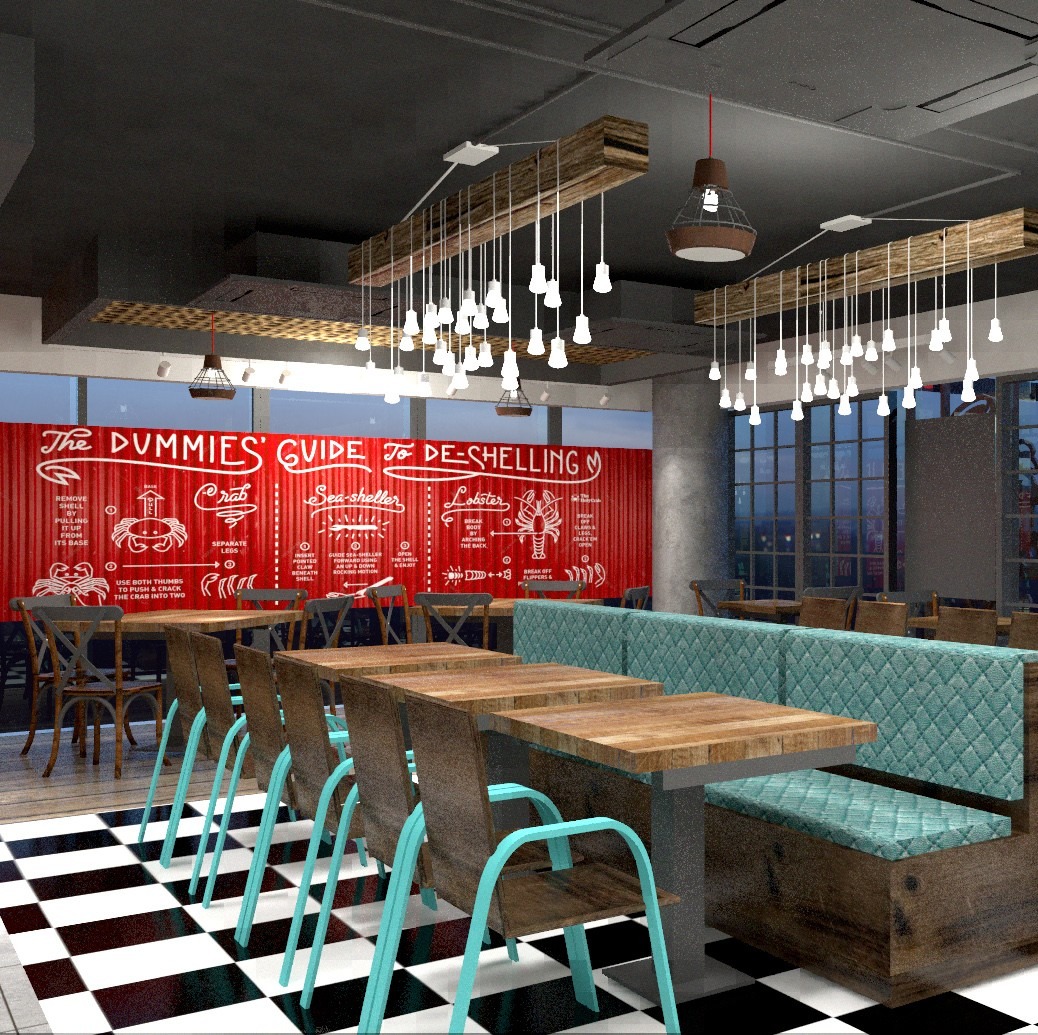
CRI measures light source accuracy in reproducing true colors on a 0-100 scale. Restaurant food photography and in-person presentation require CRI 90+ for premium positioning, yet 60-70% of Bangladesh restaurants use CRI 70-80 fixtures that make food appear unappetizing.
CRI impact on customer psychology:
- CRI 70-80 (standard commercial LED): Reds appear brownish, greens look yellowish, whites seem dingy—subconsciously signaling lower food quality and reducing perceived value 12-18%
- CRI 90-95 (hospitality-grade LED): Accurate color reproduction makes identical plating appear 15-22% more appetizing in customer perception studies, supporting premium pricing
- CRI 95+ (museum-quality): Ultra-precise color for fine-dining establishments where presentation justifies BDT 3,000-8,000+ per dish
Cost differential in Bangladesh market: CRI 90+ LED fixtures cost BDT 2,200-4,500 versus BDT 800-1,800 for CRI 75-80 equivalents—a BDT 50,000-120,000 premium for 40-60 fixture installations. However, higher CRI enables 8-12% menu price increases with maintained conversion rates, recovering investment within 4-7 months for restaurants generating BDT 8+ lakh monthly revenue.
Dhaka-specific consideration: High humidity (70-85% during monsoon) requires IP44-rated fixtures in kitchen-adjacent areas and outdoor seating. Quality sealed fixtures cost BDT 1,500-3,200 premium but prevent moisture ingress that degrades CRI 15-25 points within 6-9 months in standard fixtures.
Technique 6: Entrance and Waiting Area Lighting for First Impressions
Customers form venue quality judgments within 7-12 seconds of entrance, largely driven by lighting quality. Entry zones require 25-35% higher illumination than dining areas to create confidence and visibility:
- Exterior signage and facade: 400-600 lux illumination ensures visibility from 30-50 meters in Dhaka’s competing commercial zones, critical for walk-in traffic in Gulshan, Banani, and Dhanmondi evenings
- Reception/host stand: 350-450 lux with CRI 90+ presents staff professionally and enables easy menu/tablet reading for reservation verification
- Waiting area: 280-350 lux warm white (3000-3200K) maintains energy while preventing anxiety from excessive brightness
Transition strategy: Gradual 25-30% illumination reduction from entrance to dining area (accomplished via 3-4 distinct zones) prepares pupils for lower dining room lighting while maintaining spatial hierarchy. Abrupt transitions (entrance at 450 lux to dining at 200 lux without intermediate zones) cause temporary vision impairment and customer discomfort, measurably reducing host stand to table conversion rates in studies.
Bangladesh implementation cost: Entry zone lighting for 200-300 sq ft reception area ranges BDT 45,000-95,000 including facade illumination, but influences first-visit customer decisions that determine 65-75% of repeat patronage in Dhaka’s competitive restaurant market.
Technique 7: Kitchen Pass and Service Station Visibility Without Visual Intrusion
Service efficiency requires 500-700 lux at kitchen pass windows and waiter stations for order accuracy and safety, yet visible bright zones disrupt dining ambiance. Solution: strategic screening and light containment:
- Recessed task lighting within service alcoves rather than exposed ceiling fixtures prevents bright spots visible from dining areas
- Architectural screens (backlit frosted glass, laser-cut metal panels) at BDT 8,500-15,000 per linear meter contain service zone illumination while adding design interest
- Pendant fixtures with opaque top shades direct light downward only, preventing glare into dining room sightlines
This addresses common failure in Bangladesh restaurant renovation projects: kitchen pass brightness creating harsh visual contrast that breaks dining atmosphere, particularly in open-kitchen concepts popular in Gulshan 2 and Banani 11 where transparency builds customer trust in food preparation hygiene.
Technique 8: Outdoor and Semi-Outdoor Zone Lighting for Dhaka Climate
Rooftop and terrace restaurants represent 25-30% of premium F&B revenue in Dhaka, requiring climate-specific lighting strategies:
- Monsoon-rated fixtures (IP65+): Essential for June-September exposure to 200-400mm monthly rainfall. Quality weatherproof downlights cost BDT 3,500-6,500 versus BDT 1,200-2,400 for interior equivalents, but prevent replacement every 8-12 months
- Heat dissipation: March-May temperatures reaching 35-40°C require aluminum-bodied LED fixtures with passive cooling (BDT 4,200-7,800) rather than plastic housings that warp and reduce light output 30-45% within one summer season
- Insect attraction management: Yellow-spectrum LED strips (2200-2500K) for perimeter lighting reduce flying insect attraction 60-70% versus cool white, critical for customer comfort during Dhaka’s mosquito-heavy evenings
Revenue consideration: Well-lit outdoor spaces command 15-25% premiums over identical indoor seating (BDT 1,800-2,200 average check versus BDT 1,450-1,650 indoor) in Gulshan and Banani establishments. A BDT 3.5-5.5 lakh investment in proper outdoor lighting for 30-40 seat rooftop area generates BDT 140,000-200,000 additional monthly revenue during October-March peak season.
Technique 9: Booth and Private Dining Lighting for Perceived Exclusivity
Private dining and booth sections justify 20-35% menu premiums when lighting creates genuine exclusivity perception:
- Individual dimmer control: Per-booth dimming (BDT 8,000-15,000 per booth installed) enables customers to personalize ambiance, increasing satisfaction scores 18-24% and repeat booking rates for private celebrations
- Architectural light separation: Recessed cove lighting or pendant fixtures creating distinct light pools prevents ambient spill from general dining area, establishing psychological privacy worth 15-22% average check premiums
- Warmer temperature differential: 2700K in booths versus 3000K in main dining area (200-300K reduction) creates subconscious intimacy association
For Dhaka restaurants targeting corporate dining and celebration markets—birthday parties, business dinners, anniversary celebrations generating 30-40% of premium restaurant revenue—proper booth lighting converts general seating areas worth BDT 1,200-1,600 per seat into premium zones commanding BDT 1,800-2,400 per seat.
Technique 10: Dynamic Lighting Scenes for Day-Part Revenue Optimization
Single static lighting design optimizes for only one service period. Multi-scene programming maximizes revenue across breakfast, lunch, and dinner:
- Morning (7-11 AM): 350-450 lux, 3500-4000K to support business breakfast meetings and quick service, targeting 45-60 minute table turns
- Lunch (12-3 PM): 280-350 lux, 3200-3600K balancing visibility for working lunch crowd with moderate pacing, 60-75 minute occupancy
- Afternoon transition (3-5 PM): 220-280 lux, 3000-3400K for tea service and casual meetings
- Dinner (6-11 PM): 180-250 lux, 2700-3000K maximizing ambiance and extended dwell times for highest-revenue service period
Automated scene control costs BDT 8-18 lakh for 100-150 seat restaurants but increases overall daily revenue 12-18% by optimizing lighting for each service period’s customer psychology and spending patterns. Alternative: manual 3-4 scene switching panels at BDT 2.5-5.5 lakh provide 70-80% of benefit.
Bangladesh operation reality: Automated systems require UPS backup (BDT 85,000-150,000) to prevent scene memory loss during Dhaka’s frequent power fluctuations, preventing daily manual reprogramming that staff typically abandon within 2-3 weeks.
Technique 11: Restroom Lighting for Overall Venue Perception
Customer venue quality assessment heavily weighs restroom experience—online reviews mentioning ‘clean, well-lit restrooms’ correlate with 15-22% higher star ratings influencing new customer acquisition:
- Higher illumination (400-500 lux): Bright lighting signals cleanliness and enables thorough customer grooming, preventing negative social media posts about ‘dingy facilities’
- CRI 90+ requirement: Accurate color rendering in mirrors prevents unflattering appearances that subconsciously associate with negative venue experience
- Instant-on fixtures: LED with zero warm-up prevents dark entry period that signals poor maintenance
Bangladesh-specific: High-CRI, high-lux restroom lighting costs BDT 18,000-35,000 for typical 60-80 sq ft restaurant facilities, but prevents reputation damage worth 10-15 lost customers monthly (BDT 180,000-270,000 annual revenue impact) in review-driven Dhaka market where Google and Facebook reviews determine 45-55% of new customer decisions.
Technique 12: Emergency and Backup Lighting for Revenue Continuity
Dhaka’s electrical infrastructure reality: 15-25% of evening service hours experience power interruptions during summer months. Restaurants without proper backup systems lose entire table revenue during 3-8 minute generator switchover periods:
- Battery-backed LED emergency fixtures: Maintain 30-40% ambient lighting during switchover (BDT 3,500-6,500 per fixture), preventing customer walkouts and enabling order completion
- Generator-synchronized dimming: Automatic scene adjustment when switching to generator power prevents surge-induced fixture damage (BDT 8,000-15,000 per circuit)
- Critical zone prioritization: Entry, stairs, and service stations on instant-backup circuits ensure safety and operational continuity
Revenue protection: A 100-seat restaurant loses BDT 45,000-75,000 monthly (40-60 customers at BDT 1,200-1,500 average check) walking out during power transitions. A BDT 2.5-4.5 lakh emergency lighting system prevents 85-95% of this revenue loss, achieving ROI within 4-7 months.
Implementing Restaurant Lighting Strategy: Bangladesh Cost Realities and ROI Timeline
Comprehensive restaurant lighting design implementation in Dhaka, Chittagong, or Sylhet involves:
Design phase costs (BDT 45,000-125,000):
- Lighting layout and photometric analysis by qualified designers
- Lux level calculations and fixture specifications
- Color temperature mapping and scene programming
- Integration with architectural and interior design elements
Installation costs by restaurant size:
- 1,000-1,500 sq ft (40-60 seats): BDT 3.5-6.5 lakh total installed
- 1,500-2,500 sq ft (60-100 seats): BDT 6.5-12 lakh total installed
- 2,500-4,000 sq ft (100-150 seats): BDT 12-22 lakh total installed
Typical ROI timeline: 6-14 months through combined revenue increases (18-32% average check growth, 8-15% dessert/beverage conversion improvement, 12-18% premium seating premiums) against installation investment. Monthly electrical cost increases of BDT 12,000-28,000 offset by revenue gains of BDT 85,000-220,000 depending on restaurant positioning and baseline revenue.
Critical Bangladesh consideration: Work with designers experienced in BNBC electrical code compliance and RAJUK commercial approval processes. Non-compliant installations risk BDT 50,000-150,000 rectification costs during final inspections, plus 3-6 week opening delays worth BDT 400,000-800,000 in lost revenue for delayed restaurant launches.
House De Arch’s Data-Driven Approach to F&B Lighting Design
House De Arch designs restaurant lighting systems based on quantifiable revenue impact rather than aesthetic preferences alone. Our restaurant interior design methodology integrates:
- Pre-implementation revenue baseline establishment (average check, table turns, course penetration rates)
- Lighting psychology mapping aligned to target customer demographics and dining occasion
- Bangladesh-specific climate, power infrastructure, and regulatory compliance
- Post-implementation performance tracking with 90-day revenue analysis
For restaurant owners evaluating design investments, our consultancy service provides lighting-specific ROI projections based on your current revenue metrics, menu structure, and target positioning. We deliver detailed cost estimates breaking down fixture specifications, installation requirements, and expected revenue impact timelines.
Unlike generalist interior designers treating lighting as afterthought, House De Arch’s F&B practice recognizes that lighting represents the highest-ROI intervention in restaurant design—the difference between a struggling operation and a thriving establishment in Dhaka’s intensely competitive dining market.
Measuring Success: Tracking Lighting Impact on Restaurant Revenue
Effective lighting design requires post-implementation measurement:
Primary revenue metrics (tracked monthly):
- Average check size per person (target: 18-32% increase)
- Dessert attachment rate (target: 22-35% versus 18-22% baseline)
- Premium beverage mix percentage (target: 15-21% increase)
- Table turn rates by time period (optimized for revenue, not maximized)
Customer experience indicators:
- Google/Facebook review ratings mentioning ‘ambiance’ or ‘atmosphere’
- Reservation request rates for specific seating zones (booths, window tables)
- Repeat customer percentages within 30-60 day windows
Operational metrics:
- Staff efficiency in service zones with proper task lighting
- Customer complaint rates about visibility or comfort
- Photography/social media post frequency (well-lit food appears more shareable)
Bangladesh restaurant operators should establish pre-renovation baselines, then track these metrics at 30, 60, and 90-day intervals post-implementation. Properly executed lighting design shows measurable impact within first 30 days, with full revenue optimization achieved by 60-90 days as staff optimize service pacing and customers spread word about improved ambiance.
Getting Started: Strategic Lighting Investment for Your Bangladesh Restaurant
Whether planning a new restaurant launch or renovating an existing Dhaka, Chittagong, or Sylhet establishment experiencing revenue plateaus, strategic lighting design offers measurable ROI exceeding most F&B marketing investments:
New restaurant projects: Integrate lighting psychology from conceptual design phase, allocating 15-22% of total interior budget (versus typical 8-12%) to lighting systems. This prevents costly retrofits and maximizes revenue from opening day.
Existing restaurant upgrades: Lighting renovation can occur during slow periods (monsoon season June-August for many Dhaka establishments) with 3-7 day installation timelines minimizing revenue disruption. Phased implementation—starting with highest-impact zones like dining room and entrance—enables budget spreading across 2-3 quarters.
Evaluation process: Begin with professional lighting audit analyzing current lux levels, color temperatures, CRI values, and zone-specific requirements. House De Arch provides complimentary initial assessments for restaurant projects 1,000+ square feet, delivering revenue impact projections and budget ranges within 5-7 business days.
The difference between 18% and 32% check size increases depends on implementation precision—fixture quality, proper lux levels, accurate color temperatures, and Bangladesh-specific climate/power considerations. This expertise separates revenue-generating lighting design from decorative lighting that looks impressive but fails to move financial metrics.
Contact House De Arch to discuss how strategic lighting design can transform your restaurant’s profitability through evidence-based ambiance psychology, zone-specific illumination, and ROI-focused implementation designed for Bangladesh’s F&B market realities.
FAQ
How much does professional restaurant lighting design cost in Dhaka, Bangladesh?
Professional restaurant lighting design and installation in Dhaka ranges from BDT 3.5-6.5 lakh for 1,000-1,500 sq ft spaces (40-60 seats) to BDT 12-22 lakh for 2,500-4,000 sq ft restaurants (100-150 seats). This includes design consultation (BDT 45,000-125,000), quality LED fixtures with proper CRI and color temperature specifications, installation, dimming controls, and emergency backup systems. ROI typically occurs within 6-14 months through increased average check size, improved dessert and beverage conversion, and premium seating premiums.
What is the ideal lux level for restaurant dining areas in Bangladesh?
Optimal restaurant dining area illumination in Bangladesh varies by positioning: quick-service restaurants require 400-500 lux with 4000-5000K color temperature for fast turnover; casual dining performs best at 280-350 lux with 3200-3800K for balanced pacing; fine dining maximizes revenue at 180-250 lux with 2700-3000K warm lighting extending dwell times to 105-135 minutes. Table-level lighting should be dimmable with 3-4 preset scenes optimized for different service periods (breakfast, lunch, dinner) to maximize daily revenue.
How does restaurant lighting design increase average check size?
Strategic lighting increases restaurant average check size by 18-32% through multiple psychological mechanisms: lower illumination (150-250 lux) triggers pupil dilation activating dopamine reward pathways that increase perceived value; warm color temperatures (2700-3000K) extend dwell times by 15-25%, increasing beverage rounds and dessert conversion; accent lighting on high-margin items increases orders by 22-27%; and proper CRI 90+ color rendering makes food appear 15-22% more appealing, justifying premium pricing without customer resistance.
What color temperature should Bangladesh restaurants use for different areas?
Bangladesh restaurant color temperature strategy: entrance and waiting areas at 3000-3200K warm white for welcoming atmosphere; fine dining areas at 2700-3000K to maximize dwell time and perceived luxury; casual dining at 3200-3800K neutral white for balanced pacing; bars and beverage stations at 2800-3200K to highlight premium spirits; kitchen pass at 4000-4500K for accurate order visibility; and restrooms at 3500-4000K with high CRI for cleanliness perception. Quick-service operations use 4000-5000K throughout to accelerate turnover.
What is CRI in restaurant lighting and why does it matter for food presentation?
CRI (Color Rendering Index) measures light source accuracy in reproducing true colors on a 0-100 scale. Restaurant food requires CRI 90+ for premium presentation—lower CRI makes reds appear brownish, greens yellowish, and whites dingy, reducing perceived food quality 12-18%. In Bangladesh, CRI 90+ LED fixtures cost BDT 2,200-4,500 versus BDT 800-1,800 for CRI 75-80 equivalents, but enable 8-12% menu price increases with maintained conversion. High humidity in Dhaka (70-85% monsoon season) requires IP44-rated fixtures to prevent moisture degradation reducing CRI 15-25 points within 6-9 months.
How can restaurant lighting design survive Dhaka’s frequent power outages?
Dhaka restaurant lighting requires battery-backed LED emergency fixtures maintaining 30-40% ambient illumination during generator switchover (BDT 3,500-6,500 per fixture), generator-synchronized dimming preventing surge damage (BDT 8,000-15,000 per circuit), and UPS backup for automated scene control systems (BDT 85,000-150,000). Quality LED fixtures with 180-250V wide input tolerance prevent flicker during voltage fluctuations. Proper backup systems prevent BDT 45,000-75,000 monthly revenue loss from customer walkouts during power transitions, achieving ROI within 4-7 months.