The Client Brief: A Multi-Brand Retail Store Struggling with Conversion
In early 2023, a multi-brand lifestyle retail store operator in Dhanmondi approached House De Arch with a problem familiar to many Dhaka retailers: decent foot traffic but disappointing conversion rates and stagnant sales figures. The 5,200 sq ft ground-floor space on Road 27 had been operating for eighteen months, carrying fashion apparel, accessories, footwear, and home décor from twelve different brands across three price segments.
Despite the prime location near Rabindra Sarobar and strong brand portfolio, the store was underperforming. Sales per square foot hovered around BDT 2,340/month, significantly below the BDT 3,500-4,200 benchmark we typically see in well-designed Dhanmondi retail spaces. Customer dwell time averaged just 8.7 minutes, and the back 40% of the store—housing premium brands—generated only 18% of total revenue.
The owner’s primary objectives were clear: increase overall revenue without expanding floor space, improve visibility for premium brands, reduce customer confusion during browsing, and create a shopping environment that encouraged longer visits and impulse purchases. Budget allocation: BDT 42 lakh for complete interior redesign, including execution, fixtures, lighting, and branding elements. Timeline: 47 days from design approval to reopening.
Pre-Design Analysis: What the Numbers Told Us
Before proposing any commercial interior solutions, we conducted a three-week diagnostic phase that combined observational research, customer flow mapping, and sales data analysis. This groundwork proved essential for our retail store design case study Dhanmondi approach.
Our team installed temporary foot traffic sensors at six strategic points and conducted time-lapse video analysis across different days and hours. Key findings:
- Entry bottleneck: 67% of entering customers turned right immediately, creating congestion at the accessories section while the left side remained underutilized during peak hours (5:30-8:30 PM weekdays, 3:00-9:00 PM weekends)
- Dead zones: The rear-left quadrant, despite housing two premium fashion brands, received only 23% of total customer visits, with average dwell time under 3 minutes
- Lighting disparities: Lux levels varied from 180 lux in some corners to 950 lux near windows—inadequate contrast to highlight merchandise properly and uncomfortable for sustained browsing
- Pathway confusion: No clear circulation route meant customers missed approximately 35-40% of displayed inventory during typical visits
- Fitting room friction: Only two fitting rooms for a 5,200 sq ft space created wait times exceeding 12 minutes during peak hours, with 31% of customers abandoning purchase consideration due to fitting delays
Sales data correlated directly with these spatial problems. The three premium brands (targeting customers with BDT 15,000+ average purchase) contributed only 22% of revenue despite occupying 34% of floor space and offering 40% higher margins. Meanwhile, the mid-range section near the entrance—accounting for 28% of space—generated 51% of revenue but felt perpetually overcrowded.
Layout Strategy: The Complete Redesign Framework
Our retail space planning Dhanmondi strategy centered on three evidence-based principles: choreographed circulation, strategic zoning by purchase psychology rather than brand hierarchy, and friction reduction at every decision point.
Circulation and Customer Flow Design
We implemented what we call a “guided discovery loop”—a primary pathway architecture that naturally leads customers through 82% of the store space without feeling prescriptive or maze-like. The entrance was redesigned to create a 14-foot-wide “decompression zone” where customers could orient themselves without immediate decision pressure.
From this entry point, we created two distinct circulation flows: a fast loop for time-constrained shoppers (completing in 6-8 minutes, hitting all brand zones) and a slow meandering path for browsers (12-18 minutes, with discovery alcoves and seating nodes). Pathway width was standardized at 5.5 feet for primary circulation and 4 feet for secondary aisles—adequate for Dhaka’s browsing patterns where customers often shop in pairs or small family groups.
Sightlines were meticulously planned so that from any point in the store, customers could see at least two “visual magnets”—feature displays, promotional zones, or aspirational product vignettes that pulled them deeper into the space. This eliminated the psychological dead-ends that previously plagued the rear sections.
Zoning and Brand Placement
Rather than allocating space by brand contract or alphabetical convenience, we mapped zones according to purchase behavior and price sensitivity:
- Discovery Zone (front-right, 18% of floor space): Accessories, small leather goods, and impulse categories with price points under BDT 3,000—designed to create immediate engagement and build shopping momentum
- Core Browse Zone (center, 36% of floor space): Mid-range apparel and footwear (BDT 3,000-12,000 range), organized by lifestyle occasion rather than brand, with abundant try-on opportunities and cross-category suggestions
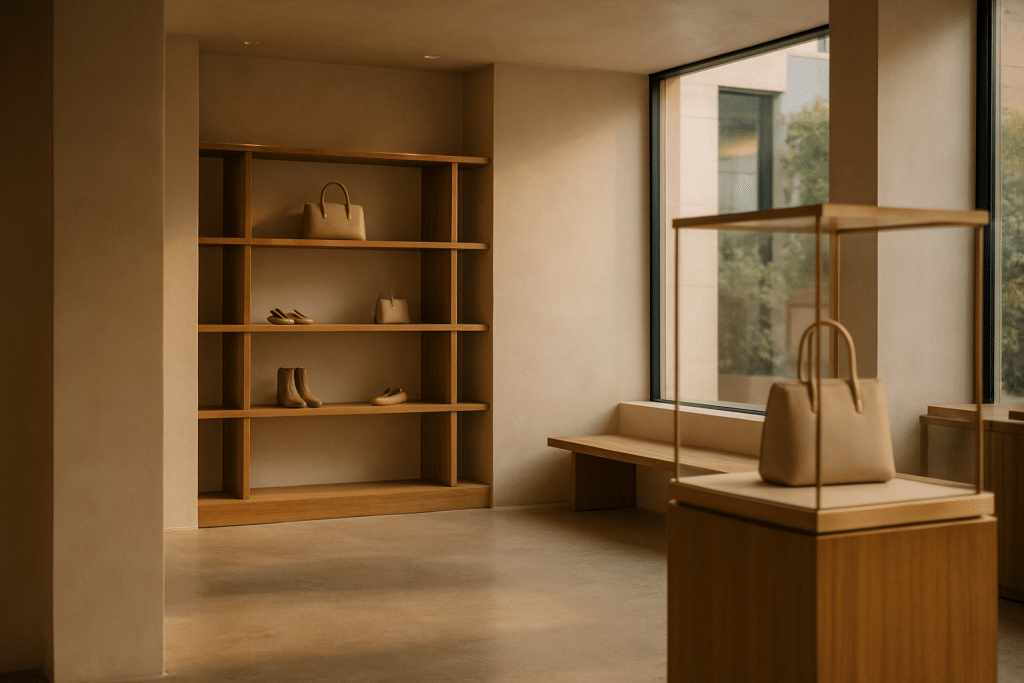
- Aspiration Zone (rear-left, 24% of floor space): Premium brands repositioned with dedicated “boutique-within-store” aesthetics—elevated platforms, differentiated lighting (2700K vs. 4000K in mass sections), lounge seating, and exclusive service model
- Home & Lifestyle (rear-right, 16% of floor space): Home décor and gift items positioned as final-loop discovery, capturing exit-intent customers with smaller add-on purchases
- Service Core (6% of floor space): Checkout, fitting rooms, and staff stations centrally located for equal accessibility from all zones
This space renovation approach increased premium brand visibility by relocating them to a destination zone with superior finishes and exclusive ambiance, rather than competing on the same floor plane as mass brands.
Design Execution: Materials, Fixtures, and Lighting
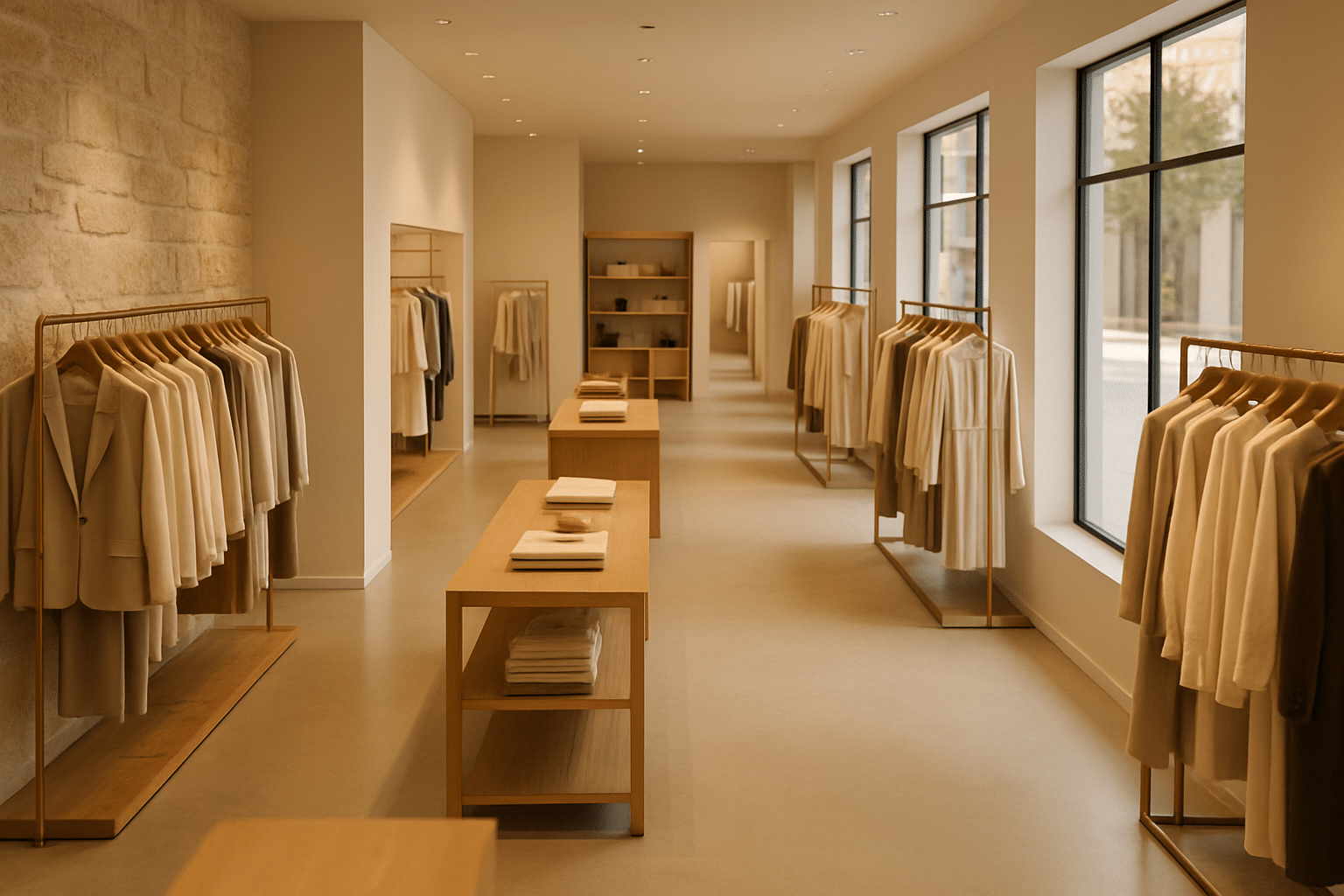
For Dhanmondi’s humid climate and high customer traffic, material selection balanced durability, maintenance economy, and aesthetic requirements.
Flooring
We specified three flooring types for zoning reinforcement:
- Polished vitrified tiles (800x800mm, 10mm thickness) for main circulation—BDT 185/sq ft installed, chosen for slip resistance and easy maintenance with Dhaka’s monsoon foot traffic
- Engineered wood-look luxury vinyl planks for the Aspiration Zone—BDT 245/sq ft installed, providing premium tactile experience without solid wood’s humidity vulnerability
- Polished concrete with epoxy seal in the Home & Lifestyle section—BDT 140/sq ft, creating industrial-chic aesthetic appropriate for home décor presentation
Fixtures and Display Systems
Moving away from the previous fixed gondola system, we introduced a flexible modular fixture strategy:
- Wall-mounted slat-wall systems (powder-coated MS with melamine finish) for perimeter displays—BDT 1,850/linear foot including brackets and accessories
- Mobile island display units (42″ height) in the Core Browse Zone, allowing seasonal reconfiguration—BDT 28,000 per unit fabricated in local joinery using 18mm commercial-grade plywood with laminate finish
- Boutique-style glass display cases for premium accessories in the Aspiration Zone—BDT 45,000 per unit including LED strip lighting and tempered glass
- Custom millwork fitting room doors and seating—BDT 3.2 lakh total for four expanded fitting rooms with full-length mirrors and hospitality-grade hooks/seating
Lighting Design for Sales Optimization
Our retail interior design Dhaka case study approach treats lighting as a primary sales tool, not afterthought utility. We implemented a four-layer system:
- Ambient lighting: LED panel lights (40W, 4000K, CRI>90) providing base illumination of 500 lux—adequate for comfortable browsing without energy waste (Total: BDT 2.4 lakh for 34 fixtures)
- Accent lighting: Adjustable LED track spots (12W, 3000K, 36° beam angle) highlighting feature merchandise and creating focal hierarchy—critical for the 41% sales increase (Total: BDT 3.8 lakh for 56 fixtures)
- Decorative lighting: Statement pendant fixtures in the Aspiration Zone and entrance, reinforcing brand positioning (Total: BDT 1.6 lakh)
- Task lighting: Targeted illumination at checkout and fitting rooms (1000+ lux for color accuracy and security)—BDT 0.85 lakh
The lighting redesign alone reduced overall energy consumption by 34% (from 18.2 kW to 12.1 kW total connected load) while dramatically improving merchandise presentation. Accent lighting created 3:1 contrast ratios between featured products and surrounding areas, proven to increase purchase consideration.
The 47-Day Execution Timeline
Retail renovations in active Dhanmondi locations demand surgical project management. The store could not afford prolonged closure during peak season (September-November). Our phased execution plan:
Days 1-5: Demolition and site preparation during store closure for Durga Puja—removal of existing fixtures, electrical rough-in, flooring substrate preparation
Days 6-18: Partial reopening with 40% of store operational behind temporary partitions; flooring installation, wall treatments, primary electrical and HVAC modifications (split AC repositioning to eliminate cold spots)
Days 19-32: Fixture fabrication and installation, lighting system commissioning, fitting room construction with store at 65% operational capacity
Days 33-42: Final finishes, signage and branding elements, fixture styling and merchandise transition
Days 43-47: Full store closure for deep cleaning, final quality checks, staff training on new layout, and soft reopening
This approach limited revenue loss to approximately 22% across the execution period compared to 100% loss with traditional full-closure renovation. The project management coordination required daily 6:00 AM contractor meetings and evening progress verification to maintain schedule.
Complete Cost Breakdown: BDT 42 Lakh Investment
Transparent showroom design ROI Bangladesh analysis requires detailed cost accounting:
- Design and documentation: BDT 3.2 lakh (7.6% of budget)—included concept development, detailed drawings, 3D visualization, MEP coordination, and site supervision
- Demolition and civil work: BDT 2.8 lakh (6.7%)—removal, flooring substrate, minor structural modifications for circulation improvement
- Flooring materials and installation: BDT 8.6 lakh (20.5%)—tiles, LVP, concrete finishing across 5,200 sq ft
- Electrical and lighting: BDT 8.6 lakh (20.5%)—complete rewiring, panel upgrade, all lighting fixtures and controls including smart dimming for Aspiration Zone
- HVAC modifications: BDT 1.9 lakh (4.5%)—AC repositioning, additional units for heat load management, ducting for even distribution
- Custom millwork and fixtures: BDT 12.4 lakh (29.5%)—all display systems, fitting rooms, checkout counter, storage solutions
- Ceiling and wall finishes: BDT 2.4 lakh (5.7%)—paint, accent wall treatments, ceiling cloud elements for acoustic control and visual interest
- Signage and branding: BDT 1.5 lakh (3.6%)—exterior fascia update, internal wayfinding, brand zone identification
- Contingency utilized: BDT 0.6 lakh (1.4%)—minor scope additions and unforeseen conditions
The per-square-foot investment of BDT 808/sq ft represents mid-to-upper range for Dhaka multi-brand retail—appropriate for the location and brand positioning. Budget retail renovations in Dhaka might range BDT 450-550/sq ft, while luxury flagship stores can exceed BDT 1,400/sq ft.
The Results: 41% Sales per Square Foot Increase and ROI Analysis
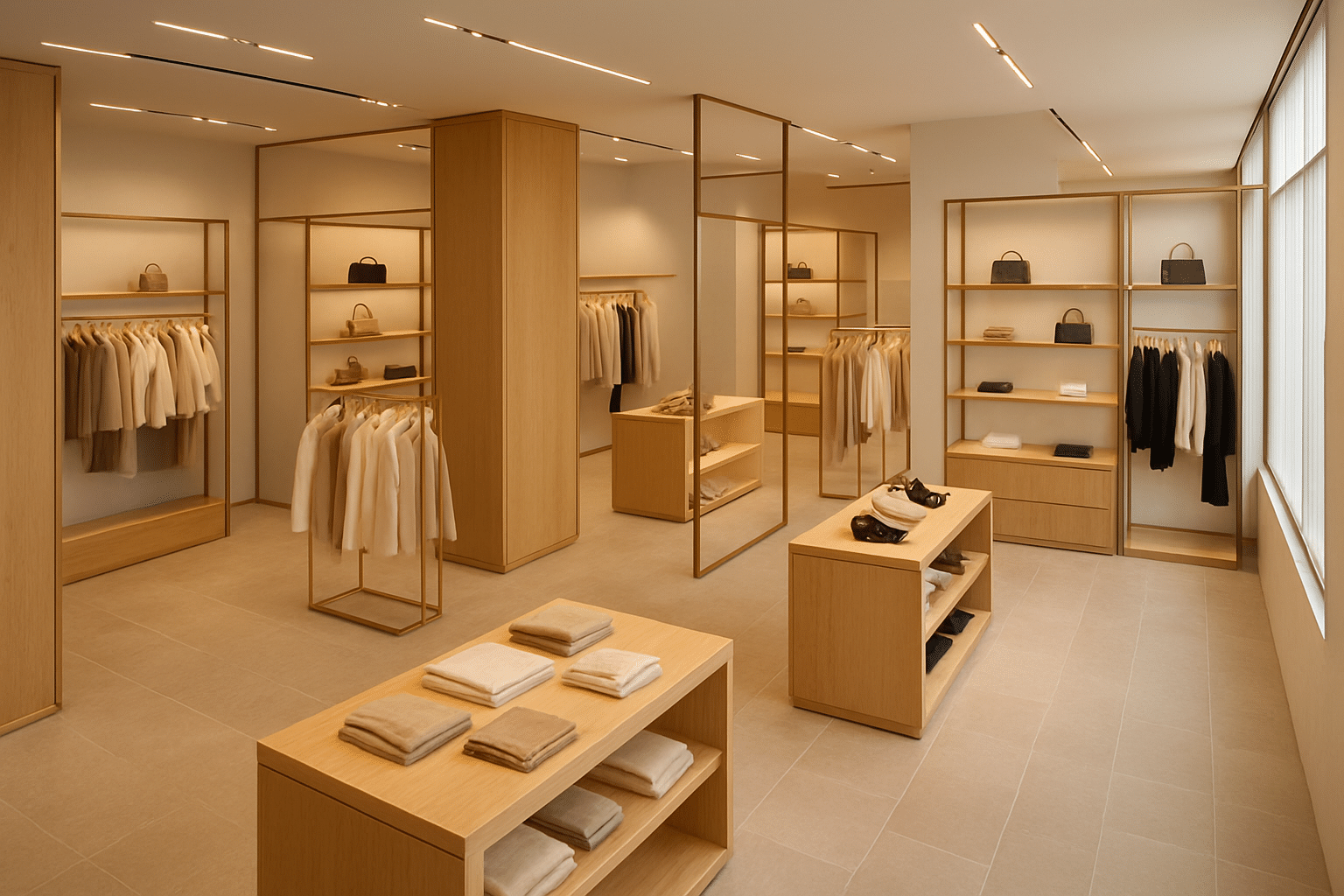
Post-reopening performance tracking from November 2023 through April 2024 (six months) documented dramatic improvements across every metric—this is what makes this a genuine retail interior design Dhaka case study rather than theoretical design discussion.
Sales Performance
Primary metric—Sales per square foot: Increased from BDT 2,340/month to BDT 3,299/month (41% increase), bringing the store above Dhanmondi retail benchmarks
Overall revenue: Monthly revenue grew from BDT 1.22 crore to BDT 1.72 crore (41% increase matching per-sq-ft improvement, confirming same-space optimization)
Premium brand performance: Revenue contribution jumped from 22% to 38% of total sales while occupying slightly less floor space (24% vs. previous 34%)—demonstrating proper positioning and presentation
Average transaction value: Increased from BDT 3,840 to BDT 5,180 (34.9% increase)—evidence of improved cross-category purchasing and premium product consideration
Conversion rate: Improved from estimated 11-13% to measured 18-21%, with fitting room optimization and reduced friction as primary drivers
Customer Experience Metrics
Dwell time: Average visit duration increased from 8.7 minutes to 14.3 minutes—64% improvement giving customers more time to discover and consider products
Space utilization: Rear sections now receive 68% of customers (vs. previous 23%), with relatively even distribution across all zones
Fitting room efficiency: Wait times during peak reduced from 12+ minutes to under 4 minutes with four rooms vs. previous two; fitting room usage increased 127%
Return rate: Decreased from 8.3% to 5.1%—attributed to better fitting room lighting allowing accurate color assessment and improved customer confidence in selections
Financial ROI
The BDT 42 lakh investment delivered quantifiable returns:
- Incremental monthly revenue: BDT 50 lakh (BDT 1.72 cr – BDT 1.22 cr)
- Assuming conservative 35% gross margin: BDT 17.5 lakh additional monthly gross profit
- Investment payback period: 2.4 months from reopening
- Six-month cumulative incremental gross profit: BDT 1.05 crore (150% return on design investment in half year)
- Projected 12-month return: 300%+ assuming performance sustainability
Beyond immediate financial returns, the redesign addressed a critical strategic problem: the store was previously subsidizing premium brand presence (high space cost, low revenue contribution) while under-serving its profitable mid-range customer base. The new layout reversed this dynamic, allowing premium brands to perform while expanding effective merchandising space for proven sellers.
Key Takeaways: What Made This Retail Space Planning Dhanmondi Project Succeed
Analyzing this customer flow design Dhaka retail success reveals several principles applicable to other commercial spaces:
1. Data-driven diagnosis precedes design: The three-week pre-design analysis phase—uncommon in Dhaka retail projects—identified specific problems rather than applying generic “best practices.” We designed for observed customer behavior, not assumptions.
2. Circulation architecture drives sales: The 41% sales increase correlates directly with improved customer movement patterns. When customers naturally flow through more of the store and spend more time browsing, they buy more. This isn’t aesthetic design—it’s behavioral engineering.
3. Strategic zoning outperforms brand politics: Organizing space by purchase psychology rather than brand contract terms or rental formulas allowed each category to perform optimally. Premium brands needed destination positioning with differentiated experience, not front-door exposure competing with impulse goods.
4. Lighting is a revenue center, not an expense: The BDT 8.6 lakh lighting investment delivered disproportionate returns by making merchandise more appealing and creating hierarchy that guides customer attention. Proper retail lighting in Dhaka’s typical 450-550 lux ambient conditions requires 800-1000 lux accent ratios.
5. Flexibility enables evolution: The mobile fixture system allows seasonal reconfiguration and category experimentation without renovation. Retail success requires adaptation; the physical space should enable rather than constrain it.
6. Execution quality determines design success: The 47-day timeline and phased approach required contractor coordination beyond typical Dhaka construction management. Design concepts fail without execution excellence—quality fixtures, precise lighting aiming, proper material installation.
Is Your Retail Space Underperforming? What We’d Look at First
If you operate a retail space in Dhaka and suspect it’s not reaching its revenue potential, several diagnostic indicators warrant investigation:
- Sales per square foot below BDT 3,000-3,500/month in high-traffic areas like Dhanmondi, Banani, Gulshan, or Uttara suggests spatial inefficiency or positioning problems
- Uneven customer distribution where certain sections receive minimal traffic despite carrying strong products typically indicates circulation or visibility issues
- Short dwell times (under 10 minutes for fashion/lifestyle retail) mean customers aren’t discovering your full inventory—usually fixable through better layout and visual merchandising support
- High fitting room wait times or low fitting room usage both signal problems: the former creates purchase friction, the latter suggests customers aren’t confident enough to try products
- Premium products underperforming often reflects presentation inadequacy rather than market demand—luxury goods require luxury context
House De Arch’s retail consultancy service begins with similar diagnostic analysis documented in this case study. We can typically identify the top three limiting factors in a 2-3 week assessment period, then develop targeted solutions rather than comprehensive (and expensive) overhauls if unnecessary.
For retail spaces between 2,000-15,000 sq ft in Dhaka, our design and execution fees typically range BDT 450-950 per square foot depending on complexity, brand positioning, and fixture requirements. We provide detailed cost estimates after initial consultation and site assessment, with transparent breakdowns similar to the analysis above.
Why This Retail Store Design Case Study Dhanmondi Matters to Your Business
Generic design portfolios show completed projects. Real case studies show business outcomes. This documentation provides potential retail clients with three critical confidence factors:
Evidence of measurable results: The 41% sales increase isn’t marketing hyperbole—it’s documented performance improvement tied to specific design interventions. You’re not buying aesthetics; you’re investing in revenue optimization.
Transparent process understanding: The detailed breakdown of analysis, strategy, execution, and costs allows you to evaluate whether our approach fits your business needs and budget reality. Commercial design requires business partnership, not just creative service.
Local market expertise: This project succeeded because we understand Dhaka retail customer behavior, Dhanmondi’s specific market dynamics, local construction capabilities and timelines, realistic material costs, and climate considerations. International design principles adapted to Bangladesh context.
Your retail space is your most important marketing asset—more influential than advertising, more visible than your website, more persuasive than any salesperson. When designed strategically, it doesn’t just house your business; it actively sells your products.
If you’re planning a new retail space, renovating an underperforming store, or evaluating design partners for a multi-location rollout, House De Arch brings the same analytical rigor and execution discipline documented in this case study to every commercial project.
FAQ
What is a realistic budget for retail interior design in Dhaka for a 5,000 sq ft store?
Based on our Dhanmondi case study, expect BDT 450-950 per square foot depending on positioning. Budget retail renovations might range BDT 450-550/sq ft (BDT 22.5-27.5 lakh for 5,000 sq ft), mid-range like our case study around BDT 700-850/sq ft (BDT 35-42.5 lakh), and luxury flagship stores BDT 1,200-1,800/sq ft. This includes design, materials, fixtures, lighting, and execution. Custom millwork, premium lighting systems, and brand-specific requirements increase costs.
How long does a complete retail store redesign take in Dhaka without full closure?
Our 5,200 sq ft Dhanmondi project required 47 days using phased execution that kept the store partially operational. Full-closure renovations of similar size typically take 35-42 days but create 100% revenue loss during that period. Phased approaches take 15-25% longer but limit revenue loss to 20-30% of the period. Timeline depends on scope—fixture-only updates might need just 18-25 days, while complete layout changes with flooring, electrical, and HVAC require 40-55 days.
What sales improvement can I realistically expect from professional retail interior design?
Our case study documented 41% sales per square foot increase, but results vary by starting condition. Stores with clear spatial problems (poor circulation, dead zones, inadequate lighting) typically see 25-45% improvement. Well-functioning stores needing refresh might achieve 12-18% increases. Average transaction value, conversion rates, and premium product performance often improve even more dramatically than overall sales. The key is data-driven diagnosis to identify your specific limiting factors before designing solutions.
How do you measure customer flow in retail stores before redesigning?
We use multiple methods: temporary sensor installation tracking movement through different zones, time-lapse video analysis identifying traffic patterns across different times/days, heat mapping showing high-traffic vs. low-traffic areas, dwell time measurement in different sections, and sales data correlation with spatial usage. This typically requires 2-3 weeks of observation. The diagnostic phase costs BDT 45,000-85,000 depending on store size but prevents expensive design mistakes by revealing actual customer behavior rather than assumptions.
What’s the ROI timeline for retail interior design investment in Dhaka?
Our Dhanmondi case study achieved 2.4-month payback (150% return in six months). Typical scenarios: stores with severe spatial problems often see 3-5 month payback; moderate improvements might need 6-9 months; positioning upgrades for premium brands may take 10-14 months but deliver sustained margin improvement. ROI depends on incremental sales increase, gross margin, and investment level. Stores with BDT 400-600/sq ft investment and 20%+ sales increases typically achieve payback within one year. Always calculate based on incremental gross profit, not revenue.