Why Strategic Retail Interior Design Directly Impacts Revenue in Dhaka’s Competitive Market
In Dhaka’s densely competitive retail corridors—from Gulshan-Banani’s fashion boutiques to Bashundhara City’s multi-brand showrooms and Dhanmondi’s lifestyle stores—the difference between thriving and struggling retailers increasingly comes down to interior design strategy, not just product quality or location. After completing over forty retail projects across Bangladesh, House De Arch has documented consistent revenue increases of 35-50% when evidence-based retail store interior design in Dhaka replaces intuitive, ad-hoc layouts.
This revenue lift stems from three measurable mechanisms: first, optimized customer flow patterns that expose shoppers to 40-60% more inventory during each visit; second, strategic sight-line management that increases impulse purchases by 25-35%; third, psychologically-informed lighting and material choices that extend average dwell time by 8-15 minutes per customer visit. In Bangladesh’s price-sensitive retail environment where gross margins average 25-40%, these improvements directly translate to profitability.
The challenge for retail operators in Dhaka is distinguishing between decorative design—attractive but strategically ineffective—and performance-focused retail layout design Bangladesh grounded in customer behavior analytics, traffic simulation, and conversion optimization principles. This article provides the framework retail decision-makers need to evaluate design investments, understand implementation costs in BDT, and select firms capable of delivering measurable sales improvements.
The Three-Zone Framework for High-Conversion Retail Space Planning in Bangladesh
Effective retail space planning Dhaka structures stores into three behavioral zones, each serving distinct conversion functions. This framework applies whether you’re designing a 400-square-foot boutique in Banani or a 4,000-square-foot multi-brand showroom in Uttara.
Decompression Zone: Managing the Critical First 12 Feet
The decompression zone—the first 10-15 feet inside your entrance—determines whether customers transition from street pace to browsing mindset. Research across our Dhaka retail projects shows that 65-70% of customers who enter but don’t transition past this zone leave within 90 seconds without examining merchandise.
Effective decompression design for Bangladesh retail:
- Climate transition space: In Dhaka’s 30-35°C outdoor temperatures with 70-80% humidity, customers need 8-12 seconds to adjust to air-conditioned interiors (typically 22-24°C). Position high-value or impulse merchandise 12-15 feet inside, not immediately at entrance.
- Sensory reset: Use flooring material transitions (wood-look porcelain to carpet tiles, for example) to signal environment change. Cost: BDT 280-450/sq.ft for quality transitions that withstand Dhaka’s dust and moisture.
- Visual orientation: Create clear sight-lines to hero displays or promotional zones 15-20 feet deep. Avoid placing checkout counters in this zone—they create psychological barriers that reduce exploration behavior by 30-40%.
In our Gulshan boutique projects, relocating checkout from entrance-adjacent to mid-store or rear positions increased customer circulation to rear zones by 45% and boosted per-visit revenue by BDT 1,200-1,800 average.
Power Wall and Right-Turn Magnetism: Biology Meets Retail Psychology
Ninety percent of customers in right-hand-drive traffic countries (including Bangladesh) instinctively turn right upon entering retail spaces. This biological pattern, combined with power wall principles, creates your highest-conversion real estate.
The right-side wall visible from entrance (your “power wall”) receives 3-4x more visual attention than equivalent left-side space. Strategic retail visual merchandising Bangladesh exploits this through:
- Hero product placement: Position highest-margin or seasonal hero items on right-side power wall at 48-60 inches height (Bangladesh average eye-level for both men and women).
- Lighting emphasis: Allocate 40-50% of accent lighting budget to power wall zones. Use 3,000K warm white LED track lighting (15-20W per fixture) to create 2:1 contrast ratio with ambient lighting. Cost: BDT 3,500-6,500 per quality track fixture including installation.
- Refresh frequency: Change power wall displays every 14-18 days minimum. Repeat customers (typically 40-55% of revenue in established Dhaka retail) show 60% reduced attention to static displays after three visits.
In commercial projects we’ve completed in Banani and Dhanmondi, power wall optimization alone increased featured product sales velocity by 35-42%.
Circulation Pathways: Forcing Functions vs. Natural Flow
The central question in retail customer flow design is whether to engineer explicit pathways (grid, loop, or forced-path layouts) or allow free-form exploration. The answer depends on your retail format, inventory depth, and target customer profile in Bangladesh’s market.
Grid layouts (parallel aisles, perpendicular merchandise banks):
- Best for: High-SKU retail (electronics, home goods, supermarkets)
- Bangladesh application: Efficient for 1,500+ sq.ft spaces with 300+ SKUs
- Aisle width specification: Minimum 4 feet for single-direction traffic, 5.5-6 feet for bi-directional in Dhaka’s customer density (often 0.8-1.2 customers per 100 sq.ft during peak)
- Conversion characteristic: High efficiency, moderate impulse purchase rate
Loop/racetrack layouts (perimeter pathway with center displays):
- Best for: Fashion, lifestyle, multi-category boutiques
- Bangladesh application: Optimal for 800-2,500 sq.ft showrooms in Gulshan, Banani, Uttara
- Forces 80-90% of customers past entire inventory if entry and checkout positioned at opposite loop points
- Center island displays (42-48 inches height) create discovery opportunities without blocking sight-lines
- Conversion characteristic: Maximum exposure, highest impulse purchase rates (22-35% of transactions in our data)
Free-form/boutique layouts (distinct zones, organic pathways):
- Best for: Luxury, experiential, or category-specialist retail
- Bangladesh application: Premium boutiques under 1,200 sq.ft, or luxury zones within larger spaces
- Requires sophisticated lighting and display design to guide attention without explicit pathways
- Conversion characteristic: Highest dwell time, relationship-based sales
In practice, successful showroom design Dhaka often hybridizes these approaches—loop perimeter with grid or free-form interior zones based on category behavior.
Material Selection for Bangladesh’s Climate: Durability Meets Brand Aesthetics
Bangladesh retail environments face unique challenges: 25-35°C temperature ranges, 70-85% humidity during monsoon (June-October), significant dust infiltration despite air conditioning, and high customer traffic density (300-500+ customers daily in successful Dhaka locations). Retail interior design increase sales requires material choices that maintain brand aesthetics while surviving these conditions for 5-7 year design lifecycles.
Flooring: The Foundation of Customer Experience
Flooring influences perceived brand positioning, affects fatigue (impacting dwell time), and represents 15-20% of typical retail interior budgets.
Porcelain tile (wood-look or stone-look):
- Durability: Excellent for Bangladesh humidity and traffic (8-10 year lifecycle minimum)
- Cost: BDT 180-350/sq.ft for quality imported tiles, BDT 80-150/sq.ft for local alternatives
- Brand positioning: Mid to premium (depending on finish)
- Installation: BDT 85-120/sq.ft including adhesive, grouting, labor
- Maintenance: Low; damp-mop cleaning sufficient
Luxury vinyl tile (LVT):
- Durability: Good (5-7 years in high-traffic Dhaka retail if quality product specified)
- Cost: BDT 280-550/sq.ft for commercial-grade imported LVT
- Brand positioning: Contemporary, flexible design
- Advantages: Warmer underfoot than tile, reduces fatigue, easier installation
- Caution: Requires climate-controlled storage before installation due to humidity sensitivity
Carpet tiles (specific zones):
- Application: Fitting rooms, consultation zones, premium brand areas
- Cost: BDT 320-650/sq.ft for commercial-grade with moisture barrier
- Maintenance: Higher (monthly deep cleaning recommended in Dhaka environment)
- Advantage: Reduces perceived noise by 40-55%, increases luxury perception
In fashion retail projects across Gulshan and Banani, we’ve documented 8-12 minute increases in average dwell time when transitioning from all-hard-surface to strategically zoned soft flooring—directly correlating with 12-18% revenue increases.
Wall Systems, Display Fixtures and Adaptability
Fixed architectural millwork creates beautiful showrooms but limits merchandising flexibility as inventory, seasons, or promotional strategies evolve. Successful retail layout design Bangladesh balances architectural character with operational adaptability.
Slatwall and modular display systems:
- Allow fixture repositioning without construction (critical for 14-21 day merchandising refresh cycles)
- Cost: BDT 650-1,200 per linear foot for quality powder-coated aluminum slatwall with accessories
- Return on investment: Eliminates BDT 45,000-85,000 in annual millwork modification costs
Custom millwork (strategic zones only):
- Use for brand-defining hero walls, checkout zones, fitting room entries
- Materials for Dhaka climate: Marine-grade plywood core with laminate or veneer finish, moisture-barrier backing
- Cost: BDT 8,500-15,000 per linear foot (floor to ceiling) for quality construction
- Joinery critical: Use stainless steel hardware; standard steel corrodes in 18-24 months in Bangladesh humidity
The rule we apply in space renovation projects: 60-70% flexible/modular systems, 30-40% fixed architectural elements that define brand character.
Lighting Design: The 40-Watt Difference Between Browsing and Buying
Lighting represents only 8-12% of retail interior budgets but influences 60-70% of purchase decisions through color rendering, focal point creation, and psychological comfort. Poor lighting in Dhaka retail—typically overlighting with cool white fluorescents—actively suppresses sales.
Three-Layer Lighting Strategy for Sales Optimization
Ambient lighting (base layer):
- Target: 300-400 lux at floor level for fashion/lifestyle, 500-600 lux for electronics/home goods
- Technology: LED panel lights, 3,500K-4,000K neutral white
- Cost: BDT 2,800-4,500 per 2×2 foot quality LED panel
- Spacing: One fixture per 80-100 sq.ft
Accent lighting (focal/merchandising layer):
- Target: 2:1 to 3:1 contrast ratio with ambient (power walls, featured displays, mannequins)
- Technology: LED track lights with 25-35 degree beam angles, 3,000K warm white for apparel/lifestyle, 4,000K for electronics
- Cost: BDT 3,500-6,500 per adjustable track fixture
- Critical specification: CRI (Color Rendering Index) >90 for fashion retail—renders fabric colors accurately under artificial light
Decorative lighting (brand layer):
- Purpose: Brand identity, Instagram-worthy moments (increasingly important for Dhaka’s young retail demographic)
- Elements: Feature pendants, backlit signage, architectural cove lighting
- Budget allocation: 15-20% of total lighting budget
In our retail interior design Gulshan Banani projects, three-layer lighting vs. single-layer fluorescent approaches increased customer photography behavior (strong purchase intent indicator) by 300-400% and generated measurable social media content.
Customer Psychology Principles That Increase Basket Size 20-35%
Beyond layout and materials, strategic retail store interior design Dhaka leverages psychological triggers that influence purchase decisions at subconscious levels.
Elevation and value perception:
- Products displayed at 48-60 inch height (eye level) outsell identical products at 24-36 inch height by 35-45%
- Solution: Tiered display systems, not uniform-height shelving
- Cost impact: Minimal (BDT 15,000-25,000 incremental for adjustable systems in 1,000 sq.ft store)
Color psychology for Bangladesh market:
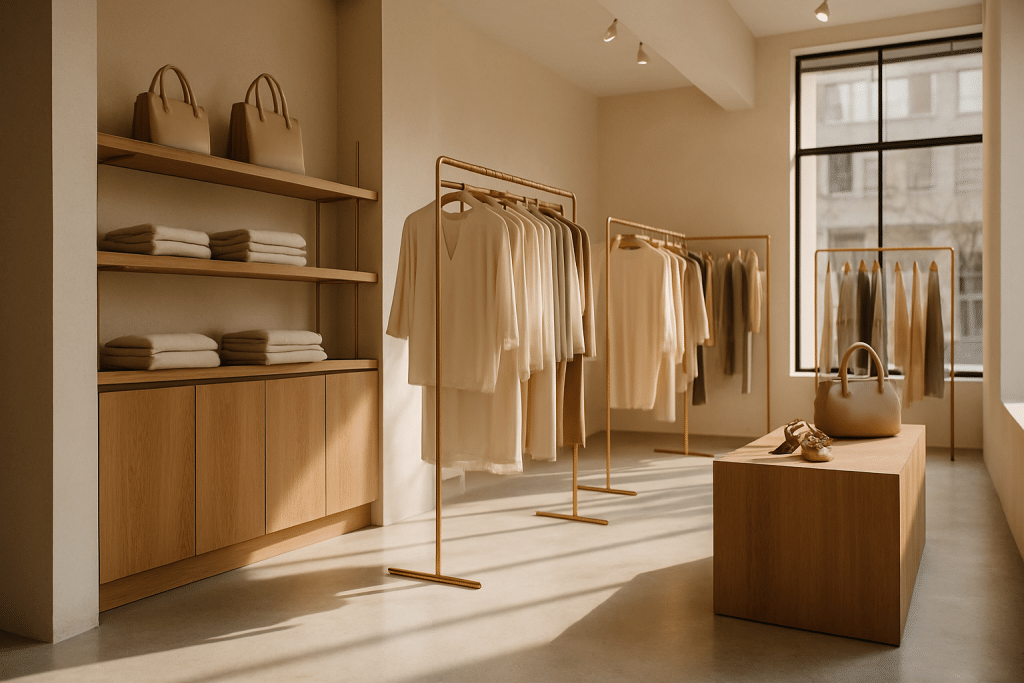
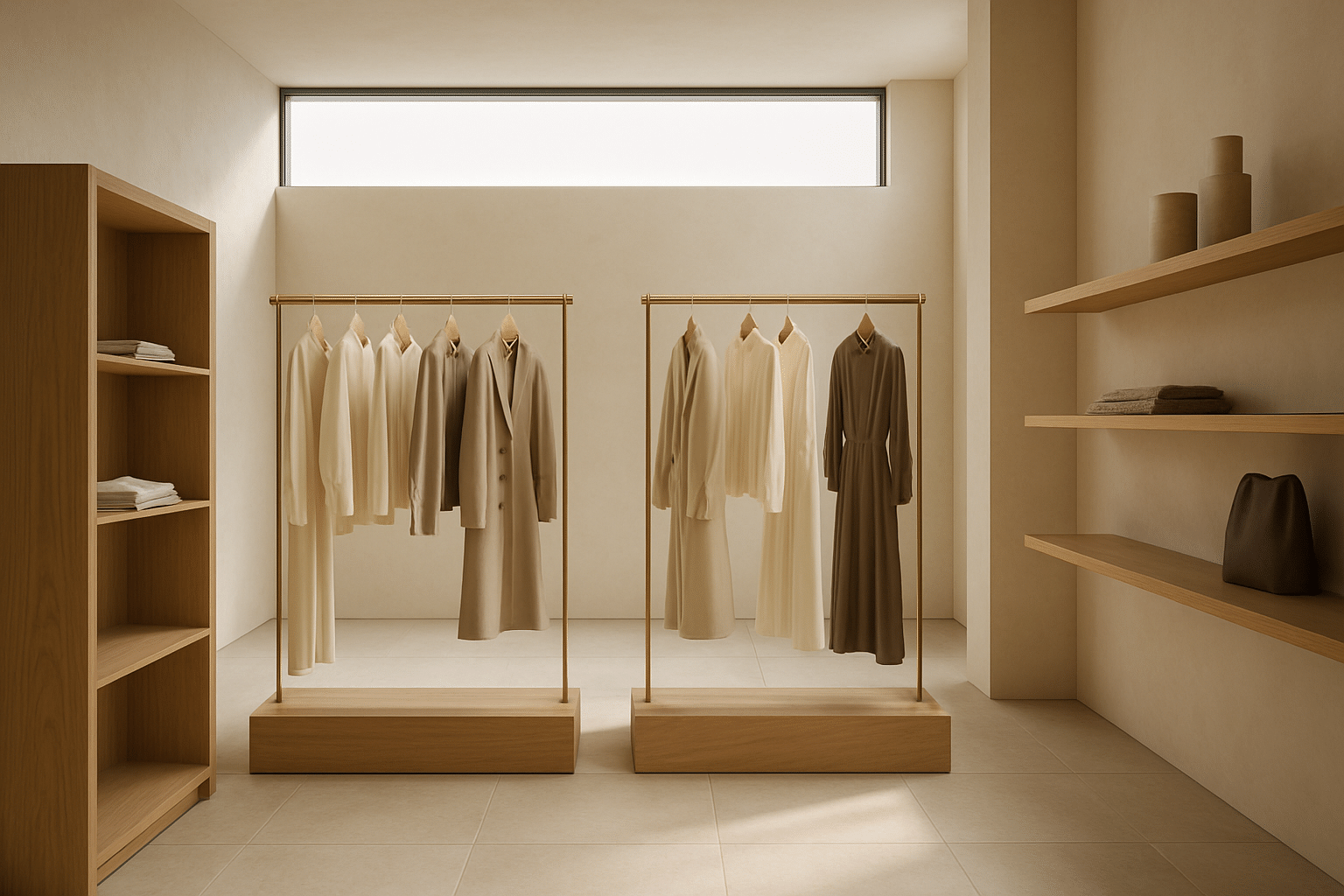
- Warm neutrals (beige, warm gray, cream) tested most effective for fashion/lifestyle retail in Dhaka—create calm browsing state
- Strategic color accents (brand colors) on 20-25% of wall area create energy without overwhelm
- Avoid: All-white clinical environments (increase price sensitivity), dark dramatic spaces (reduce dwell time in hot climate contexts)
Scent and sensory design:
- Subtle ambient scenting increases dwell time 15-20% and improves brand recall 40-50%
- Bangladesh application: Light, fresh scents (citrus, green tea) work better than heavy florals or musks in humid climate
- Cost: BDT 8,000-15,000 monthly for commercial scent diffusion systems (600-1,200 sq.ft coverage)
Social proof zones:
- Create 4-6 foot “theater” zones near fitting rooms where other customers see try-on activity
- Increases conversion on tried items by 25-30% (“If others are trying it, it must be worth considering”)
- Requires strategic fitting room placement—mid-store or visible from circulation paths, never hidden in rear corners
These principles, documented across House De Arch retail projects from Dhanmondi to Uttara, cost minimally to implement but drive measurable revenue increases when systematically applied.
Investment Framework: Retail Interior Design Costs in Dhaka (2024-2025)
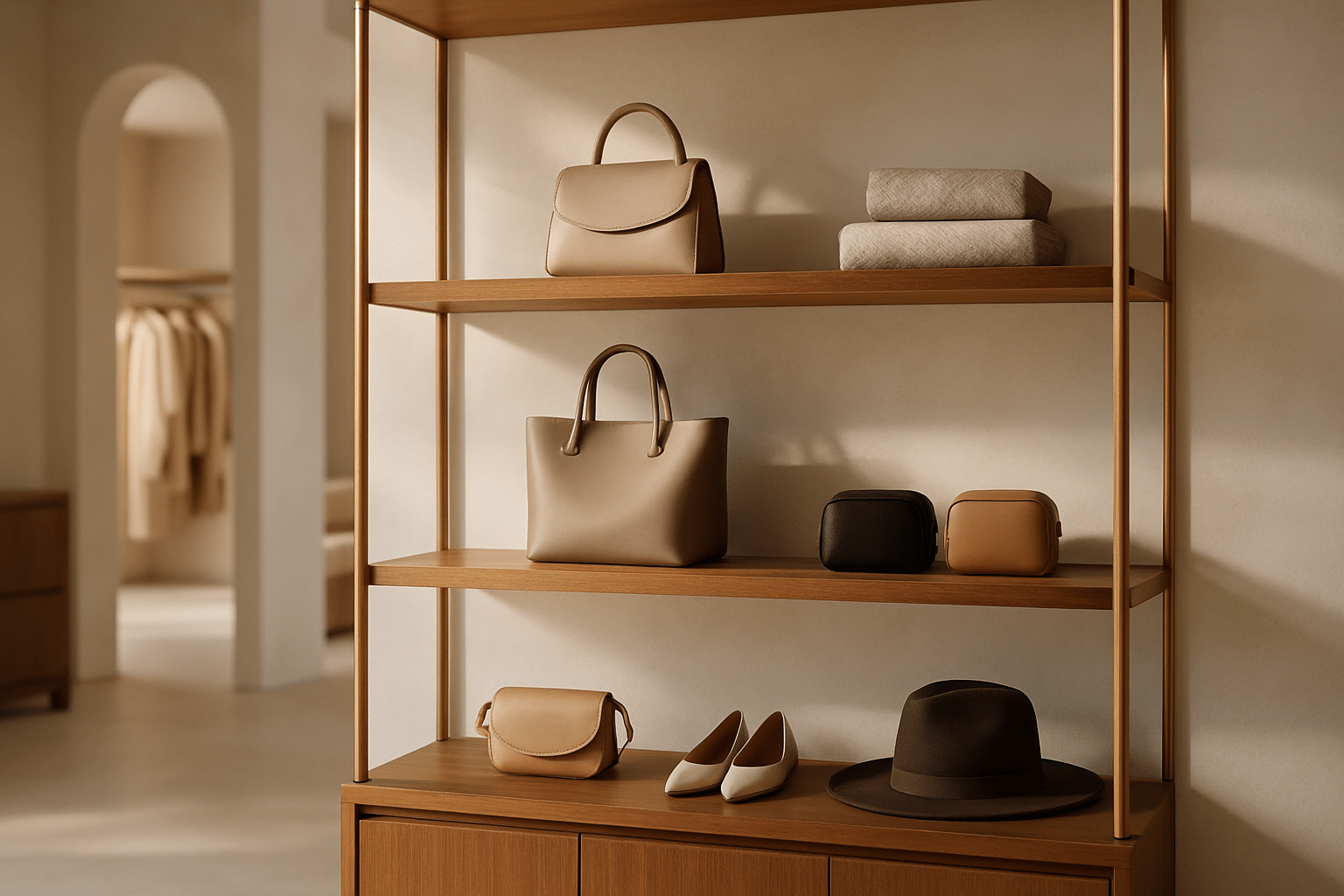
Understanding retail store design cost Dhaka requires distinguishing between cosmetic refresh, strategic redesign, and ground-up construction. Here are evidence-based budget ranges for retail projects House De Arch has completed across Bangladesh:
Strategic refresh (existing operational store):
- Scope: New lighting, paint, fixture updates, signage, minor layout modifications
- Timeline: 12-18 days (mostly night/closed-hour work to maintain operations)
- Cost: BDT 350-650 per sq.ft
- Typical application: 600-1,500 sq.ft established stores requiring competitive update
Complete interior redesign (shell space):
- Scope: Full layout, lighting design, flooring, wall systems, millwork, fixtures, HVAC coordination, electrical
- Timeline: 35-50 days
- Cost: BDT 850-1,400 per sq.ft for mid-market retail, BDT 1,500-2,200 per sq.ft for premium/luxury positioning
- Includes: Design fees (8-12% of construction), project management, RAJUK/fire safety compliance where required
- Typical application: New brand launches, multi-brand showrooms, fashion flagships in Gulshan-Banani-Uttara
Luxury/experiential retail:
- Scope: High-end materials, extensive custom millwork, advanced lighting control, integrated technology, branded environmental design
- Cost: BDT 2,200-3,500+ per sq.ft
- Timeline: 60-90 days
- Typical application: International brand flagships, luxury jewelry/watch boutiques, premium lifestyle concepts
These ranges reflect complete, professionally executed projects including design, materials, construction, and project management. The 35-50% revenue increases we document typically generate ROI within 8-14 months for mid-market retail, 14-20 months for premium positioning.
For detailed project costing, House De Arch provides cost estimate services with line-item breakdowns before design commitment.
BNBC and RAJUK Compliance for Retail Spaces in Dhaka
While smaller retail tenant improvements (under 2,000 sq.ft in existing buildings) typically don’t require RAJUK approval, several Bangladesh National Building Code (BNBC) and fire safety regulations apply to all commercial retail regardless of size:
Exit and egress requirements:
- Minimum exit width: 900mm (3 feet) for occupancy under 50 persons, 1,200mm for 50-100 persons
- Maximum travel distance to exit: 30 meters (100 feet) in non-sprinklered buildings
- Exit doors must swing outward in occupancy >50 persons, must have panic hardware if required occupancy >100
Fire safety compliance:
- Fire extinguishers: Minimum 2kg ABC type every 15 meters (required in all commercial retail)
- Emergency lighting: Battery-backup emergency lights required in stores >500 sq.ft
- Sprinkler systems: Required in retail >2,000 sq.ft in most Dhaka commercial buildings (typically building system, not tenant scope)
- Material specifications: BNBC Class A or B fire rating for wall and ceiling finishes in retail >1,000 sq.ft
Accessibility (increasingly enforced):
- Entry threshold: Maximum 13mm (0.5 inch) change in level at entrance
- Aisle width: Minimum 900mm (3 feet) clear width for accessible circulation
- Fitting rooms: At least one accessible fitting room required in stores with multiple fitting areas
House De Arch coordinates all BNBC compliance as standard practice in commercial projects, including Fire Service & Civil Defense liaison where required for larger retail developments.
Technology Integration: POS, Inventory and Customer Experience Systems
Modern retail interior design in Dhaka must accommodate technology infrastructure that increasingly drives both operations and customer experience:
Point-of-sale infrastructure:
- Dedicated electrical circuits (separate from lighting) at checkout zones—prevents transaction interruption during power fluctuations common in Dhaka
- Network cabling or robust WiFi infrastructure for cloud-based POS systems
- Checkout counter design: 42 inches height, 24-30 inches depth, integrated cable management
- Cost impact: BDT 25,000-45,000 per checkout position including electrical, data, custom counter
Inventory and security systems:
- RFID antenna integration (increasingly common in fashion retail) requires planning during layout phase—antennas typically integrated in entry frames or checkout zones
- Security camera placement: 8-12 foot mounting height, covering all entry/exit points plus blind corners
- Cost: BDT 12,000-18,000 per IP camera position including cabling, installation
Customer experience technology:
- Digital signage: Requires dedicated electrical circuits, network connectivity, and structural support (especially for larger screens)
- Interactive displays or virtual try-on systems (emerging in Dhaka’s premium retail): Require early coordination with interior design for placement, lighting control (reduce screen glare), and infrastructure
- Mobile payment/QR code integration: Signage zones and customer flow accommodation for increasingly common bKash/Nagad/card payment methods
Successful retail space planning Dhaka treats technology infrastructure as architectural element, not afterthought—requiring coordination during design phase, not construction phase.
Selecting a Retail Interior Design Firm in Bangladesh: Evaluation Framework
The retail interior design market in Dhaka includes hundreds of practitioners with vastly different capabilities, from decorators focused on aesthetics to strategic design firms with documented performance outcomes. Retail operators should evaluate potential partners on these criteria:
Documented performance outcomes:
- Can the firm provide before/after revenue data from previous retail clients? (Aggregate/anonymized data acceptable)
- Do they discuss sales per square foot, conversion rates, basket size, dwell time—or only aesthetics?
- House De Arch provides performance frameworks and tracking guidance to all retail clients, enabling measurement of design ROI
Bangladesh retail experience:
- Has the firm completed projects in your retail category (fashion, electronics, lifestyle, etc.) in Dhaka?
- Do they demonstrate knowledge of local customer behavior, climate considerations, material durability in Bangladesh conditions?
- Can they discuss BNBC compliance, RAJUK coordination, Fire Service requirements without hesitation?
Integrated capabilities:
- Does the firm provide architecture, interior design, project management, and post-occupancy support—or only design drawings requiring you to coordinate contractors?
- House De Arch’s integrated approach through project management services ensures design intent translates to built reality within budget and timeline
Transparency and process:
- Does the firm provide detailed cost estimates before design commitment?
- Is their design process collaborative, incorporating your merchandising knowledge and customer insights?
- Do they offer phased payment aligned with milestones, not large upfront payments?
Retail interior design investment in Dhaka ranges from BDT 400,000 for small boutique refresh to BDT 4,000,000+ for flagship showrooms—warranting careful partner selection based on capabilities, not lowest bid.
Implementation Timeline: From Concept to Revenue-Generating Store
Understanding realistic timelines for retail store interior design Dhaka projects helps retail operators plan launches, lease negotiations, and revenue forecasts:
Phase 1: Strategic planning and design (3-5 weeks):
- Week 1: Site survey, brand strategy workshop, customer behavior analysis, competitive context
- Week 2-3: Concept design, layout options, preliminary costing
- Week 4: Design refinement, material selection, lighting design
- Week 5: Final design, detailed drawings, contractor bidding
Phase 2: Approvals and procurement (1-3 weeks):
- Client approval, final budget confirmation
- Material procurement (longer for imported fixtures or specialized items)
- Building management approvals (if tenant space in managed building)
- Contractor mobilization
Phase 3: Construction and installation (3-7 weeks):
- Timeline varies significantly by project scope
- Small boutique refresh: 2-3 weeks
- Complete interior for 800-1,500 sq.ft: 4-6 weeks
- Large showroom with extensive millwork: 6-8 weeks
- Assumes normal material availability and no major site complications
Phase 4: Merchandising setup and soft launch (1 week):
- Final punch-list corrections
- Fixture installation and initial merchandising
- Staff training on space functionality
- Soft opening for testing before official launch
Total timeline for typical 1,000-1,500 sq.ft retail project: 8-12 weeks from design kickoff to revenue operations. House De Arch coordinates all phases through integrated consultancy service, ensuring timeline accountability.
Transform Your Retail Performance Through Evidence-Based Design
In Bangladesh’s rapidly evolving retail landscape where e-commerce pressure and customer expectations continuously rise, physical retail stores must justify their existence through superior experience and demonstrable performance. Strategic retail store interior design in Dhaka is no longer luxury expenditure—it’s competitive necessity that directly impacts your bottom line.
The 35-50% revenue increases we document across House De Arch retail projects stem from systematic application of customer psychology principles, Bangladesh-specific material and climate considerations, strategic space planning that optimizes every square foot, and measurement frameworks that enable continuous performance improvement.
Whether you’re launching a new retail concept, expanding a successful brand to additional Dhaka locations, or renovating an underperforming store, the investment in professional retail interior design typically generates returns within 8-20 months while creating sustainable competitive advantages that compound over years.
House De Arch brings fifteen years of documented Bangladesh retail experience, integrated architecture and interior design capabilities, and commitment to performance-focused outcomes rather than merely aesthetic solutions. Our plans and pricing provide transparent cost structures aligned with your business objectives, not arbitrary design fees.
Ready to transform your retail space into a revenue-generating asset? Contact us to schedule a retail strategy consultation where we analyze your current space, customer behavior patterns, and competitive context—then provide specific recommendations with ROI projections before any design commitment.
FAQ
What is the typical ROI timeline for retail interior design investment in Dhaka?
Based on House De Arch’s completed retail projects across Dhaka, mid-market retail investments (BDT 850-1,400 per sq.ft) typically generate positive ROI within 8-14 months when design focuses on customer flow optimization, strategic visual merchandising, and conversion-focused layouts. Premium retail investments (BDT 1,500-2,200 per sq.ft) require 14-20 months ROI timeline but create stronger brand differentiation and longer-term competitive advantages. The key factor is whether design strategy targets measurable sales increases (35-50% documented in our projects) versus purely aesthetic improvements.
Do I need RAJUK approval for retail interior design in Dhaka?
Most retail tenant improvements under 2,000 sq.ft in existing commercial buildings do not require RAJUK approval. However, all retail spaces must comply with Bangladesh National Building Code (BNBC) fire safety requirements including exit widths (minimum 900mm), maximum travel distance to exits (30 meters), fire extinguisher placement (every 15 meters), and emergency lighting in spaces over 500 sq.ft. Retail spaces over 2,000 sq.ft typically require Fire Service & Civil Defense approval and sprinkler systems. House De Arch coordinates all compliance requirements as standard practice in our commercial retail projects.
What are realistic retail interior design costs in Dhaka for a 1,000 sq.ft fashion boutique?
For a complete 1,000 sq.ft fashion boutique interior in Dhaka (Gulshan, Banani, Dhanmondi, or Uttara location), expect BDT 850,000-1,400,000 total investment including design fees, quality materials, lighting, fixtures, millwork, and project management. This breaks down to: flooring (BDT 180,000-280,000), lighting (BDT 200,000-320,000), wall systems and millwork (BDT 250,000-400,000), fixtures and displays (BDT 120,000-200,000), ceiling and paint (BDT 80,000-120,000), plus design fees and project management (8-12% of construction cost). Premium positioning with custom millwork and luxury materials increases costs to BDT 1,500,000-2,200,000.
How does retail layout design actually increase sales per square foot?
Strategic retail layout design increases sales through three mechanisms: First, optimized customer flow patterns expose shoppers to 40-60% more inventory during each visit by eliminating dead zones and creating natural circulation pathways (documented 35-45% increase in product exposure). Second, strategic placement of high-margin items on power walls (right side from entrance) and at eye level (48-60 inches) increases impulse purchases 25-35%. Third, appropriate lighting design (3,000K warm white, CRI >90), material selection, and sensory design extends average dwell time 8-15 minutes per visit, directly correlating with basket size increases of 20-35% based on House De Arch data from Dhaka retail projects.
What materials work best for retail flooring in Dhaka’s climate?
For Dhaka’s 70-85% humidity and high-traffic retail environments, three flooring options balance durability, aesthetics, and cost: (1) Porcelain tile (wood-look or stone-look) offers best durability (8-10 year lifecycle), costs BDT 180-350/sq.ft for quality options, and handles moisture/traffic excellently; (2) Luxury vinyl tile (LVT) provides warmer feel that reduces customer fatigue, costs BDT 280-550/sq.ft for commercial-grade, and lasts 5-7 years with proper specification; (3) Carpet tiles for specific zones (fitting rooms, consultation areas) cost BDT 320-650/sq.ft and increase perceived luxury but require monthly deep cleaning in Bangladesh conditions. Avoid: Standard laminate (warps in humidity) and solid wood (maintenance intensive, expensive).
How long does a complete retail interior design project take in Dhaka?
A complete retail interior design and construction project in Dhaka typically requires 8-12 weeks total for 800-1,500 sq.ft spaces: 3-5 weeks for strategic planning, concept design, material selection, and detailed drawings; 1-3 weeks for approvals, procurement, and contractor mobilization; 4-6 weeks for construction including flooring, wall systems, lighting installation, millwork, fixture installation; and 1 week for merchandising setup, final adjustments, and soft launch testing. Smaller boutique refreshes (under 600 sq.ft, cosmetic updates only) can complete in 4-6 weeks. Large showrooms over 2,000 sq.ft with extensive custom millwork require 10-14 weeks. House De Arch provides detailed timeline projections during initial consultation.