Why Office Design Investment Matters More Than Ever in 2026
Between hybrid work models reshaping how Dhaka employees use office space and the intensifying competition for skilled talent, Bangladesh businesses are rethinking their workspace strategies. The post-pandemic office isn’t just about desks and meeting rooms anymore—it’s a strategic asset that influences productivity, employee retention, and brand perception.
Data from Dhaka’s commercial real estate sector shows that companies investing in modern office interior design in Dhaka report 23-31% lower turnover rates and 18-25% higher space utilization compared to traditional layouts. With Dhaka’s average commercial rent ranging from BDT 65-150 per sq ft in Gulshan, Banani, and Motijheel, optimizing every square foot delivers measurable ROI.
This article examines the office interior design trends Bangladesh 2026 businesses are actually implementing—not theoretical concepts, but investments we’re seeing across Dhaka’s corporate, startup, and commercial sectors, complete with budget implications and regulatory considerations specific to operating in Bangladesh.
Trend 1: Activity-Based Working (ABW) Zones Replace Fixed Desks
The most significant workspace design trend 2026 shift is the abandonment of one-desk-per-employee models. Forward-thinking Dhaka businesses—from tech startups in Mohakhali DOHS to corporate offices in Gulshan 1—are implementing activity-based working environments with dedicated zones for different work modes.
What this looks like in practice:
- Focus zones: Acoustic-treated individual workstations with sound-absorbing panels (BDT 85,000-140,000 per 4-station cluster including furniture and partitions)
- Collaboration hubs: Informal meeting spaces with modular furniture, whiteboards, and screen-sharing capability (BDT 120,000-220,000 per 15-person hub)
- Social spaces: Café-style areas with comfortable seating away from workstations (BDT 95,000-175,000 per 20-person zone)
- Phone/video booths: Enclosed single-person spaces for confidential calls (BDT 45,000-75,000 per booth)
A 5,000 sq ft Dhaka office implementing ABW can typically accommodate 15-20% more staff than traditional layouts while improving employee satisfaction scores by 28-35% according to occupancy studies from Gulshan-based firms.
BNBC compliance note: Activity-based layouts must maintain minimum egress widths (BNBC Chapter 4: 1.1m for corridors serving >50 occupants). Fire exits cannot be obstructed by modular furniture zones, requiring careful space renovation planning with RAJUK-approved drawings.
Trend 2: Biophilic Design Elements for Dhaka’s Climate
Integrating natural elements into office interiors—biophilic design—has moved from aesthetic preference to business imperative. Research consistently shows 13-18% productivity improvements and 23% reduction in sick leave in workspaces with biophilic elements, metrics that resonate with Dhaka HR directors managing large teams.
Bangladesh-appropriate biophilic applications:
- Living green walls: Vertical gardens with indigenous species (money plant, areca palm, snake plant) that tolerate Dhaka’s humidity and require minimal maintenance. Cost: BDT 1,800-3,200 per sq ft including irrigation systems
- Indoor planters with local species: Floor-standing planters with bamboo, ficus, or indoor palms positioned near windows. Cost: BDT 8,000-25,000 per large planter including plant
- Natural light optimization: Redesigning partitions to maximize daylight penetration, reducing dependence on artificial lighting in Dhaka’s 6-7 hour daily sunlight window
- Natural materials: Bamboo ceiling treatments (BDT 650-1,100 per sq ft), cork flooring in break areas (BDT 850-1,400 per sq ft), or reclaimed wood accent walls
- Water features: Small desktop or wall-mounted water elements providing acoustic masking and humidity regulation (BDT 35,000-85,000 installed)
These modern office interior Bangladesh elements also support sustainability narratives increasingly important for multinational clients evaluating local partners and employees choosing employers.
Trend 3: Technology-Integrated Smart Office Systems
The commercial office fit-out trends 2026 landscape includes significant technology infrastructure investments—not flashy gadgets, but practical systems addressing Dhaka’s specific challenges around power reliability, climate control, and space booking.
Smart office investments Dhaka businesses are prioritizing:
- Occupancy sensors and space analytics: IoT sensors tracking desk/room utilization to optimize space allocation decisions. System cost: BDT 180,000-350,000 for 3,000 sq ft including installation and 1-year subscription
- Automated climate control: Zone-based HVAC with occupancy-responsive cooling—critical given Dhaka’s 32-38°C summer temperatures and power costs of BDT 8-12 per unit. Smart thermostats: BDT 85,000-140,000 per zone
- Integrated booking systems: App-based meeting room and desk reservation reducing conflicts and enabling hybrid scheduling. Software licensing: BDT 450-850 per user annually
- Power backup integration: UPS systems integrated with lighting, essential equipment, and climate control. 10KVA system for 2,500 sq ft office: BDT 350,000-550,000
- Access control systems: Biometric or card-based entry with visitor management. Full system for 50-person office: BDT 250,000-425,000
These technologies deliver 18-24 month payback periods through reduced operational costs and improved space utilization, making them attractive to CFOs evaluating office design trends Dhaka businesses can justify financially.
Trend 4: Wellness-Centered Design and Ergonomics
Employee wellness has evolved from corporate buzzword to measurable workplace design criterion. Dhaka businesses competing for talent—especially in IT, finance, and professional services—are implementing evidence-based wellness features.
Practical wellness investments we’re specifying:
- Ergonomic workstation standards: Height-adjustable desks (BDT 22,000-45,000 each), lumbar-support chairs (BDT 18,000-38,000), and monitor arms (BDT 4,500-8,500). Outfitting 10 workstations: BDT 440,000-915,000
- Air quality systems: HEPA filtration for Dhaka’s air quality conditions (AQI regularly 150-200). Commercial-grade air purifiers: BDT 55,000-125,000 per 800 sq ft zone
- Circadian lighting: LED systems with color temperature adjustment (5000K daytime, 3000K evening) supporting natural rhythms. Cost: BDT 450-750 per sq ft more than standard LED
- Acoustic management: Sound-absorbing panels, acoustic ceiling tiles, and carpet tiles reducing noise in open-plan environments. Acoustic treatment package: BDT 280-520 per sq ft
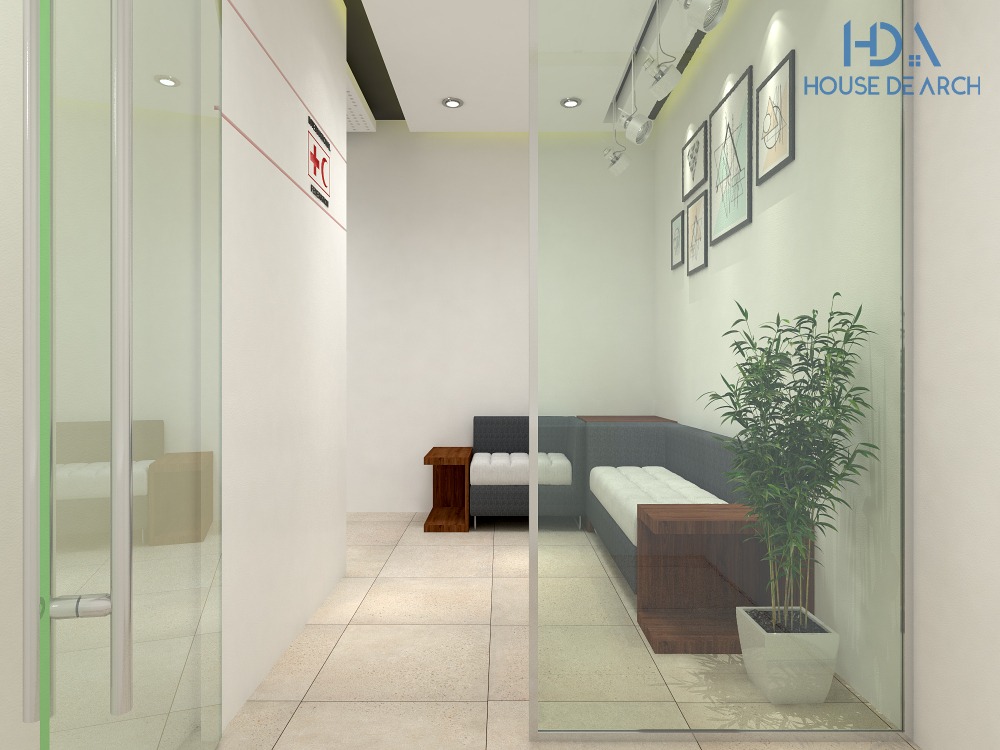
- Wellness rooms: Dedicated spaces for prayer, meditation, or nursing (BNBC-compliant for privacy). Fit-out cost: BDT 120,000-200,000 per 100 sq ft room
A 3,500 sq ft Dhaka office implementing comprehensive wellness features typically invests BDT 1,850,000-3,200,000 beyond base fit-out costs, but reports 21-28% reduction in health-related absenteeism and 16-23% improvement in employee satisfaction surveys.
Trend 5: Flexible and Modular Infrastructure
Given Bangladesh’s dynamic business environment and the uncertainty around long-term workspace needs, the most pragmatic office design trends Dhaka 2026 emphasize adaptability over permanent fixtures.
Flexibility strategies:
- Demountable partition systems: Aluminum-framed glass partitions (BDT 1,200-1,950 per sq ft) that reconfigure without wet construction, maintaining BNBC fire ratings while allowing 2-3 day layout changes
- Modular furniture systems: Reconfigurable desking, mobile storage, and movable whiteboards. Cost: 15-25% premium over fixed furniture but extends useful life by 40-60%
- Raised floor systems: For offices above 2,500 sq ft, raised flooring (BDT 850-1,400 per sq ft) enables power/data reconfiguration without breaking concrete
- Track-mounted lighting: Ceiling track systems allowing fixture repositioning as layouts change (BDT 320-580 per linear foot installed)
- Mobile technology infrastructure: Wireless access points and mobile power distribution rather than fixed wall outlets
This modern office interior Bangladesh approach suits companies anticipating 20-40% headcount fluctuation or exploring hybrid models where workspace needs shift quarterly. The premium paid for flexibility—typically 18-25% over conventional fit-outs—amortizes quickly when avoiding full redesigns every 3-4 years.
Trend 6: Brand-Expressive and Culture-Focused Environments
2026 Dhaka offices increasingly function as brand showcases for clients and culture manifestations for employees—particularly important for companies recruiting in competitive sectors.
Culture-building design investments:
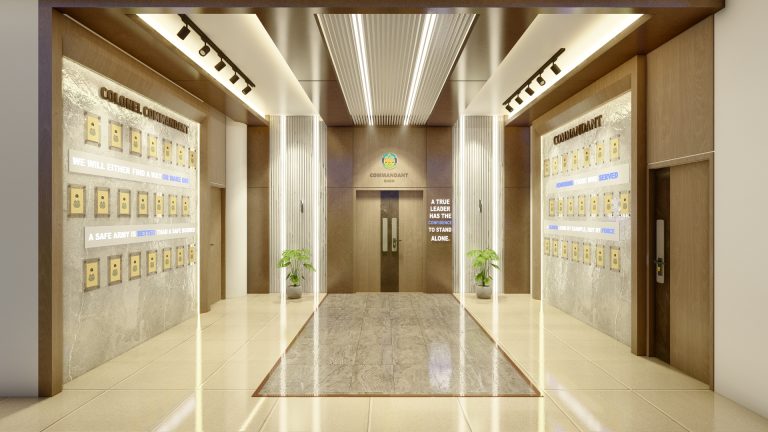
- Custom branded entrance areas: Illuminated logos, material selections reflecting brand values, visitor seating. Budget: BDT 350,000-750,000 for 200 sq ft reception
- Innovation/collaboration spaces: Dedicated zones for brainstorming with writable surfaces, pin-up space, prototyping areas. Fit-out: BDT 280,000-520,000 per 300 sq ft
- Cultural display areas: Gallery walls for employee achievements, project showcases, or company history. Installation: BDT 85,000-150,000
- Hospitality-inspired break areas: Café-quality pantries with commercial espresso machines, comfortable furniture, and finishes matching high-end Dhaka restaurants. Budget: BDT 650,000-1,200,000 for 400 sq ft
- Signature design elements: Custom light fixtures, locally commissioned art, or architectural features that photograph well for social media and recruitment materials
These investments in commercial projects deliver recruiting advantages—candidates surveyed in Dhaka’s tech sector rank ‘inspiring workspace’ as the third most important factor after compensation and flexibility, ahead of traditional perks.
Trend 7: Sustainability and Energy Efficiency
With commercial electricity costs rising and corporate sustainability commitments increasing, energy-efficient workspace design trends 2026 deliver both environmental and financial returns.
Sustainable office strategies for Bangladesh conditions:
- High-performance glazing: Low-E glass reducing solar heat gain critical in Dhaka’s climate. Cost premium: BDT 450-750 per sq ft over standard glass, but reduces HVAC loads 25-35%
- LED lighting systems: 6-8 watt LED panels replacing 40-watt fluorescents. Full office conversion: BDT 180-320 per sq ft, payback period 18-26 months
- VRF HVAC systems: Variable refrigerant flow systems offering 30-40% energy savings vs. conventional central AC. Cost: BDT 850-1,400 per sq ft of conditioned space
- Solar integration: Rooftop panels supplementing power (where building allows). 10KW system: BDT 850,000-1,200,000, generating BDT 12,000-18,000 monthly savings
- Water-efficient fixtures: Sensor taps and dual-flush systems. Per-restroom upgrade: BDT 55,000-95,000
- Recycled/local materials: Reclaimed wood (BDT 400-750 per sq ft), locally manufactured furniture (20-30% cost savings over imports), low-VOC paints (BDT 125-185 per sq ft)
A comprehensive sustainability retrofit for a 4,000 sq ft Dhaka office ranges from BDT 1,800,000-3,400,000 but typically achieves 24-32% operational cost reduction and increasingly satisfies multinational client sustainability audit requirements.
Budget Reality Check: What These Trends Actually Cost
Understanding the financial commitment for office interior design trends Bangladesh 2026 businesses are implementing helps decision-makers prioritize investments:
Base office fit-out (Dhaka, 2026 costs):
- Basic fit-out: BDT 950-1,500 per sq ft (painted walls, basic flooring, standard lighting, open layout)
- Mid-range fit-out: BDT 1,600-2,400 per sq ft (includes partitions, upgraded finishes, branded elements, standard furniture)
- Premium fit-out: BDT 2,600-4,200 per sq ft (includes multiple trends discussed here: ABW zones, smart systems, premium finishes, custom elements)
Individual trend implementation costs (per sq ft):
- Activity-based working zones: +BDT 280-520
- Biophilic elements: +BDT 180-350
- Smart office technology: +BDT 320-580
- Wellness features: +BDT 240-420
- Flexible/modular infrastructure: +BDT 210-380
- Sustainability features: +BDT 280-510
For a 3,000 sq ft Dhaka office implementing 3-4 major trends, expect total project costs of BDT 5,500,000-9,800,000 including furniture, technology, and professional fees from firms like House De Arch offering comprehensive project management and cost estimate services.
ROI: When Modern Office Design Pays for Itself
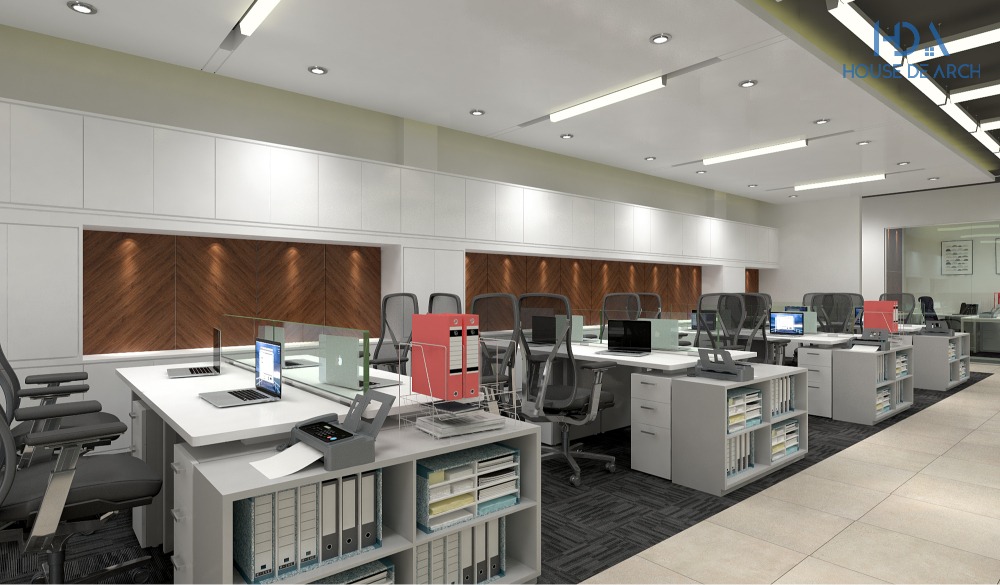
CFOs evaluating these modern office interior Bangladesh investments want payback timelines. Based on Dhaka office projects we’ve tracked:
Quantifiable returns:
- Real estate efficiency: ABW implementations accommodate 15-25% more staff in the same space, deferring expensive expansions. For a 3,500 sq ft office at BDT 95 per sq ft monthly rent, this represents BDT 500,000-800,000 annual savings
- Energy costs: Comprehensive efficiency upgrades reduce power/cooling costs by 28-38%. For offices spending BDT 120,000-200,000 monthly on electricity, annual savings reach BDT 400,000-900,000
- Recruitment costs: Companies with modern offices report 30-45% faster hiring and 18-24% better offer acceptance rates, reducing recruiter fees (typically 15-20% of annual salary in Dhaka)
- Retention savings: Each prevented resignation saves BDT 450,000-850,000 in replacement costs (recruiting, onboarding, productivity loss). Offices with strong design report 23-31% lower turnover
- Productivity gains: Documented 12-18% productivity improvements from wellness and biophilic design translate to substantial value for knowledge-work businesses
Premium office fit-outs typically achieve full ROI within 2.5-4.5 years through these combined factors—shorter timelines than most other capital investments available to Dhaka businesses.
RAJUK and BNBC Considerations for Office Renovations
Implementing office design trends Dhaka businesses want must comply with local building regulations:
Key regulatory requirements:
- Fire safety compliance: BNBC 2020 Chapter 5 requires clearly marked exits, emergency lighting, and fire extinguishers at specified intervals. Open-plan and ABW layouts must not increase travel distance to exits beyond 30m (45m if sprinklered)
- Egress widths: Corridors serving >50 occupants require minimum 1.1m width; doors in exit paths need 0.9m clear width. This affects partition placement in modern office interior Bangladesh projects
- Ventilation requirements: BNBC Chapter 8 mandates minimum air changes per hour (6-8 ACH for office spaces). Flexible layouts with increased density must ensure HVAC systems handle the load
- Accessibility: Commercial spaces must accommodate persons with disabilities—minimum 0.9m corridor widths, accessible restrooms, ramp specifications if entrance involves level changes
- Electrical load calculations: Adding smart systems, upgraded lighting, and power-hungry equipment requires electrical drawings approved by RAJUK if total load changes significantly
- Structural modifications: Removing walls or cutting floor openings for stairs requires RAJUK structural approval, even in commercial fit-outs
Work with experienced firms offering consultancy services who understand Bangladesh regulations. Non-compliant renovations risk shutdown orders, fines, or complications during building renewal inspections.
How to Prioritize Trends for Your Budget and Goals
Not every business needs every trend. Strategic prioritization depends on your specific situation:
For companies with recruitment/retention challenges: Prioritize wellness features, biophilic design, and culture-building elements that differentiate your workplace. Budget allocation: 35-45% of fit-out budget.
For rapidly growing businesses: Invest heavily in flexible/modular infrastructure and ABW zones accommodating fluctuating headcount without redesigns. Budget allocation: 40-50% of fit-out budget.
For cost-focused organizations: Lead with energy efficiency and space optimization delivering measurable operational savings. Budget allocation: 30-40% of fit-out budget, with fastest payback.
For client-facing businesses: Prioritize branded entrance areas, hospitality-inspired spaces, and design elements that impress visitors and photograph well. Budget allocation: 25-35% of fit-out budget.
For technology companies: Smart office systems, collaboration spaces, and innovation zones support your culture and work style. Budget allocation: 30-40% of fit-out budget.
Phased implementation works well—establish flexible infrastructure first, then add technology, wellness, and biophilic elements over 12-24 months as budgets allow and occupancy patterns become clear.
What Dhaka Businesses Are Actually Choosing
Based on our 2024-2026 project pipeline, the most frequently implemented combinations for office interior design trends Bangladesh businesses prefer:
Startup/tech sector (typically 1,500-3,500 sq ft): Activity-based working zones + technology integration + culture-focused elements. Average investment: BDT 2,200-3,400 per sq ft. Priority: flexibility and brand expression over long-term durability.
Professional services (law, consulting, finance, 2,500-6,000 sq ft): Wellness features + biophilic design + branded client-facing areas. Average investment: BDT 2,600-3,800 per sq ft. Priority: professional image and employee satisfaction.
Corporate/multinational offices (5,000-15,000 sq ft): Comprehensive approach implementing 5-6 trends with emphasis on sustainability and smart systems. Average investment: BDT 2,800-4,200 per sq ft. Priority: long-term operational efficiency and global standards alignment.
SME/growing businesses (1,200-3,000 sq ft): Selective implementation of 2-3 trends with emphasis on space optimization and flexibility. Average investment: BDT 1,800-2,800 per sq ft. Priority: maximum value and future adaptability.
Understanding your industry peers’ priorities helps benchmark appropriate investment levels and feature sets for your specific context.
Working with Office Interior Design Specialists
Successfully implementing these workspace design trends 2026 requires more than trend awareness—it demands technical knowledge of Bangladesh construction practices, material sourcing, regulatory requirements, and project management.
What specialist firms provide:
- Space planning optimized for Dhaka conditions: Accounting for climate, power reliability, and local work patterns
- Material specification: Sourcing products available in Bangladesh or managing imports economically, with realistic lead times
- Regulatory navigation: Ensuring BNBC compliance and managing RAJUK approval processes where required
- Contractor coordination: Managing Dhaka-based contractors, quality control, and realistic project timelines
- Budget transparency: Providing detailed estimates with contingencies appropriate for Bangladesh construction conditions
- Post-occupancy support: Addressing punch-list items and ensuring systems function as designed
Evaluate firms based on portfolio of completed Dhaka office projects, understanding of your industry’s specific needs, transparent pricing structures, and ability to provide comprehensive plans and pricing aligned with your budget and timeline expectations.
FAQ
What is the average cost per square foot for modern office interior design in Dhaka in 2026?
Modern office interior design in Dhaka ranges from BDT 1,600-2,400 per sq ft for mid-range fit-outs to BDT 2,600-4,200 per sq ft for premium implementations incorporating multiple trends like activity-based working, smart technology, and wellness features. Basic fit-outs start at BDT 950-1,500 per sq ft but lack the modern features increasingly expected by employees and clients. Costs include partitions, finishes, furniture, technology, and professional fees but exclude HVAC systems and major electrical upgrades which are typically separate.
How do activity-based working (ABW) office layouts comply with BNBC regulations in Bangladesh?
Activity-based working layouts must comply with BNBC 2020 fire safety and egress requirements: corridors serving more than 50 occupants need minimum 1.1m width, travel distance to exits cannot exceed 30m (45m if sprinklered), and exit doors require 0.9m clear width. Flexible furniture and modular partitions cannot obstruct emergency exits or reduce required egress widths. Properly designed ABW layouts incorporate these requirements during space planning, positioning flexible zones away from exit paths and maintaining clear circulation routes. Working with architects familiar with RAJUK requirements ensures compliance while achieving desired flexibility.
What ROI can Dhaka businesses expect from investing in modern office interior design?
Dhaka businesses typically achieve ROI within 2.5-4.5 years through multiple factors: space efficiency improvements accommodate 15-25% more staff without expanding (saving BDT 500,000-800,000 annually in rent for average offices), energy efficiency reduces power costs by 28-38% (BDT 400,000-900,000 annual savings), improved retention saves BDT 450,000-850,000 per prevented resignation, and faster recruitment reduces hiring costs. Productivity improvements of 12-18% from wellness and biophilic design provide additional value. Premium fit-outs deliver faster payback than most capital investments available to Bangladesh businesses.
Which office design trends offer the fastest payback for Dhaka businesses?
Energy efficiency and space optimization trends deliver the fastest payback in Dhaka: LED lighting conversions achieve 18-26 month payback through reduced electricity costs, VRF HVAC systems pay back in 24-36 months through 30-40% energy savings, and activity-based working layouts that accommodate more staff without expansion deliver immediate rent savings. Smart occupancy systems optimize space utilization with 18-24 month payback. Biophilic design and wellness features show ROI through retention and productivity improvements within 24-36 months but require more sophisticated measurement. For cost-focused businesses, prioritize energy and space efficiency before aesthetic upgrades.
Do I need RAJUK approval to renovate my office interior in Dhaka?
Office interior renovations typically don’t require RAJUK approval unless they involve structural modifications (removing load-bearing walls, cutting floor openings, adding mezzanines), significant electrical load increases requiring new service connections, or changes to building façade/exterior. However, all renovations must comply with BNBC 2020 requirements for fire safety, egress, ventilation, and accessibility. Interior fit-outs with partitions, finishes, furniture, and lighting generally proceed without RAJUK approval but must pass building inspections during occupancy certificate renewals. Consult with experienced design firms to determine which aspects of your project require regulatory approval and ensure compliance throughout.
How long does a typical office interior design project take in Dhaka?
Typical Dhaka office interior projects require 10-18 weeks from design initiation to occupancy: 2-3 weeks for space planning and design development, 1-2 weeks for approvals and contractor selection, 6-10 weeks for construction and fit-out (depending on size and complexity), 1-2 weeks for furniture installation and technology commissioning, and 1 week for punch-list completion. Projects involving custom millwork, imported materials, or extensive MEP work take 14-18 weeks. Timelines depend on decision-making speed, material availability, and contractor coordination. Working with firms offering comprehensive project management services helps maintain schedules and coordinate the multiple trades involved in modern office fit-outs.