Why Hotel Interior Design Directly Impacts Your Revenue in Bangladesh’s Competitive Market
Bangladesh’s hospitality sector has grown exponentially, with Dhaka alone seeing a 40% increase in hotel development from 2018 to 2023. Yet occupancy rates remain volatile—averaging 55-65% for mid-tier properties—because guest expectations have fundamentally shifted. Today’s traveler doesn’t just book a bed; they purchase an experience, and that experience begins the moment they see your property photos online and ends when they leave their review.
For hotel owners and developers in Dhaka, Chattogram, Sylhet, and Cox’s Bazar, interior design is no longer cosmetic. It’s a revenue driver. Properties with intentionally designed interiors report 23-35% higher average daily rates (ADR) and 18% better repeat booking rates compared to functionally equivalent but poorly designed competitors. The difference? Strategic hotel interior design in Bangladesh that addresses local climate challenges, cultural expectations, operational efficiency, and the specific psychology of hospitality spaces.
At House De Arch, we’ve worked across commercial hospitality projects where design interventions—lobby reconfiguration, room layout optimization, material selection for Dhaka’s humidity—directly correlated with measurable improvements in guest satisfaction scores and online review ratings. This article breaks down the evidence-based strategies we use to create hotel interiors that don’t just look impressive but perform commercially.
The Financial Case: What Hotel Interior Design Actually Costs and Returns in Bangladesh
Budget transparency matters. For a boutique hotel (15-30 rooms) in Dhaka, comprehensive hotel design Dhaka services including concept development, detailed drawings, material specifications, and site supervision typically range from BDT 8-15 lakh, depending on project complexity and finish levels. For larger properties (50+ rooms), design fees scale to BDT 20-40 lakh, with implementation costs varying significantly based on material choices and structural modifications.
Typical per-room interior investment (excluding structural/MEP work):
- Economy segment: BDT 3.5-6 lakh per room (basic furniture, standard finishes, functional lighting)
- Mid-tier/business hotels: BDT 7-12 lakh per room (custom furniture, branded fixtures, zoned lighting, quality textiles)
- Boutique/upscale: BDT 15-28 lakh per room (bespoke millwork, imported fixtures, integrated technology, premium materials)
These investments typically show ROI within 18-36 months through increased ADR, improved occupancy during shoulder seasons, and reduced maintenance costs from durable material selection. More importantly, well-designed properties command 25-40% rental premiums in Bangladesh’s competitive hotel market without proportional increases in operating costs.
Our cost estimate service provides detailed breakdowns specific to your property type, location, and target market segment, ensuring budget alignment from day one.
Guest Psychology: The Six Design Elements That Drive 5-Star Reviews
After analyzing hundreds of hotel reviews on Booking.com, TripAdvisor, and Google for Bangladesh properties, six design factors repeatedly correlate with high ratings and positive sentiment. These aren’t subjective preferences—they’re consistent patterns in guest feedback that directly inform our hospitality interior design Bangladesh approach.
1. First Impression Architecture: Lobby and Reception Design
Your lobby creates the psychological anchor for the entire stay. Guests form quality judgments within 15-30 seconds of entry. Effective hotel lobby design in Bangladesh must address:
- Climate transition zones: Dhaka’s outdoor temperatures (32-38°C) to indoor AC (22-24°C) require vestibule spaces that prevent thermal shock and manage humidity infiltration. Double-door entry systems with intermediate zones reduce AC load by 18-25% while improving guest comfort.
- Visual hierarchy: Reception desks positioned for immediate sightlines but not blocking natural exploration. Ceiling heights of 3.6-4.2m create openness without appearing cavernous.
- Cultural touchpoints: Subtle incorporation of Bangladeshi design elements—jamdani textile patterns, terracotta accents, water features referencing Bengali courtyards—creates local authenticity without resorting to kitsch.
- Functional zoning: Separate waiting areas from circulation paths. Business travelers need visible workspaces; leisure guests seek comfortable seating away from desk transactions.
Material choices matter operationally: high-traffic lobby floors in vitrified tiles (800x800mm, R10 slip rating) or polished Rajasthan marble cost BDT 180-350/sqft installed but withstand Bangladesh’s monsoon season and require minimal maintenance compared to cheaper alternatives that show wear within 18 months.
2. Room Layout Optimization: Maximizing Perceived Space and Functionality
Standard hotel rooms in Dhaka measure 280-350 sqft, yet guest perception of spaciousness varies dramatically based on layout decisions. Effective hotel room design Bangladesh strategies include:
- Entry sequence design: Avoid bed visibility from entrance. A 900mm entry corridor with wardrobe/luggage niche creates psychological separation and perceived privacy.
- Furniture scale calibration: King beds (180x200cm) in rooms under 300 sqft create cramped perceptions. Queen beds (160x200cm) with wall-mounted nightstands and floating desks maximize floor visibility and movement space.
- Multi-functional elements: Desk-vanity combinations, fold-down work surfaces, and under-bed storage reduce furniture count while maintaining functionality—critical in compact urban properties.
- Mirror placement: Strategic full-height mirrors opposite windows double perceived space. In 280 sqft rooms, this single intervention can improve spaciousness ratings by 30-40% in guest feedback.
Bathroom design deserves equal attention: wet-dry separation, wall-mounted fixtures, and frameless glass (8mm toughened, acid-etched) create spa-like impressions in 45-65 sqft bathrooms. Locally sourced Chittagong stone or Rajshahi marble for countertops (BDT 220-450/sqft) provide luxury aesthetics at controlled costs.
3. Lighting Design: The Most Underutilized Tool in Bangladeshi Hotel Interiors
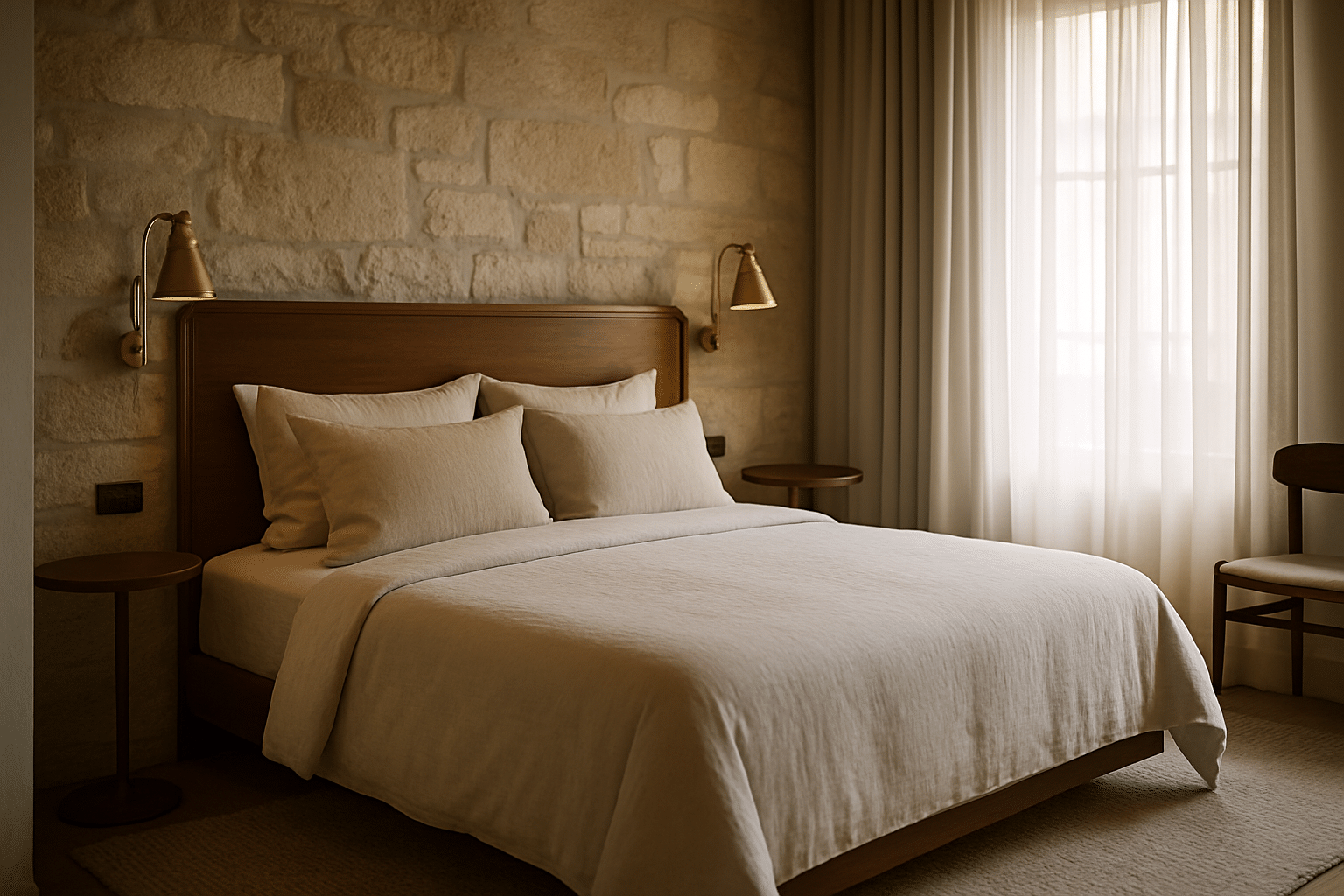
Poor lighting receives more negative mentions in Bangladesh hotel reviews than any other design factor except cleanliness. Yet most properties still rely on single-source overhead fixtures and inadequate task lighting. Professional guest experience design implements layered lighting:
- Ambient layer: Recessed LED downlights (3000K warm white, CRI >80) on dimmers provide base illumination at 150-200 lux
- Task layer: Bedside reading lights (adjustable arms, 400-500 lux at reading plane), desk lamps (600 lux), and vanity lighting (500 lux vertical illumination on face)
- Accent layer: Cove lighting, picture lights, or decorative pendants create visual interest and depth
- Control systems: Bedside master switches and entry panel controls (Schneider/Legrand, BDT 8,500-15,000 per room) dramatically improve guest convenience
Energy costs matter in Bangladesh’s commercial electricity rates (BDT 9-12/kWh for commercial). LED conversion reduces lighting energy consumption by 60-75% compared to CFLs, with payback periods of 14-18 months even at higher initial investment.
4. Material Selection for Bangladesh’s Climate and Maintenance Reality
Dhaka’s 80-90% humidity during monsoon seasons and 35-38°C temperatures create specific material performance requirements that imported design concepts often ignore. Our boutique hotel interior Dhaka projects prioritize:
- Wood alternatives: WPC (wood-plastic composite) or marine-grade plywood with laminate finishes outperform solid wood in humid conditions, eliminating warping and termite issues while reducing costs 30-45%
- Textile choices: Synthetic-blend upholstery (polyester-cotton) resists moisture absorption and mildew better than natural fabrics; treated at BDT 850-1,400/meter versus BDT 1,200-2,500 for specialty natural textiles requiring frequent replacement
- Wall finishes: Acrylic-based paints (Asian Paints Royale, Berger Weathercoat) with anti-fungal additives withstand humidity; avoid paper-based wallpapers except in climate-controlled suites
- Flooring: Vitrified tiles or vinyl planks (Tarkett, Armstrong, BDT 120-280/sqft) provide wood aesthetics without moisture susceptibility; carpet only in AC-controlled conference areas with moisture barriers
These selections reduce replacement cycles from 3-4 years to 7-10 years, directly impacting operating margins and maintaining design integrity longer.
5. Cultural and Operational Considerations Unique to Bangladesh Hotels
Design must accommodate Bangladesh’s specific hospitality culture and operational patterns:
- Prayer space provisions: Qibla direction indicators in rooms (subtle wall markers or drawer inserts), directional prayer mats in cupboards
- Family travel accommodation: Convertible spaces for extended family groups (common in domestic tourism); rollaway bed storage, connecting room acoustic privacy
- Food service considerations: In-room dining setup areas separate from sleeping zones; adequate counter space for multiple dish service typical of Bengali meals
- Security expectations: Visible CCTV in public areas, well-lit parking zones, reception visibility from entry—safety perception drives female traveler and family bookings
Our commercial projects experience across Bangladesh informs these culturally-grounded design decisions that generic international templates miss.
6. Technology Integration: What Actually Matters to Bangladesh Hotel Guests
Skip the expensive “smart room” gimmicks that break within months. Bangladesh hotel guests prioritize functional technology:
- Power accessibility: Minimum 6 outlets per room including bedside USB ports (BDT 450-850 per unit); international socket compatibility
- Connectivity: Mesh WiFi systems (Ubiquiti UniFi, BDT 25,000-60,000 for 20-room coverage) providing 50+ Mbps per room, not single-router systems claiming hotel-wide coverage
- Climate control: Individual room AC thermostats with actual temperature control, not just fan speed adjustments
- Entertainment: 43-50″ smart TVs with casting capability and local channel packages matter more than proprietary systems
These investments total BDT 35,000-65,000 per room but directly address the top operational complaints in Bangladesh hotel reviews.
Regulatory Compliance: BNBC and Fire Safety Requirements for Hotel Interiors
Bangladesh National Building Code (BNBC) 2020 and Fire Prevention and Extinction Act requirements significantly impact hotel renovation Bangladesh projects. Key compliance areas:
- Egress requirements: Corridor widths minimum 1.8m for hotels over 10 rooms; fire-rated doors (60-minute rating) for stairwell access; exit signage with backup power
- Fire detection and suppression: Smoke detectors in all rooms and public areas; sprinkler systems for properties over 4 floors or 50 rooms; fire extinguisher placement every 20m of corridor
- Material flame ratings: Curtains, upholstery, and decorative materials must meet flame-retardant standards (test certificates required for RAJUK approval); this typically adds 15-25% to textile costs
- Accessibility provisions: Minimum 5% of rooms (or minimum 1 room) must meet accessibility standards including wider doorways (900mm), grab bars, and roll-in showers
- Ventilation and exhaust: Bathroom exhaust minimum 8 air changes per hour; kitchen exhaust systems with grease traps and fire suppression for properties with F&B service
Our consultancy service includes RAJUK/Fire Service coordination, ensuring design compliance without costly redesigns during approval stages. Non-compliant properties face approval delays of 4-8 months and retrofit costs of BDT 8-15 lakh for typical 25-room properties.
Common Hotel Design Mistakes We See (and Fix) in Bangladesh Projects
In hotel renovation Bangladesh projects, we regularly encounter these value-destroying errors:
- Undersized AC systems: Calculating cooling loads without accounting for Dhaka’s solar heat gain and humidity. Results: rooms that never reach comfortable temperatures, guest complaints, and 40% higher energy bills from constantly running undersized units. Proper load calculation and VRF/VRV system specification adds 15% upfront but reduces operating costs 35% annually.
- Inadequate storage: Rooms designed without sufficient wardrobe, luggage, and personal item storage. Business travelers and families need 1.2-1.5 linear meters of hanging space plus drawer/shelf storage. Retrofit solutions are expensive and spatially compromised.
- Acoustic neglect: Party walls without proper insulation (minimum 50mm acoustic batts plus staggered studs for STC 50+ rating). Noise complaints drive negative reviews and operational headaches. Acoustic remediation post-construction costs 3-4x preventive design.
- Bathroom ventilation failures: Exhaust fans venting into false ceilings rather than outdoors, creating mold breeding grounds. Proper ductwork to exterior adds BDT 8,500-15,000 per room but eliminates moisture damage and maintenance issues.
- Lighting on single switches: No layering or dimming capability, forcing guests to choose between overlighting or darkness. Retrofitting controls costs BDT 12,000-18,000 per room versus BDT 3,500-6,000 during initial installation.
These mistakes share a common origin: prioritizing initial construction cost over lifecycle performance and guest experience. The savings are illusory; they simply shift costs to higher operating expenses and lost revenue from poor reviews.
The Design Process: How HDA Approaches Hotel Interior Projects
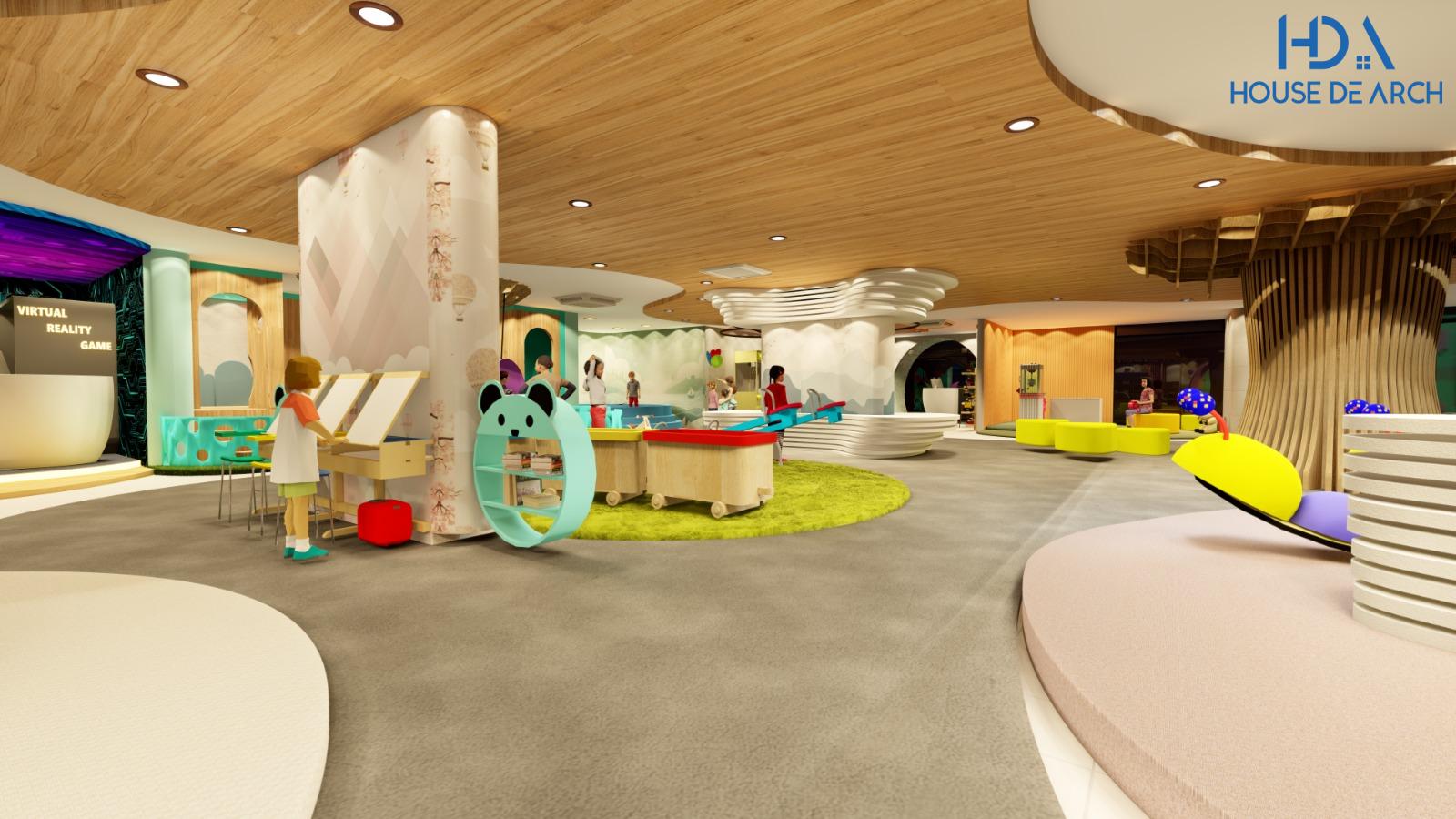
Our hospitality interior design Bangladesh process ensures design decisions align with your operational model and revenue targets:
- Market positioning workshop (Week 1-2): Define target guest segments, competitive set analysis, ADR targets, and brand positioning. Design follows strategy, not trends.
- Operational planning (Week 3-4): Room mix optimization, back-of-house efficiency, staff workflow, and maintenance accessibility. Beautiful but operationally dysfunctional hotels fail financially.
- Concept development (Week 5-8): Space planning, mood boards, material palettes, and preliminary budgets. Includes 3D visualization of key spaces (lobby, typical room, signature suite) for stakeholder alignment.
- Design development (Week 9-14): Detailed drawings, specifications, lighting plans, furniture design/selection, and fixture schedules. This is where buildability and budget control happen.
- Regulatory coordination (Week 15-18): RAJUK submissions, Fire Service approvals, and utility coordination. We handle the bureaucracy so you don’t have to.
- Implementation oversight (throughout construction): Site supervision, material verification, contractor coordination, and quality control. Design intent only matters if it’s actually built correctly.
Timeline for a 25-room boutique hotel: 16-22 weeks from contract to construction-ready documentation. Larger properties (50+ rooms) extend to 24-32 weeks. Our project management services can compress these timelines when necessary while maintaining quality standards.
Measuring Success: Design KPIs That Actually Matter
We evaluate hotel interior design effectiveness through measurable outcomes, not aesthetics alone:
- Guest satisfaction metrics: Review scores (target: 4.2+ on Booking.com/Google), specific mention rates for design/comfort/cleanliness categories, Net Promoter Score for repeat booking intent
- Financial performance: ADR premium versus competitive set (target: 15-25% for well-designed properties), revenue per available room (RevPAR), booking conversion rates from online listings
- Operational efficiency: Housekeeping time per room (well-designed spaces reduce cleaning time 12-18%), maintenance cost per room annually, energy consumption per room-night
- Longevity indicators: Finish durability (5+ years without major refresh), furniture structural integrity, systems reliability (HVAC, lighting, plumbing)
These metrics inform our design recommendations and allow objective evaluation of design ROI. Properties we’ve designed in Dhaka’s Gulshan and Banani areas consistently achieve 18-28% higher RevPAR than comparable properties in the same micro-markets, attributable primarily to design-driven guest preference and pricing power.
Investment Priorities: Where to Allocate Your Design Budget for Maximum Impact
If budget constraints require phasing, prioritize investments in this order for boutique hotel interior Dhaka projects:
- Lobby and entry sequence (20-25% of interior budget): First impressions drive booking conversions and set quality expectations. Compromise elsewhere if necessary, but get this right.
- Bathroom quality (18-22% of budget): Bathroom complaints generate disproportionate negative reviews. Premium fixtures, proper waterproofing, and spa-like finishes deliver measurable ROI.
- Bed and bedding (12-15% of budget): Mattress quality, pillow selection, and linen thread count (minimum 300TC Egyptian cotton) directly correlate with comfort ratings. This is non-negotiable.
- Lighting systems (10-12% of budget): Properly designed lighting transforms average spaces and addresses the most common guest complaint after cleanliness.
- Climate control (8-10% of budget): Reliable, controllable AC is baseline expectation in Bangladesh. System undersizing is false economy.
- Remaining allocation: Furniture, window treatments, artwork, technology integration, and decorative elements
This allocation differs significantly from residential projects where decorative elements receive higher priority. Hospitality design is fundamentally performance-based; aesthetics serve functionality and guest psychology, not the reverse.
Why Hotel Interior Design Requires Specialized Expertise Beyond Residential Work
Many hotel developers assume residential interior designers can handle hospitality projects. The skill sets overlap perhaps 40%, but critical differences include:
- Operational requirements: Housekeeping efficiency, maintenance accessibility, durability under commercial use intensity (300+ room cleans annually versus 50-60 in residential)
- Code complexity: Fire safety, accessibility, health department requirements, and commercial building standards far exceed residential codes
- Financial modeling: Design decisions must consider RevPAR impact, operating cost implications, and ROI timelines, not just client preference
- Standardization vs. customization: Replicable room designs that maintain quality across 20-50+ units while controlling costs and construction timelines
- Guest psychology: Designing for unknown users with varying expectations versus known clients with specific tastes
Our restaurant interior design and broader commercial experience informs our hospitality approach, ensuring designs perform operationally while delighting guests. We understand that hotels are businesses first and showcases second—a distinction that fundamentally shapes design priorities.
Getting Started: What Hotel Owners Should Prepare Before Engaging Designers
To maximize value from your design investment, prepare these elements before initial consultations:
- Business plan clarity: Target market segments, pricing strategy, competitive positioning, and occupancy projections. Design without strategy is decoration.
- Realistic budgets: Total project budget, interior allocation, and phasing flexibility. Vague “make it nice but cheap” briefs waste everyone’s time.
- Operational model: Staffing plans, service levels, F&B strategy, and amenity offerings. These drive space programming and design requirements.
- Existing conditions (for renovations): As-built drawings if available, structural reports, MEP system capacity, and known building issues. Surprises during construction destroy budgets and timelines.
- Timeline requirements: Opening date targets, seasonal considerations (avoid monsoon construction if possible), and financing milestones.
Our plans and pricing page outlines service structures and investment levels for different project scales, allowing informed budgeting before detailed discussions. For renovation projects, our space renovation services include existing condition assessment and code upgrade requirements analysis.
Transform Your Hotel Property Into a Revenue-Generating Asset
Bangladesh’s hospitality market rewards properties that understand guest experience isn’t about luxury for its own sake—it’s about intentional design that addresses functional needs, cultural expectations, and psychological comfort while performing financially. The difference between 55% occupancy at BDT 4,500 ADR and 75% occupancy at BDT 6,500 ADR is rarely location or amenities alone; it’s the cumulative impact of dozens of design decisions that either delight guests or disappoint them.
Whether you’re developing a new boutique hotel in Gulshan, renovating an existing property in Chattogram, or planning a resort in Cox’s Bazar, strategic interior design is your competitive advantage in an increasingly sophisticated market. Guest expectations will only continue rising; properties designed to meet today’s standards already lag tomorrow’s requirements.
House De Arch has delivered hospitality interior projects across Bangladesh’s commercial sectors, bringing the same evidence-based, performance-focused approach to hotels that we apply to our office, restaurant, and residential work. We don’t design for awards or Instagram posts—we design for measurable business outcomes: higher ADR, better reviews, increased bookings, and sustainable operational performance.
If you’re ready to create a hotel interior that drives revenue rather than just consuming budget, let’s discuss your project specifics, site constraints, market positioning, and financial targets. Contact us today for a project evaluation and preliminary consultation.
FAQ
What is the typical cost for hotel interior design services in Bangladesh?
Hotel interior design costs in Bangladesh vary by project scale and complexity. For boutique hotels (15-30 rooms), comprehensive design services range from BDT 8-15 lakh. Larger properties (50+ rooms) typically require BDT 20-40 lakh for complete design documentation and supervision. Per-room interior implementation costs range from BDT 3.5-6 lakh (economy segment) to BDT 15-28 lakh (boutique/upscale), excluding structural and MEP work. These investments typically show ROI within 18-36 months through increased occupancy and higher average daily rates.
How long does hotel interior design and implementation take in Dhaka?
Design timeline for a 25-room boutique hotel typically requires 16-22 weeks from contract to construction-ready documentation, including RAJUK approvals and Fire Service coordination. Larger properties (50+ rooms) extend to 24-32 weeks. Construction implementation adds 5-8 months depending on project scope, existing conditions, and finish complexity. Renovation projects often take 20-30% longer due to phased construction maintaining partial operations. Proper planning and experienced project management can compress timelines while maintaining quality standards.
What RAJUK and BNBC regulations apply to hotel interior design in Bangladesh?
Hotel interiors must comply with Bangladesh National Building Code (BNBC) 2020 and Fire Prevention and Extinction Act requirements. Key regulations include: minimum corridor widths of 1.8m for hotels over 10 rooms, fire-rated doors for stairwells, smoke detectors and sprinklers for properties over 4 floors or 50 rooms, flame-retardant materials with test certificates, accessibility provisions for minimum 5% of rooms, and proper ventilation systems. Non-compliance causes approval delays of 4-8 months and retrofit costs of BDT 8-15 lakh for typical properties. Working with experienced designers ensures compliance without costly redesigns.
Which materials work best for hotel interiors in Bangladesh’s humid climate?
Bangladesh’s 80-90% monsoon humidity and high temperatures require specific material selections. Recommended materials include: WPC or marine-grade plywood with laminate instead of solid wood (eliminates warping and termites while reducing costs 30-45%), synthetic-blend upholstery fabrics that resist moisture and mildew, acrylic-based paints with anti-fungal additives, vitrified tiles or vinyl planks for flooring instead of moisture-sensitive options, and locally sourced Chittagong stone or Rajshahi marble for bathroom countertops. These selections extend replacement cycles from 3-4 years to 7-10 years, significantly improving operating margins and maintaining design integrity longer.
What design elements most impact hotel guest satisfaction and review scores in Bangladesh?
Analysis of hundreds of Bangladesh hotel reviews reveals six critical design factors: impressive lobby and reception creating strong first impressions, optimized room layouts maximizing perceived space (even in compact 280-350 sqft rooms), layered lighting systems with task, ambient, and accent layers, climate-appropriate material selections preventing humidity damage and maintenance issues, cultural considerations including prayer space provisions and family accommodation, and functional technology integration focusing on power accessibility and reliable WiFi over gimmicky smart features. Properties addressing these elements consistently achieve 4.2+ review scores and 18-28% higher RevPAR than comparable properties.
Should I hire a residential interior designer or hospitality specialist for my hotel project?
Hotel interior design requires specialized expertise beyond residential work. Critical differences include: understanding operational requirements like housekeeping efficiency and maintenance accessibility under commercial use intensity, navigating complex fire safety, accessibility, and commercial building codes, making design decisions based on RevPAR impact and ROI timelines rather than aesthetic preference alone, creating replicable standardized designs across multiple rooms while controlling costs, and designing for unknown guests with varying expectations rather than known clients. Residential designers typically lack this commercial performance focus, leading to operationally dysfunctional spaces that look attractive but fail financially. Hospitality specialists deliver measurably better business outcomes.