
The dining room is the room most associated with memory in any home — the place where family gatherings happen, where important conversations take place over food, where the quality of the design shapes the quality of the time spent within it. Yet in most Dhaka apartments, the dining room receives less design attention than the living room it adjoins. This guide covers dining room interior design in Dhaka — from the fundamental decisions about table size and positioning to the lighting that transforms an ordinary meal into an occasion.
The Dining Table: Sizing and Positioning
The dining table is the room’s defining element, and its size determines everything else. Two rules govern dining table sizing: allow a minimum 600mm of table width per person (700mm preferred for comfortable dining), and allow a minimum of 900mm clearance between the table edge and any wall or furniture to allow comfortable chair movement and waiter-style service circulation.
In Dhaka’s typically compact apartment dining zones, these clearance requirements often force a smaller table than clients initially specify. A table that seats 8 in a rendered image can make a room feel like a corridor in reality. The correct approach: measure the available dining zone, subtract the required circulation clearance on all sides, and specify the largest table that fits within those dimensions — not the largest table that fits in the room.
Table shapes
Round tables are the most social dining surface — everyone can see everyone, there is no “head of the table”, and they feel generous even at modest diameters. Best for 4–6 person dining zones. Rectangular tables are more space-efficient for larger groups and work well in longer dining rooms. Extending tables (with leaves that extend the table for larger gatherings) provide the best of both — compact for everyday use, generous for entertaining.
Dining Lighting: The Most Important Decision
The pendant light above the dining table is the single design decision with the greatest impact on the dining experience. A well-chosen pendant — warm colour temperature (2,700K), positioned 70–80cm above the table surface, sized to complement the table’s scale — transforms every meal. It makes food look appetising, makes faces look attractive, and creates a pool of warm light that focuses attention on the table and the people around it.
Sizing rule: the pendant diameter should be approximately 1/3 to 1/2 of the table width. Over a 900mm wide table, a 350–450mm diameter pendant is correct. Over a 1,200mm table, 400–600mm. Multiple smaller pendants (two or three in a linear arrangement over a rectangular table) can be used instead of one large pendant — they provide more even lighting and a more contemporary aesthetic.
All dining lighting must be on a dimmer circuit. The difference between a family dinner at full brightness and a dinner party at 40% brightness is the difference between a functional meal and a genuinely memorable occasion.
Chairs: Comfort for Extended Meals
Dining chairs are used for 20–90 minutes at a sitting — long enough for comfort to matter significantly, but short enough that the ergonomic requirements are less demanding than a task chair. Key considerations: seat height should be 270–300mm below the table surface (standard dining table height 740–760mm, standard dining chair seat height 440–460mm); the seat should be deep enough to support the full thigh without pressure behind the knee; upholstered seats provide more comfort for extended dining than hard timber or plastic seats.
In Bangladesh’s humid climate, dining chair upholstery should be a fabric that breathes and does not retain heat — linen, cotton, or a quality synthetic weave rather than leather or vinyl, which can become uncomfortable in warm temperatures. A removable, washable seat cushion on a timber or metal frame is often the most practical specification.
Open-Plan Dining: Integrating with the Living Room and Kitchen
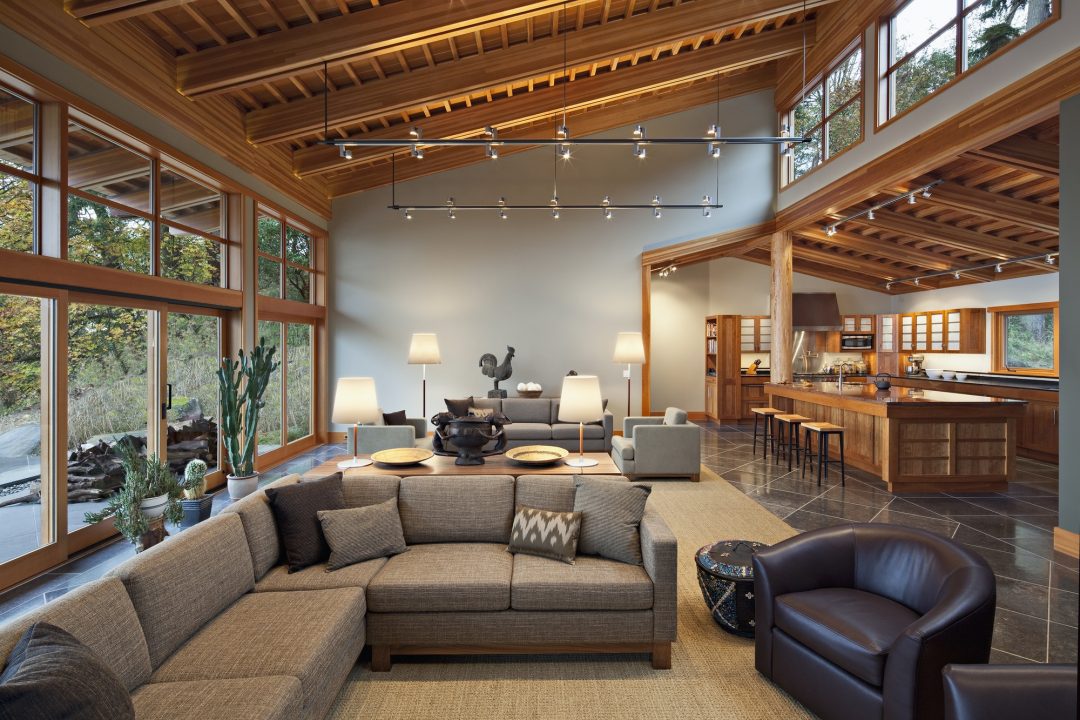
Most premium Dhaka apartments now combine the dining room, living room, and kitchen into a single open-plan space. This configuration has significant advantages — better natural light distribution, a more social cooking and eating environment, and a sense of spaciousness that compartmentalised layouts cannot achieve. It also requires deliberate design to prevent the three zones from feeling like a single undifferentiated room.
Three design tools define zones within an open-plan living-dining-kitchen: the dining pendant light (which establishes the dining zone overhead); the dining rug (which defines the dining footprint at floor level); and the material transition between zones (a change from the living room rug to the dining room’s harder or differently finished flooring). Together, these three elements create a dining zone with a clear spatial identity without requiring walls or partitions.
Dining Room Storage: The Sideboard and Display
The dining room sideboard — a low storage unit running along one wall — is one of the most useful and most underspecified elements in Dhaka’s dining rooms. It provides: storage for dining accessories (table linens, candles, serving dishes) that clutter worktops and cupboards elsewhere; a surface for serving dishes during the meal; a display surface for art, decorative objects, and plants; and a visual anchor to the wall that balances the table’s dominance of the room.
A well-designed sideboard in a dining room does more design work per square foot than almost any other piece of furniture — it is worth investing in quality and considered design. Custom joinery that spans the full width of the wall, combining open display shelving above with closed storage below, is the most visually impactful and practically useful specification.
Dining Room Cost Guide — Dhaka 2025
| Component | Budget | Mid-Range | Premium |
|---|---|---|---|
| Dining table (6–8 person) | ৳20,000–৳45,000 | ৳45,000–৳90,000 | ৳90,000–৳200,000+ |
| Dining chairs (per chair) | ৳5,000–৳12,000 | ৳12,000–৳25,000 | ৳25,000–৳60,000+ |
| Pendant light | ৳5,000–৳12,000 | ৳12,000–৳30,000 | ৳30,000–৳80,000+ |
| Sideboard / joinery | ৳15,000–৳35,000 | ৳35,000–৳75,000 | ৳75,000–৳160,000+ |
| Dining rug | ৳8,000–৳18,000 | ৳18,000–৳40,000 | ৳40,000–৳90,000+ |
| Total (complete dining room) | ৳5L–৳12L | ৳12L–৳26L | ৳26L–৳60L+ |
Frequently Asked Questions
How big should a dining table be for a family of four in a Dhaka apartment?
A 1,200mm × 800mm (or 1,000mm diameter round) table is comfortable for four people and practical in most apartment dining zones. If the family regularly entertains, an extending table that opens from 1,200mm to 1,600mm or 1,800mm provides the flexibility to accommodate six or eight guests without consuming extra floor space daily.
Should the dining table be the same material as the kitchen cabinetry in an open-plan space?
Not necessarily the same, but they should be from the same material family or palette. A natural timber dining table works well adjacent to white kitchen cabinetry (complementary contrast) or timber-front kitchen cabinetry (continuous warmth). A white composite dining table works well with white kitchens (visual continuity) but can make an open-plan space feel cold if no warm material anchors the dining zone. The rug, chairs, and pendant bring warmth regardless of the table material.
Related: Living Room Interior Design | Kitchen Interior Design Bangladesh | Modern Apartment Interior Design | Residential Interior Design Guide | Interior Design Cost Guide
Designing a dining room in Dhaka? Contact House De Arch — we create spaces worth gathering in.