
Dhaka’s retail landscape is one of the most dynamic in South Asia — a market where global brands, ambitious local retailers, and innovative independents compete for customers with increasingly high expectations. Retail shop design in Dhaka must navigate this competitive environment while addressing the specific realities of Bangladesh: climate, culture, supply chain, and a customer base that is both brand-conscious and value-aware. This guide covers the design strategies, location considerations, and cost frameworks that give Dhaka retail spaces a genuine commercial edge.
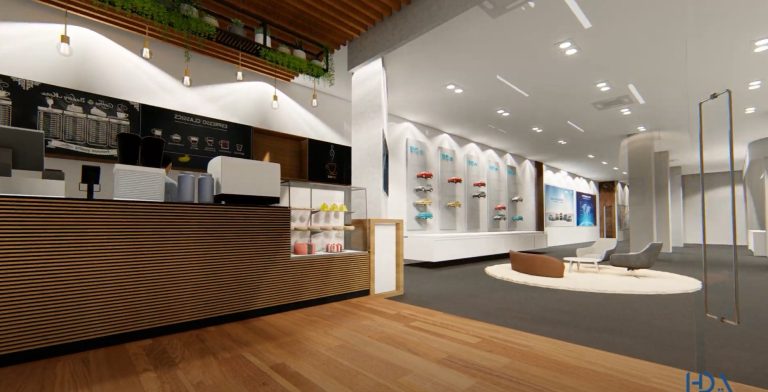
Dhaka’s Retail Landscape: Key Design Implications
Climate Considerations
Bangladesh’s tropical climate — hot and humid for most of the year, with a monsoon season — creates specific demands for retail interiors. Air conditioning is not optional; it is a prerequisite for extended customer dwell time. Entrances must manage the transition between street heat and conditioned interior without creating uncomfortable drafts or allowing excessive heat gain. Flooring must handle wet footwear during monsoon season without becoming a slip hazard. Materials must resist high humidity without warping, delaminating, or discolouring.
Location-Specific Design
Retail design in Dhaka varies significantly by location. Gulshan and Banani demand a premium register — the customer base is affluent, internationally travelled, and benchmarks against global retail standards. Dhanmondi requires a balance of aspiration and accessibility — strong design sensibility with price sensitivity. Bashundhara City and other mall environments require designs that stand out against adjacent competitors while conforming to mall infrastructure constraints. Street-level retail in Motijheel serves a business district audience with different needs again. Understanding the location’s customer profile is the first design decision.
Design Strategies for Different Dhaka Retail Concepts
Fashion and Apparel
Fashion retail in Dhaka increasingly demands global aesthetic standards. Clean, flexible interiors with adjustable rail systems, generous fitting rooms with excellent lighting, and a carefully considered colour palette that complements rather than competes with the merchandise. The shopfront and window display are the primary customer acquisition tools — invest disproportionately in these relative to the back of the store.
Electronics and Technology
Technology retail requires a clinical precision in display — products arranged in clear categories, well-lit demonstration areas where products can be handled and tested, and a service counter positioned to provide confident, expert assistance. Lighting at 3,500–4,000K (neutral to cool white) suits the precision and modernity of technology products. Cable management and power infrastructure must be designed from the outset.
Food and Specialty Retail
Specialty food stores — artisan bakeries, premium grocers, health food stores — combine the sensory appeal of food with a design language that communicates quality and care. Natural materials (timber, stone, woven textures), warm lighting, and generous product display heights create environments that feel abundant and curated. Hygiene and easy-clean surfaces are non-negotiable alongside aesthetics.
Home and Lifestyle
Home and lifestyle retail benefits most from experiential display — products shown in lifestyle contexts rather than stacked on shelves. A sofa shown in a styled living room setting sells more effectively than the same sofa on a plinth. Creating room vignettes within the store helps customers visualise products in their own homes and naturally extends dwell time as they engage with the entire scene.
Shopfront and Visual Merchandising in Dhaka
In a city as visually busy as Dhaka, standing out at street level demands deliberate design. The shopfront — signage, window display, entrance design — has approximately three seconds to stop a pedestrian or driver and communicate the brand’s offer. The most effective Dhaka shopfronts share common characteristics: clear brand identification (name and logo visible from a distance), a window display that changes regularly (at least monthly), strong lighting that illuminates the entrance after dark, and a physical distinction from neighbouring facades.
Retail Shop Design Cost in Dhaka 2025
| Location | Budget per Sq Ft | Mid-Range per Sq Ft | Premium per Sq Ft |
|---|---|---|---|
| Gulshan / Banani | ৳1,500–৳2,500 | ৳2,500–৳4,000 | ৳4,000–৳7,000+ |
| Dhanmondi / Mirpur | ৳800–৳1,500 | ৳1,500–৳2,800 | ৳2,800–৳5,000 |
| Shopping Mall | ৳1,200–৳2,000 | ৳2,000–৳3,500 | ৳3,500–৳6,000 |
| Street / Stand-alone | ৳700–৳1,200 | ৳1,200–৳2,500 | ৳2,500–৳4,500 |
Frequently Asked Questions
How do I compete with large chain stores in Dhaka as an independent retailer?
Through specificity and experience. Chain stores are designed to appeal broadly; they cannot be as specific, personal, or atmospheric as a well-designed independent. Invest in a distinctive design identity, train staff to deliver a genuinely personalised service, and create a store experience that cannot be replicated online or in a chain outlet. Customers pay a premium for genuine personality and curation — and in Dhaka’s growing middle and upper-middle market, that premium is increasingly available to independent retailers who earn it.
How much should I budget for a shopfront refurbishment in Dhaka?
A quality shopfront refurbishment — new fascia signage, window display infrastructure, entrance redesign, and external lighting — typically costs ৳2L–৳8L depending on size and specification. This investment has one of the highest ROI of any retail design spend because it directly affects customer acquisition.
Related: Retail Interior Design Guide | Boutique Interior Design | Jewelry Store Design
Designing a retail shop in Dhaka? Contact House De Arch for a free consultation.